
Vandaag of morgen in huis

Kwaliteit gegarandeerd

Welkomstaanbiedingen ontgrendelen: GRATIS bezorging | Tot 80% korting | Gratis 30 dagen JoyPlus-proefperiode
Download de app
An electric heater can quickly add warmth to a bedroom, home office, student room or workplace. However, it’s not wise to look only at the wattage or a promise of “fast heating”. A compact heater, for example, may be handy by a desk but may not spread enough warmth around a living room. A model with lots of features could also cost more without you ever using them.
These are some common pitfalls:
A desk heater rated at 600 watts may be enough to provide local warmth at a desk or in a very small room. Models rated at 1200 to 1500 watts are often marketed for bedrooms and offices. A room of around 15 to 25 m² will generally need more capacity than a small, enclosed study area.
Look at the combination of:
A thermostatic heater can reduce its power once it reaches the set temperature. This may be more practical than a model that keeps running at its highest setting. A timer helps limit how long the heater runs, but doesn’t automatically make it energy-efficient.
A ceramic heater usually uses a PTC element and a fan to distribute warm air. This type is a good choice if you want to feel warmth quickly in a small or medium-sized room. An electric fan heater works in a similar way, but you may hear the airflow.
An infrared heater mainly warms people and surfaces nearby. This can be useful on a sheltered patio or at a workstation, but it works differently from a fan heater that circulates air around the room. Always check the IP rating before using a heater outdoors. According to the product information, the Alpina infrared heater below is rated IP44 and is suitable for indoor and outdoor use. Don’t use it in the rain or in a wet environment that isn’t covered by the product instructions.
Key points to check include:
A CE mark indicates that the manufacturer declares the product meets applicable EU requirements. It is not a general guarantee that a model is safe to use in every situation. Always follow the instructions: don’t cover a heater, place it next to curtains or furniture, or use an indoor model in a damp room.
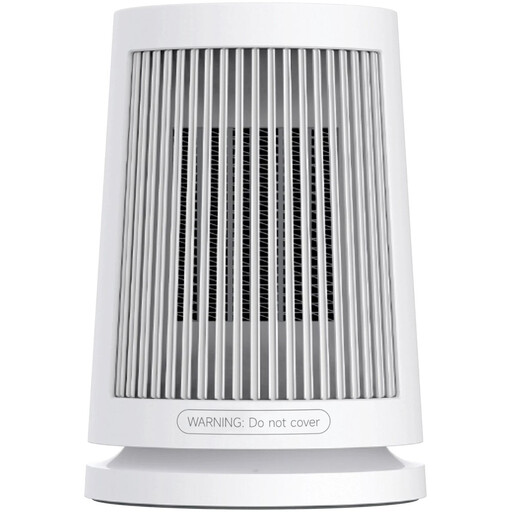
Why it suits this profile: Weighing 0.93 kg, this compact heater is designed for a desk, bedroom or small personal space. Its 600-watt output is suited to short periods of local heating.
Its low stated power makes it less likely that you’ll automatically choose a 1500- or 2000W model for a small workspace. Bear in mind, though, that it isn’t designed to heat a large room in its entirety.
PTC ceramic heating, 45° oscillation, thermostat, tip-over protection and overheat protection.
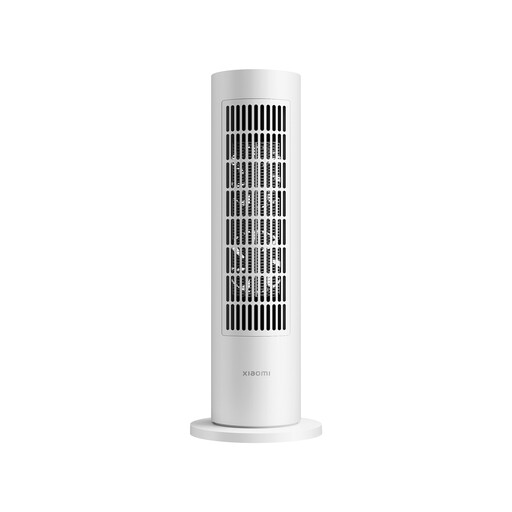
Why it suits this profile: This tower heater combines 2000 watts of power with a thermostat, 70° oscillation, a timer and control via the Mi Home app. It’s a good fit if you value easy controls and wider heat distribution.
The product specifications list specific features rather than relying on a vague claim of “smart” operation: app control, a timer, oscillation and automatic shut-off. An internet connection is required for full app functionality.
PTC ceramic element, thermostat, 70° oscillation, tip-over protection and overheat protection.
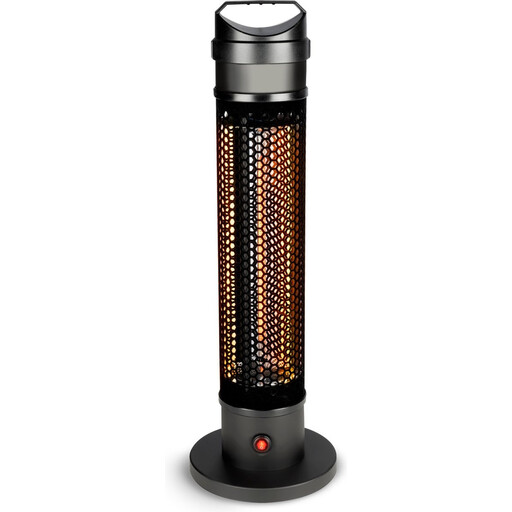
Why it suits this profile: This portable infrared heater is stated to be suitable for indoor and outdoor use, such as on a sheltered patio or at a specific workstation. The stated coverage is around 2–5 m², according to the product information provided.
The IP44 rating and stated suitability for indoor and outdoor use offer more reassurance than a general claim about patio heating. Even so, place the appliance somewhere stable and sheltered.
800-watt infrared heating, integrated handle, IP44 rating, touch protection and tip-over protection.
We’ve put together a full, up-to-date list of products that meet these strict selection criteria and the applicable European safety requirements.
Place the heater on a flat, hard surface and leave at least the clearance specified in the instructions. Don’t put it on bedding, carpet or a soft chair. Keep curtains, paper, clothing and furniture away from the air outlet.
To keep running costs down:
A 1500-watt model uses a theoretical 1.5 kWh for one hour at full power. Multiply this by your current electricity tariff to estimate the cost. An energy-saving mode may reduce average energy use, but the result depends on the room, insulation and settings.
It mainly depends on the heater’s power and how long you use it. A 2000-watt heater uses 2 kWh per hour at full power. With a thermostat, a lower setting and a timer, average energy use may be lower. Check the cost against your energy tariff.
Only if the instructions allow it and the appliance is stable and unobstructed. A timer, tip-over protection and overheat protection provide extra features, but they don’t replace safe use. Never cover the heater, and keep bedding and curtains well away.
Its lifespan depends on how often you use it, dust, storage and maintenance. Let the appliance cool before moving it, clean the air vents as instructed and don’t use it if the cable, plug or casing is damaged. Keep your proof of purchase and warranty details in case you need servicing.
