
Vandaag of morgen in huis

Kwaliteit gegarandeerd

Welkomstaanbiedingen ontgrendelen: GRATIS bezorging | Tot 80% korting | Gratis 30 dagen JoyPlus-proefperiode
Download de app
An electric heater may seem simple: plug it in and turn on the heat. However, models vary considerably in speed, noise, controls and safety features. As a result, an inexpensive appliance may prove less suitable for a bedroom, home office or larger living room.
Pay particular attention to three common pitfalls:
Power is measured in watts. The models in this selection range from approximately 1,500 to 2,200 watts. Higher power can be useful in a larger or less well-insulated room, but it also increases maximum electricity consumption.
Always consider the combination of:
A product listing stating a suitable area is a guideline, not a guarantee that the same temperature will be achieved in every home. A compact 1,500-watt heater may be perfectly suitable for a well-insulated study, while a larger living room may require more power or a longer heat-up time.
A fan heater blows warm air directly into the room. This makes it suitable for quick supplementary heating by a desk, bed or seating area. The downside is that the fan can be audible.
A ceramic heater usually uses a PTC heating element. Product information often links this to rapid heat-up and a relatively low surface temperature. However, always check the specific safety features and operating instructions for the model.
A convector heater warms air, which then rises and circulates. This type generally operates quietly and is suitable when you want to heat a room more evenly over a longer period. Models with an additional fan combine convection with faster air circulation.
A heater with a thermostat can automatically adjust the power or switch off when the set temperature has been reached. This can be more convenient than constantly changing the settings manually. A timer, ECO mode or remote control is particularly useful when the heater is positioned at a distance or only needs to operate temporarily.
Also look out for:
A CE marking indicates that the manufacturer declares compliance with relevant EU requirements. It is not an independent ranking or quality mark. Never use an electric heater when it is covered, or in a damp area unless it is specifically designed for this purpose, and keep curtains, bedding and furniture at a safe distance.
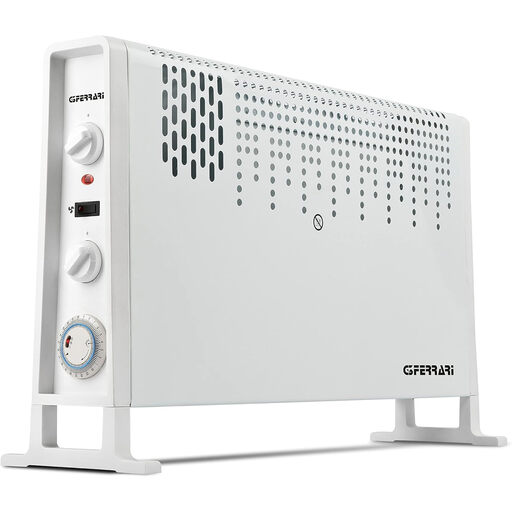
Why it suits this profile: This compact model is designed for straightforward operation with an adjustable thermostat. It is therefore a good fit for anyone looking for a portable heater without lots of additional features.
The product information mentions overheat protection and a thermostat. Before buying, however, check the exact power rating and the supplied instructions.
Compact design, adjustable thermostat and straightforward operation.

Why it suits this profile: For people working from home and those using a heater in the bedroom, the stated noise level of 25–42 dB, remote control and 12-hour timer are useful specifications.
The manufacturer specifies a ceramic PTC element, thermostat control from 5–35 °C and eight layers of safety protection. The stated energy saving of up to 40% is a claim made by DREO and is not a guaranteed result for every home.
1500 watts, remote control, timer, thermostat, tip-over protection and overheat protection.
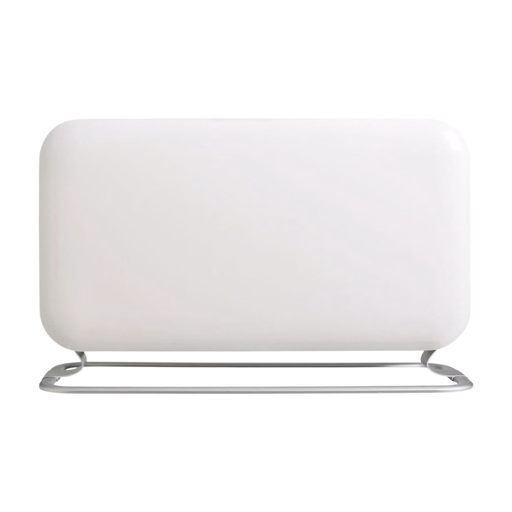
Why it suits this profile: This convector heater is designed for quieter heating over longer periods. The product details specify 2,000 watts, three settings, an electronic thermostat and an LED display.
The stated quiet operation clearly sets it apart from a fan heater. However, the appliance is larger and heavier than a compact portable heater.
2000 watts, electronic thermostat, LED display, three settings and quiet convection heating.

Why it suits this profile: The four heat settings, oscillation, ECO mode and remote control are practical for a bedroom, study or seating area where you want to adjust the airflow.
The manufacturer states that the adjustable thermostat operates from 5–35 °C, with a noise level of 38–50 dB depending on the setting. This gives you a more specific basis for assessing noise.
1800 watts, oscillation, 24-hour timer, ECO mode, tip-over protection and overheat protection.
We have put together a complete, up-to-date list of products that fully meet these strict selection criteria and the applicable European safety regulations.
Place the appliance on a flat, stable surface and maintain at least the distance specified in the manual. For several models, approximately one metre from combustible materials is required. Never cover the air inlet or outlet, and preferably use a suitable wall socket rather than an extension lead or multi-socket adaptor.
Switch off the heater and unplug it before moving, cleaning or storing it. Stop using it immediately if you notice a damaged cable, unusual smell, smoke or abnormal noise.
This depends on the power rating and your electricity tariff. A 2,000-watt heater uses 2 kWh per hour when operating continuously at maximum power. A thermostat, lower setting or ECO mode can limit the amount of time it runs at maximum power. Calculate the actual cost using: consumption in kWh × your current electricity price.
Not necessarily. Maximum consumption is mainly determined by the wattage and operating time. A ceramic heater may, however, have a thermostat, multiple settings and directed airflow. Any savings mentioned in a brand’s own research or claims do not automatically apply to every home.
Its lifespan depends on how often it is used, dust, storage and maintenance. Keep ventilation openings clear, clean the appliance according to the manual and do not use it if any parts are damaged. Store the heater in a dry place and check the cable, plug and casing before the season begins.
