
Vandaag of morgen in huis

Kwaliteit gegarandeerd

Welkomstaanbiedingen ontgrendelen: GRATIS bezorging | Tot 80% korting | Gratis 30 dagen JoyPlus-proefperiode
Download de app
An electric heater can quickly make a bedroom, home office, living room or garage more comfortable. However, there are big differences between models. A compact electric heater for your desk needs different features from a powerful portable heater for indoor use or a construction heater for the garage.
Look out for three common pitfalls in particular:
Power is measured in watts. Many models fall into these categories:
A fan heater usually warms a room quickly by using a fan to circulate warm air. A ceramic heater or ceramic fan heater uses a PTC heating element. Don’t just look at the maximum power output; check for multiple heat settings too. These let you adjust the power once the room has reached the right temperature.
An electric heater with a thermostat switches the heating on and off to maintain a set temperature. This is more practical than running the heater continuously at full power. Check whether the thermostat specifies a particular range, such as 5–35 °C.
An electric heater with a timer can switch off after a set period. Models with a 1–12-hour or 24-hour timer offer more options for an office, bedroom or living room. A timer is no substitute for supervision, so always follow the instructions for use.
For a quiet electric heater, the stated decibel level is worth checking. According to the product information, the DREO Atom 416 has a noise level of 25–42 dB and a quiet mode of 34 dB. In practice, the noise you hear may depend on the fan speed, the surface it stands on and how far away you are from the appliance.
At a minimum, check for:
Position the heater away from fabrics and keep the air inlet and outlet clear. Ideally, use a suitable, earthed socket and avoid using an extension lead if the instructions advise against it.
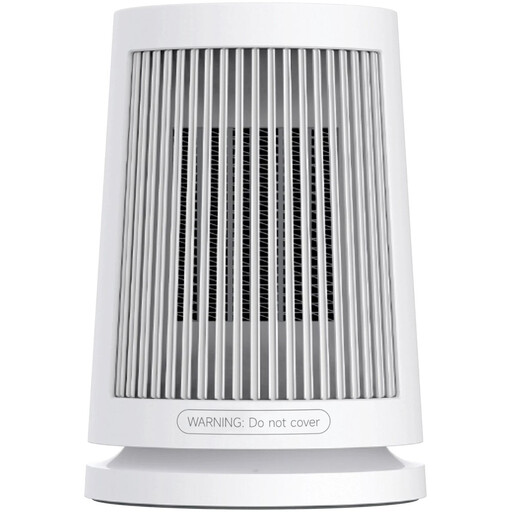
Why it suits this type of user: This compact 0.93 kg model is suitable for a desk, small room or targeted heating. It measures 142 × 132 × 188 mm.
Its lower power output means you don’t have to use a 2,000 W model straight away to heat a small area. Placement still matters: the manufacturer lists overheat and tip-over protection, but also recommends placing the heater on a flat surface.
600 W PTC heating, 45° oscillation, compact design and automatic shut-off.

Why it suits this type of user: This model is designed for bedrooms, offices and living rooms where adjustable heat and a low stated noise level are important.
The product information lists three power settings: 900, 1300 and 1500 W. This means you don’t have to heat the room on the highest setting all the time. The stated energy saving of up to 40% is a claim made by DREO and depends on the conditions of use.
Thermostat range of 5–35 °C, 12-hour timer, 25–42 dB according to the product specifications and tip-over protection.
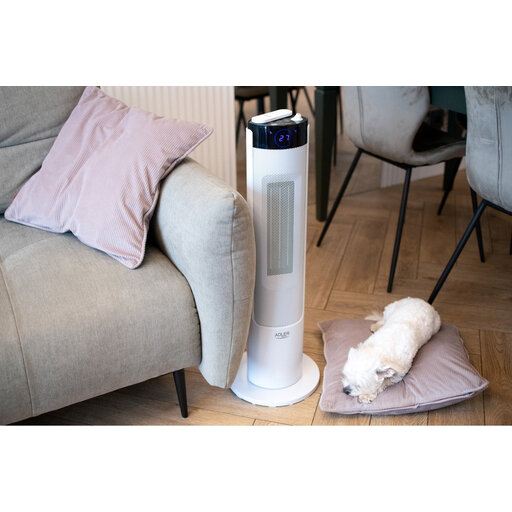
Why it suits this type of user: With 1,400 and 2,200 W settings, a thermostat, timer and tower design, this ceramic heater is a good fit for users who need a range of settings.
The timer can be set from 1 to 12 hours and the thermostat from 10–35 °C. The manufacturer also lists overheat protection and automatic shut-off if the heater tips over. The humidifying function needs extra maintenance and isn’t designed for damp areas such as bathrooms.
Maximum power of 2200 W, 80° horizontal oscillation, remote control and stated noise level below 50 dB.
We’ve put together a complete, up-to-date list of products that meet these strict selection criteria and the applicable European safety regulations.
You can calculate energy use with this simple formula:
power in watts ÷ 1,000 × running time in hours × electricity price per kWh
A 2,000 W heater running continuously at full power for one hour uses 2 kWh. A thermostat can reduce the actual running time by temporarily switching off the heating element. Check your energy tariff on your bill and focus on daily use, rather than just the maximum wattage.
It can be, as long as the model is suitable for indoor use, stands securely and is kept well away from bedding and curtains. A quiet electric heater with a thermostat and timer can be a practical choice. Don’t leave the appliance running unattended, and follow the manufacturer’s safety instructions.
Lifespan depends on how often it’s used, the amount of dust in the air, how it’s stored and how well it’s maintained. Keep the ventilation openings clear, let the appliance cool down before moving it, and don’t use it if the cable, plug or casing is damaged.
Not necessarily. Electricity use is mainly determined by the power output and how long the heater runs. A ceramic heater may offer practical benefits, such as multiple settings, a thermostat or more consistent control. So compare the full specifications rather than relying on the word “ceramic”.
