
Vandaag of morgen in huis

Kwaliteit gegarandeerd

Welkomstaanbiedingen ontgrendelen: GRATIS bezorging | Tot 80% korting | Gratis 30 dagen JoyPlus-proefperiode
Download de app
An electric heater can quickly make a cold bedroom, home office or study more comfortable. But there’s more to choosing between models than just wattage. A striking display or a claim such as “heats up quickly” won’t tell you how noisy the fan is, how stable the heater is or how much electricity it actually uses.
Here are some common pitfalls to watch out for:
A 1500W heater is often a practical choice for a personal workspace, bedroom or smaller room. A 2000W heater offers more capacity for larger indoor spaces, but the results also depend on insulation, ceiling height, draughts and your preferred temperature.
As well as checking the maximum power, look at the heat settings. A heater that can run on a lower setting, for example, gives you more control over comfort and energy use. Watch out for conflicting information in the product details. Some models have a product name that lists a different wattage from the specifications table. Before buying, check the power settings, mains voltage and instruction manual.
A ceramic heater with a PTC element uses a ceramic heating element and a fan. This blows warm air into the room in a focused stream, which is especially useful when you want quick warmth by a desk, bed or seating area.
Oscillation can spread the air over a wider angle. This doesn’t automatically mean a room will be heated evenly, so keep the heater clear of curtains, furniture and walls, and never block the air inlet or outlet.
The following features can be useful for everyday use:
A timer doesn’t automatically make a heater energy-efficient. You can easily calculate energy use with: power in kW × hours of use × your electricity tariff. A 1500W model running at full power for one hour theoretically uses 1.5 kWh. In practice, a thermostat can reduce average energy use by switching off the heating element when full power isn’t needed.
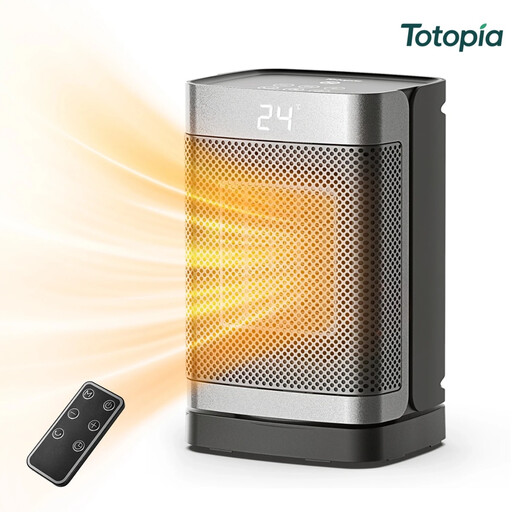
Why it suits this profile: This compact model is designed for bedrooms, offices and personal workspaces. Button or remote control operation and a timer make it straightforward to use every day.
The product information lists two heat settings, a 12-hour timer, tip-over protection and overheat protection. Before buying, check the power rating in the current product specifications.
PTC heating, oscillation, an LED display, remote control and a compact size of approximately 17 × 14 × 26 cm.
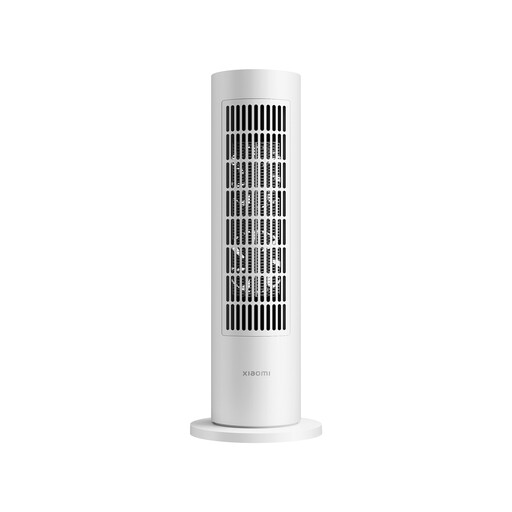
Why it suits this profile: A good choice if you want app control, smart thermostat settings and a tower design, as well as warmth for your living room or home office.
The listed specifications include 2000W, 70° oscillation, a timer and automatic shut-off. According to the product information, you’ll need the Mi Home app to access all the smart features.
PTC ceramic heating, four settings according to the product description, app and voice control, overheat protection and tip-over protection.

Why it suits this profile: This model is worth considering for bedrooms, studies and home offices where you want a compact heater with a low stated noise level.
According to DREO’s own product information, the stated noise level ranges from 25 to 42 dB, depending on how it’s used. The manufacturer also lists eight layers of protection; always follow the instructions as well.
1500W PTC heating, temperature settings from 5–35 °C, a 12-hour timer, remote control and a weight of approximately 1.44 kg.
We’ve put together a complete, up-to-date list of products that meet these strict selection criteria and comply with current European safety regulations.
Place an electric space heater on a hard, level and stable surface. Don’t use it on bedding, a soft sofa or a thick rug if the instruction manual advises against it. Keep it away from curtains, paper, clothing and other flammable materials. Never cover a fan heater, and don’t use it in a damp room unless the product information explicitly says it’s suitable.
Where possible, plug the heater directly into a suitable socket. Switch it off and unplug it before moving or cleaning it, or if you won’t be using it for an extended period. Let it cool down completely first.
It depends on the wattage, how long you use it for and your electricity tariff. A 2000W model running at full power theoretically uses 2 kWh per hour. A thermostat, lower heat setting and timer can help limit average energy use, but every model needs electricity to produce heat.
Its lifespan depends on how often you use it, dust build-up, fan wear and maintenance. Keep the air vents clear, follow the cleaning instructions and don’t use the heater if its cable, casing or plug is damaged. Warranty periods vary by product and are listed in the product information.
Place the heater freestanding on a stable, hard surface with plenty of space around it. Don’t direct warm air at curtains, furniture or bedding for long periods. Always check the instruction manual for recommended clearances and placement requirements.
