
Vandaag of morgen in huis

Kwaliteit gegarandeerd

Welkomstaanbiedingen ontgrendelen: GRATIS bezorging | Tot 80% korting | Gratis 30 dagen JoyPlus-proefperiode
Download de app
Choosing an electric heater might seem simple: decide on the wattage, pick a model, and plug it in. However, many regrettable purchases happen because features are often made to sound better in product titles than they are in reality. For instance, a heater might blow warm air quickly, but this can also mean it makes more noise. Similarly, a model with an energy-saving mode won't automatically use little power if it's constantly running at full capacity.
For households, home workers, students and offices, there are three main pitfalls to watch out for:
The power rating, or wattage, determines the maximum amount of electricity the heater uses and how much heat the element produces. For a small workspace, a portable heater between 600 and 1500 watts may be sufficient. For a bedroom, living room or office of around 15 to 25 m², a 2000-watt heater is often recommended.
The required capacity also depends on insulation, ceiling height, the outside temperature and your desired room temperature. You should therefore treat the suggested room size as a guideline, not a guarantee. A convector heater warms the air gradually, while a fan heater distributes heat around the room more quickly.
When considering power consumption, remember this formula:
power in kilowatts × hours of use = consumption in kWh
So, a 2000-watt heater running at full power for one hour uses 2 kWh. A thermostat or ECO mode can reduce the number of hours it runs, but it doesn't change the maximum power consumed while it's actively heating.
A ceramic heater typically uses a PTC (Positive Temperature Coefficient) element. According to manufacturers' product information, this type can deliver heat quickly and allows you to adjust the power level through different settings. Many ceramic models also combine this with a fan, oscillation and a timer.
A fan heater blows warm air directly into the room. This is useful when you want to quickly heat a desk or seating area, but be sure to check the noise level if you plan to use it in a bedroom or during video calls.
A convector heater works by heating the air, which then rises. This type usually operates without a fan, so it can be quieter. The Mill SG2000LED, for example, lists a power output of 2000 watts, three settings, an electronic thermostat and an additional fan for heat distribution. The manufacturer states it is suitable for rooms up to 20 m².
An oil-filled radiator generally takes longer to heat up but can provide a more even and sustained warmth. The Mill AB-H1000DN has three power settings (400, 600 and 1000 watts) and is designed for rooms up to 16 m², according to its product description.
A heater with a thermostat switches the heating element on and off to maintain a set temperature. This is more practical than constantly operating the heater manually. A heater with a timer is useful for setting it to switch off automatically. A heater with a remote control or app control offers extra convenience, letting you operate it from your sofa or bed.
In addition, check for these minimum safety features:
A CE mark indicates that the manufacturer declares the product meets relevant European standards. It is not an independent quality rating. Therefore, you should also review the user manual, warranty, dimensions, cable length and specific safety information.

Why it's a good fit: This compact model is aimed at smaller spaces up to 15 m², such as a student room, home office or workspace.
The product specification lists two power levels, 600 and 1500 watts, so you don't always have to run it at maximum power. It also includes tip-over and overheat protection.
1500-watt maximum power, three temperature settings, a carry handle and a specified noise level of 24 dB(A).
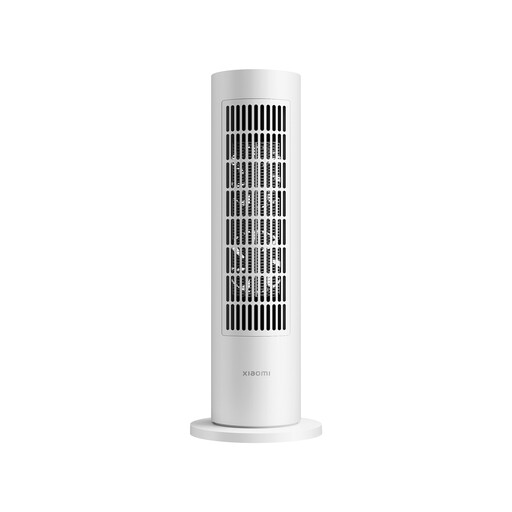
Why it's a good fit: Ideal for users who want to control their heating via an app, voice assistant or timer.
The listed features are specific: 2000 watts, four modes, a thermostat, a timer and tip-over protection. A stable internet connection is required for full app functionality.
PTC ceramic element, 70° oscillation, smart thermostat, timer and control via the Mi Home app, according to the product description.
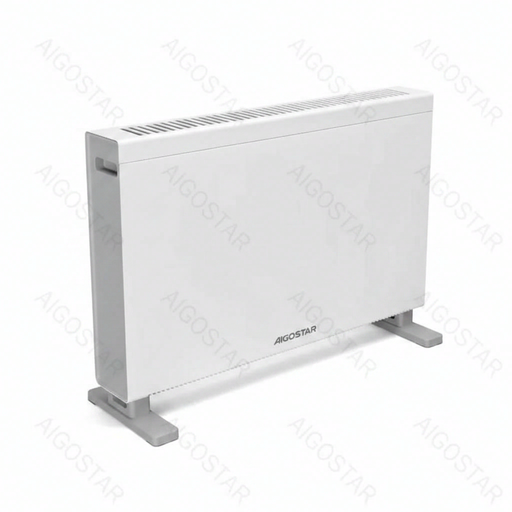
Why it's a good fit: A practical choice for an office, living room or any space of around 20 to 25 m² where remote operation is desired.
The two power settings of 1250 and 2000 watts allow for lower consumption when full capacity isn't needed. The product information also mentions overheat and tip-over protection.
Convection heating, LED controls, remote control, 24-hour timer, carry handle and a specified range of 20 to 25 m².
We have compiled a complete, up-to-date list of products that fully meet these strict selection criteria and comply with current European safety regulations.
That depends on the power rating, how long you use it and your electricity tariff. A 2000-watt model uses a maximum of 2 kWh per hour. A thermostat, lower heat setting or timer can limit the actual number of hours it operates. It's therefore important to compare not just the wattage, but also the control settings and automatic functions.
You should only do this with a model if the user manual explicitly permits it, and only when it is placed on a stable, clear surface. A timer, tip-over protection and overheat protection offer additional safety, but they don't eliminate the risks of unattended use. Always maintain the minimum distance from flammable materials specified by the manufacturer and never cover the appliance.
The lifespan varies depending on the model, frequency of use and maintenance. Keeping the air vents free of dust, storing it correctly and handling the cable and plug with care will help to reduce wear and tear. Stop using the heater immediately if you notice a damaged cable, a burning smell, sparks or erratic operation. Also, be sure to check the warranty and keep your proof of purchase.
