
Vandaag of morgen in huis

Kwaliteit gegarandeerd

Welkomstaanbiedingen ontgrendelen: GRATIS bezorging | Tot 80% korting | Gratis 30 dagen JoyPlus-proefperiode
Download de app
Energy bills remain a constant concern, and turning on the central heating for just one cold room often feels wasteful. An electric heater is a smart solution for supplemental heating. However, the market is flooded with models that promise the world. Many people fall for marketing traps and end up with a heater that's noisy, guzzles electricity, or is unsafe.
As a Joybuy Product Recommendation Officer, I'm here to help you cut through the noise. Let's discuss the three most common pitfalls so you can make an informed decision.
Before choosing a model, there are a few specifications you need to check. These will determine if a heater is right for your situation.
The power, expressed in watts, determines how quickly and effectively a heater can warm up a room. Too little power means the heater will run constantly at full capacity without achieving the desired result. Too much power is unnecessarily expensive to run.
A good rule of thumb is to allow for approximately 75-100 watts per square metre (m?) for a standard ceiling height (2.5 metres).
The way a heater produces warmth has a major impact on comfort and ease of use.
Safety is non-negotiable. Always check for two crucial features:
For use in damp areas, the IP rating (Ingress Protection) is important. A bathroom heater must have at least an IP21 rating (drip-proof). For extra safety near a shower or bath, IPX4 (splash-proof) is a better choice.
Below are a few models that align well with specific needs, based on their objective specifications.
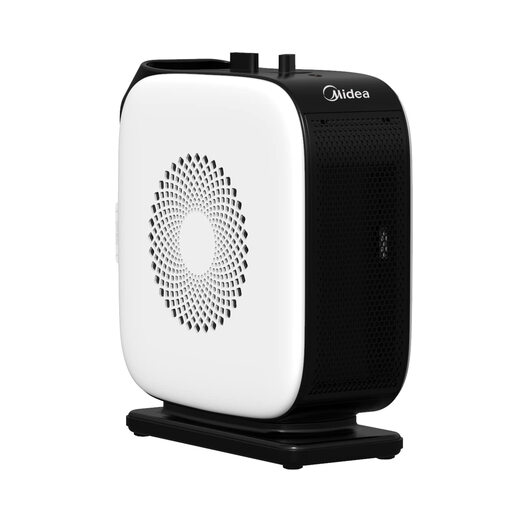
Why This Fits Their Persona: Ideal for those who need to heat a small space (up to 10 m?) quickly and efficiently without spending a lot of money or taking up much room. Perfect for a dorm room or a small home office.
This model is a PTC ceramic heater, which delivers fast heat exactly where you need it. You won't waste time or energy heating up an oversized, slow heater.
Compact size with a carrying handle. Features an oscillation function for even heat distribution and overheat protection.
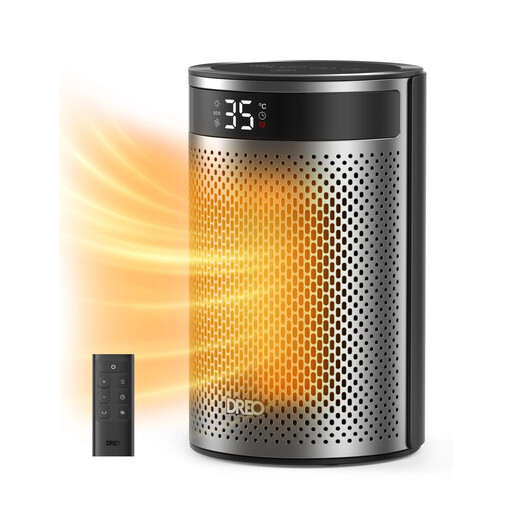
Why This Fits Their Persona: For those who need to work or study with concentration and can't have a distracting fan. This heater combines rapid heat with quiet operation.
It tackles the pitfall of the noisy fan heater. According to the manufacturer, Dreo's HyperSilent technology ensures a noise level as low as 34dB. The ECO mode and thermostat help bypass the "energy-efficient" myth by optimising consumption.
Quiet operation, precise thermostat (5-35°C), timer, and remote control. Features comprehensive safety functions, including tip-over and overheat protection.
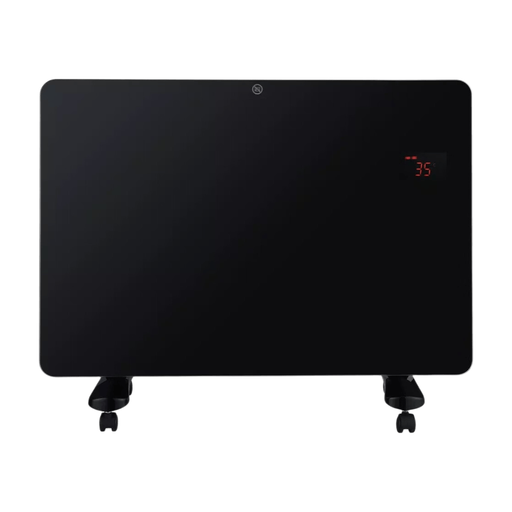
Why This Fits Their Persona: Suitable for families looking for a safe and quiet solution, for instance in the bathroom or a playroom. The focus is on safety and even, silent heat.
This model addresses the safety pitfall. Its IPX4 rating makes it splash-proof and thus suitable for bathroom use. As a convector heater, it's silent, which avoids the trap of a noisy heater.
Splash-proof (IPX4), 24-hour timer, and can be used freestanding or wall-mounted for extra safety. Includes overheat protection.
We have compiled a complete, up-to-date list of products that fully meet these strict selection criteria and Dutch safety standards.
The cost depends on the heater's power (wattage) and your electricity rate. The calculation is simple: divide the wattage by 1000 to get kilowatts (kW) and multiply this by your price per kilowatt-hour (kWh).
Example: A 1500-watt (1.5 kW) heater running for one hour at an electricity price of €0.30 per kWh costs: 1.5 kW * €0.30 = €0.45 per hour. A model with a good thermostat will not run continuously at full power, which reduces costs.
It is generally not recommended to leave an electric heater running unattended. If you do need heat overnight, choose a model with comprehensive safety features: a timer to turn it off automatically, a precise thermostat to regulate the temperature, and of course, tip-over and overheat protection.
For those who value silence, a convector heater is the most popular choice. It operates without a fan, making it virtually silent. Modern ceramic heaters with a focus on quiet operation, like the models from Dreo, are also a great alternative if you want to combine the fast heat-up time of a fan heater with less noise.
