
Vandaag of morgen in huis

Kwaliteit gegarandeerd

Welkomstaanbiedingen ontgrendelen: GRATIS bezorging | Tot 80% korting | Gratis 30 dagen JoyPlus-proefperiode
Download de app
An electric heater may seem simple to choose: select the wattage you want, plug it into a socket and you’re ready to go. In practice, models vary considerably in heat distribution, controls, noise levels and suitability for different rooms. A compact fan heater can warm up a desk area quickly, but may not be comfortable for prolonged use in a bedroom. An oil-filled radiator heats up more gradually, but is heavier and less convenient to move around.
The following pitfalls regularly cost UK households money:
Power is measured in watts. An electric heater rated at 2000 watts can bring a room up to temperature more quickly than a 1000-watt model, but its hourly consumption is also higher when running at full power. A lower wattage may be suitable for a small bedroom, home office or sitting area. A larger or poorly insulated living room will often benefit from greater capacity.
Also check the stated heated area. According to the product specification, the Mill CUS1800MEC is suitable for rooms of up to 30 m², while the Mill SG2000LED is listed for a maximum of 20 m². These figures come from the manufacturer’s product information and will depend in practice on the conditions in the room.
None of these types is automatically more energy-efficient in every situation. Overall consumption is mainly determined by the wattage, the temperature setting, insulation and operating time.
A heater with a thermostat switches the heating element off when the set temperature is reached and can switch it back on when the room cools down. A heater with a timer is useful when you want to set an operating time in advance. Some models offer a daily or weekly schedule.
Also check for:
A bathroom heater should only be used in a bathroom if the manufacturer expressly permits this and the installation complies with the relevant requirements. According to the product description, the Camry CR 7747 has an IPX2 rating and is designed for wall mounting. Never place an electrical appliance within reach of splashing water without checking the clearance and installation instructions.
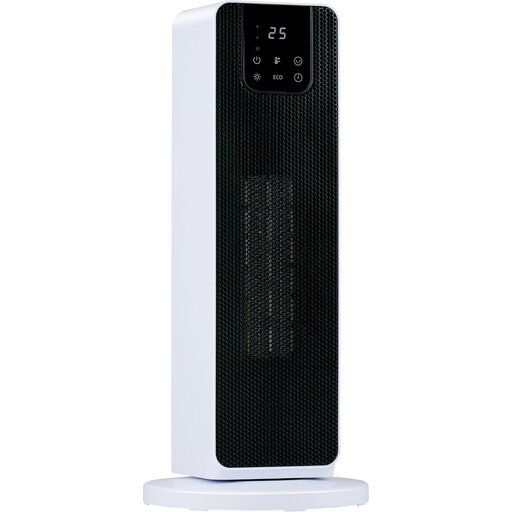
Why it suits this profile: This model offers two power settings of 800 and 2000 watts, along with a remote control and a timer of up to 12 hours. This makes it easy to operate for occasional use in different rooms.
The adjustable settings help prevent you from always using maximum power. Tip-over and overheating protection are explicitly listed in the product information.
PTC ceramic heating, oscillation function, remote control and timer of up to 12 hours.
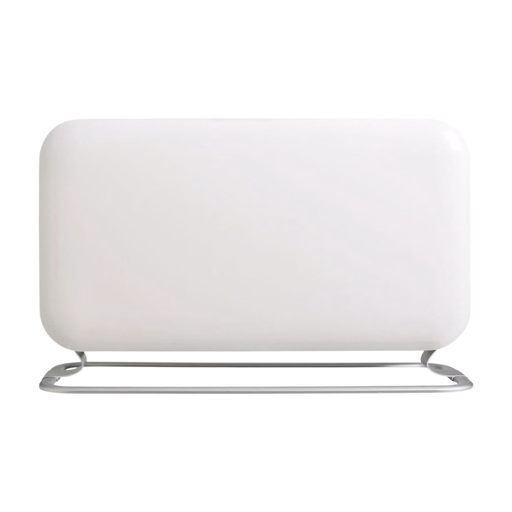
Why it suits this profile: This convector heater combines 2000 watts of power with three settings, an electronic thermostat and an LED display. Its design is intended for permanent placement in a living or working area.
The product specification clearly states the power, settings and thermostat. This means you can compare the model using verifiable information rather than looking at appearance alone.
2000 watts, three settings, electronic thermostat and a 160 cm cable.

Why it suits this profile: According to the product information, this wall-mounted model is intended for bathrooms and features a built-in towel rail, two settings and a programmable weekly timer with up to six periods per day.
Rather than using an ordinary portable heater in a damp area, choose a model whose product details specifically mention bathroom use and IPX2. Always check the instructions before installation.
Wall mounting, 1400/2000 watts, adjustable temperature from 10 to 49 °C and weekly programming.
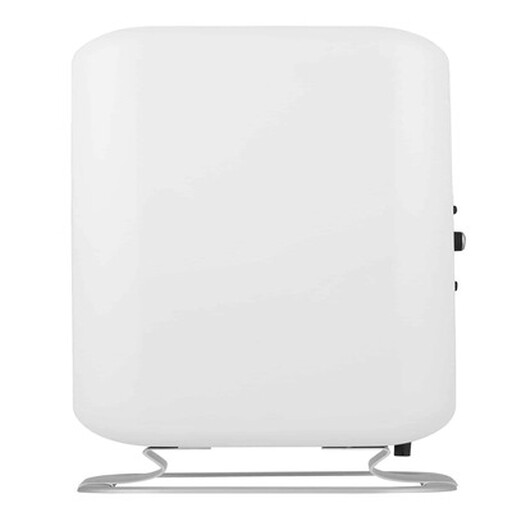
Why it suits this profile: This oil-filled radiator has three settings of 400, 600 and 1000 watts, an electronic thermostat and a day-night programme. According to the product specification, this model is intended for rooms of up to 16 m².
The three power settings and day-night programme help prevent continuous heating at maximum power. However, the model weighs 9 kg, so it is less suitable if you move it frequently.
1000 watts, day-night thermostat, three settings, plus tip-over and overheating protection.
Place a heater on a flat, stable and non-flammable surface. Keep curtains, bedding, paper and furniture at a safe distance. Never cover the appliance with clothing or a blanket. When using a high-power setting, preferably use a suitable socket connected directly to the mains, and check that the plug and cable do not become hot.
You can calculate consumption easily:
power in kilowatts × operating time in hours = consumption in kilowatt-hours
A 2000-watt model running continuously at full power for one hour uses 2 kWh. In reality, a thermostat may switch the element off from time to time. Actual consumption therefore depends on the settings and conditions.
We have put together a complete, up-to-date list of products that fully meet these strict selection criteria and the applicable European safety requirements.
That depends on the wattage, electricity price and operating time. A thermostat, timer or weekly schedule can prevent the appliance from running for longer than necessary. So don’t compare only the maximum wattage; also consider the available lower settings and control options.
Only if the model is specifically approved for this purpose and the IP rating, mounting method and safety clearances are suitable. An ordinary fan heater or oil-filled radiator is not automatically safe to use in a damp area. Always follow the instructions and do not place the appliance near a bath, shower or source of splashing water.
Its lifespan depends on build quality, frequency of use, dust and maintenance. Allow the appliance to cool down before cleaning it, keep air inlets clear and do not use it if the cable, plug or casing is damaged. If problems occur, contact the supplier or manufacturer rather than attempting to repair electrical components yourself.
