
Vandaag of morgen in huis

Kwaliteit gegarandeerd

Welkomstaanbiedingen ontgrendelen: GRATIS bezorging | Tot 80% korting | Gratis 30 dagen JoyPlus-proefperiode
Download de app
An electric heater can be useful when you need extra warmth quickly in a bedroom, living room, office or student room. However, an attractive display, high wattage or the term “energy saving” is not enough to make a good choice. The difference often comes down to the combination of room size, controls, noise level and safety.
A 2000-watt model can provide heat quickly, but it is not automatically suitable for every room. In a small study, a compact 600- or 1500-watt heater may be more practical. For a larger or less well-insulated space, higher power may be more relevant.
Pay attention to the stated recommended room size. This is only a guideline: ceiling height, insulation, draughts and the desired temperature also affect the result.
An electric heater converts electricity into heat. At maximum power, a 2000-watt heater uses approximately 2 kWh per hour. The actual cost depends on how long the heating element is active and on your electricity tariff.
A heater with a thermostat, several heat settings, an ECO mode or a timer can reduce usage because the appliance does not run continuously at full power. However, check exactly what the manufacturer means by any stated saving percentage. According to DREO’s own claims, certain models can save up to 40% energy through intelligent power control; this is not a universal guarantee for every household.
A fan heater makes noise because a motor moves air. Therefore, look for a stated level in decibels (dB) rather than relying solely on the description “quiet heater”. For example, the DREO models in this selection specify a range of 25–42 dB. The perceived noise level may vary depending on the heat setting and surroundings.
A ceramic heater with a PTC element generally heats up quickly. PTC stands for Positive Temperature Coefficient: the element changes its electrical resistance as it gets warmer. On its own, this says nothing about overall running costs or whether the heater is suitable for your room.
An adjustable thermostat allows you to select your desired temperature. Some models offer a range of 5 to 35 °C, with settings in one-degree increments. A heater with a timer is practical when you want the appliance to switch off automatically after a certain period.
A heater with a remote control is convenient when you are on the sofa or in bed. A smart Wi-Fi heater goes a step further: you can adjust settings through an app and, with some systems, use automations or voice control. Check beforehand that the app is compatible with your smartphone and Wi-Fi network.
At a minimum, check for:
Place a portable heater on a flat, stable surface and never cover it. For the models mentioned, keep at least 1 metre away from curtains, furniture, bedding and other flammable materials. Do not use an electric heater in a damp room or close to water unless the instructions explicitly permit it.
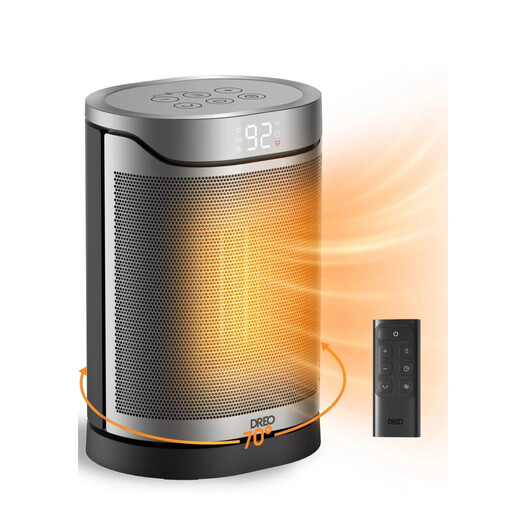
Why it suits this profile: A compact fan heater for smaller rooms, offices and student rooms, with several power settings and a remote control included.
The stated range of 10–20 m² and settings of 900, 1300 and 1500 watts make it easier to avoid heating at maximum power all the time.
PTC ceramic element, 5–35 °C thermostat, 12-hour timer, oscillation, and tip-over and overheating protection.

Why it suits this profile: Designed for those looking for a tower model with wide air distribution, precise temperature control and extensive control options.
The specification states a recommended room size of 15–25 m² and a noise level of 25–42 dB, making it easier to assess power and noise.
2000 watts, 70° oscillation, 5–35 °C thermostat, 12-hour timer, remote control and eight stated safety layers.

Why it suits this profile: Suitable for those who value longer heating periods, app control and a stated range of up to 34 m².
The three settings of 800, 1200 and 2000 watts offer more choice than simply switching the heater on or off. However, the radiator weighs 12.1 kg, making it less suitable for frequent moving.
Wi-Fi and Bluetooth connectivity, Millheat app, frost-free mode, tip-over protection and overheating protection.
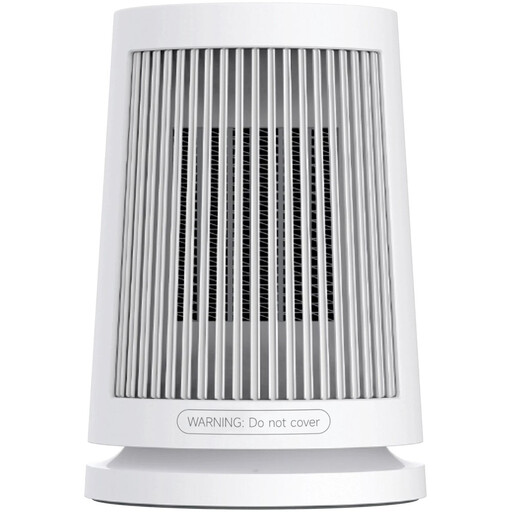
Why it suits this profile: A lightweight, portable electric heater for a desk, small bedroom or another space where localised warmth is sufficient.
The 600-watt output means you do not need a heavier model for a small workspace. Do not expect it to heat a large room fully.
Compact size, weight of 0.93 kg, 45° oscillation, PTC ceramic element and automatic switch-off if the heater tips over or overheats.
We have compiled a complete, up-to-date list of products that fully meet these strict selection criteria and the applicable European safety regulations.
A 2000-watt heater uses approximately 2 kWh per hour at maximum power. Multiply this by your current electricity price. A thermostat or lower setting can reduce the time the heater is switched on, but exact consumption depends on insulation, temperature and usage time.
A ceramic fan heater can provide heat quickly and offer several settings. The ceramic element does not automatically make the appliance cheaper to run: the power it draws and the length of time the heater is active are the main factors determining consumption. A thermostat, timer and ECO mode can help limit unnecessarily long heating periods.
This depends on the instructions and the safety features. Only choose a model with features including tip-over and overheating protection, place it in a clear space and never cover it. Also check that the timer, thermostat and automatic switch-off function suit the way you intend to use it.
