
Vandaag of morgen in huis

Kwaliteit gegarandeerd

Welkomstaanbiedingen ontgrendelen: GRATIS bezorging | Tot 80% korting | Gratis 30 dagen JoyPlus-proefperiode
Download de app
An electric heater may seem simple to choose: plug it in, select the power setting and the room gets warmer. In practice, models vary considerably in their controls, noise levels, safety features and energy use. As a result, a cheaper purchase may not be the best choice for a bedroom, home office or garage.
As a Joybuy Product Recommendation Officer, I focus above all on verifiable product specifications. Before you buy, watch out for these common pitfalls:
A 2000W heater is a popular choice for compact rooms. This power rating may suit a living room, study or garage, but heat distribution also depends on insulation, ceiling height and draughts. A smaller room won’t always need the maximum power setting.
A heater with a thermostat switches the heating element on and off to maintain the set temperature. Check the temperature range and how the temperature is controlled. According to the product information, the OmniHeat has an adjustable thermostat from 5 °C to 35 °C. The PELONIS also offers adjustable temperature control and multiple heat settings.
A ceramic heater with a PTC element can warm up quickly. The term ceramic fan heater mainly describes the combination of a ceramic heating element and a fan. On its own, it says nothing about noise levels or energy use.
A heater with a timer is practical if you don’t want the appliance running continuously. A 24-hour timer lets you set a time for the heater to switch off or create a schedule. Check whether the timer only switches the heater off or can also be used to programme a start time.
A heater with a remote control is convenient from the sofa or bed. Some models are operated with a remote control; others can also be controlled through an app. The Xiaomi Smart Tower Heater Lite lists control via the Mi Home app, as well as a thermostat, timer and oscillation. According to the product information, smart controls require an app and an internet connection.
A portable electric heater should stand securely, with plenty of clear space around it. Check for:
For a bedroom or office, a quiet heater is often more important than maximum heat output. The OmniHeat lists three noise levels of 50, 45 and 38 dB in its product specifications. Treat these as figures provided by the brand; the noise you experience may vary depending on the setting and the room.

Why it suits this profile: This compact ceramic fan heater offers four heat settings, a thermostat, ECO mode and a 24-hour timer. It’s straightforward to use in a bedroom, student room or home office.
The adjustable thermostat and multiple settings mean you don’t have to rely solely on maximum power for heat. The stated noise level varies by setting.
1800W power, 5–35 °C thermostat, 24-hour timer, remote control, and tip-over and overheat protection according to the product information.
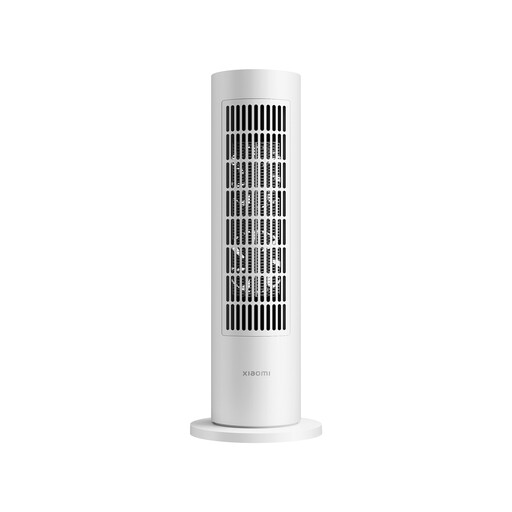
Why it suits this profile: Its tower design takes up little floor space, making it a good fit for people who value app control, a thermostat, a timer and oscillation.
The specifications explicitly list automatic shut-off and tip-over protection. Bear in mind that smart features depend on an app and an internet connection.
2000W PTC heating, 70° oscillation, four settings, a smart thermostat and control via the Mi Home app, according to the product description.

Why it suits this profile: According to the product information, this model is intended for use in places such as bedrooms, living rooms, offices, basements and garages. Its carry handle makes it easier to move between rooms.
Five settings, a thermostat and a 24-hour timer give you more control than simply switching the heater on and off. Any savings from ECO mode will depend on the room, settings and how long you use it.
2000W PTC ceramic element, ECO mode, 24-hour timer, carry handle, overheat protection and tip-over protection according to the manufacturer.
We’ve put together a complete, up-to-date list of products that meet these strict selection criteria and the applicable European safety regulations.
An electric freezer and an electric heater serve different purposes, but they share some practical considerations: size, noise levels and positioning. According to its product information sheet, the CHiQ Chest Freezer 99L has a capacity of 99 litres, an energy rating of E, a stated noise level of 39 dB and annual energy consumption of 169 kWh. Don’t place a freezer next to a heat source, and leave enough space for ventilation.
For cooking at the table, a teppanyaki grill is an alternative to a large hob. The MELISSA Teppanyaki Griddle has a cooking surface of 47,5 × 26,5 cm, 2000W power, an adjustable thermostat, a non-stick coating and a removable drip tray. Use the appliance only on a stable, heat-resistant surface and don’t leave it unattended while it’s operating.
It depends on the power rating and how long you use it. An appliance rated at 2000W uses around 2 kWh per hour when running continuously at full power. A thermostat, timer or ECO mode can reduce how long it’s switched on, but actual energy use varies depending on the room and settings.
You can, provided the model is suitable for indoor use according to its instructions. Make sure the heater is stable, keep it away from bedding and curtains, and never cover it. A timer and a lower noise level are useful features for overnight use.
Its lifespan depends on how often it’s used, ventilation, dust and maintenance. Keep the air vents clear, clean the appliance according to the manual and unplug it when it’s not in use. A longer warranty on parts may offer extra information about the service terms, but it isn’t a guarantee of a specific lifespan.
