
Vandaag of morgen in huis

Kwaliteit gegarandeerd

Welkomstaanbiedingen ontgrendelen: GRATIS bezorging | Tot 80% korting | Gratis 30 dagen JoyPlus-proefperiode
Download de app
An electric heater can quickly make a bedroom, home office or living room feel cosy. However, there are big differences between models. A compact electric heater is handy beside your desk, while a convector heater is better suited to heating a larger room for longer periods. If you only look at the wattage or a low price, you could end up with a noisy heater, high electricity bills or controls that are awkward to use.
The main pitfalls to avoid when buying an electric heater are:
Power is measured in watts. A 1500W heater is generally intended for smaller rooms or spot heating. A 2000W heater can produce heat more quickly, but it also uses more electricity if it runs continuously at its highest setting.
Don’t just look at the stated coverage in square metres. Ceiling height, draughts, window area and insulation all make a difference. So check:
A ceramic heater with a PTC element can produce warm air quickly. A convector heater distributes heat through natural air circulation and is often suitable for even heating. A fan heater warms a room quickly, but the fan usually makes it noisier.
Noise levels matter if you’re choosing a heater for a bedroom, nursery, office or study. Look for a stated dB rating and check whether it applies to the lowest or highest setting. “Quiet operation” without a measured value is harder to compare.
A heater with a thermostat switches the heating element on and off to maintain the set temperature. A timer stops the heater from running when it’s not needed. A remote control, LED display or app can be handy, but check whether you need Wi-Fi or a smartphone to use all the controls.
Check whether the model has features such as:
Don’t use an electric heater beneath clothes, towels or blankets. Keep flammable materials such as curtains, paper and bedding at least one metre away if the instructions say to do so. Ideally, plug a powerful heater directly into a wall socket, and don’t use it near a bath, shower or swimming pool unless it’s specifically designed for that environment. A bathroom heater must also have a suitable IP rating; IPX2 doesn’t mean the appliance is waterproof.
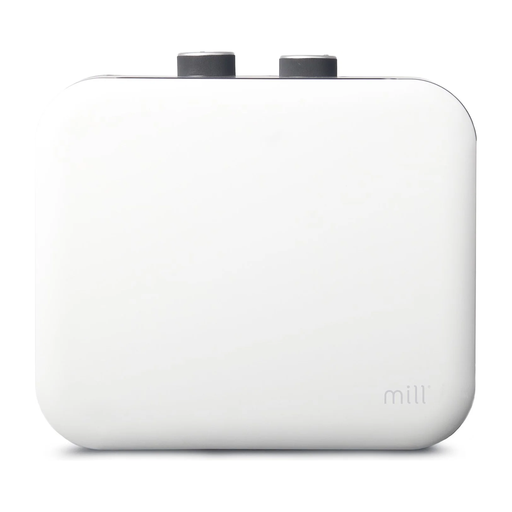
Why it suits this buyer: This compact model has two settings, 1200W and 1800W, and a mechanical thermostat. According to the product information, it’s suitable for rooms up to 30 m².
The two heat settings mean you don’t have to run it at full power all the time. The product description also lists tip-over and overheat protection.
PTC ceramic element, compact design and thermostat; handy as a portable heater in a home office or study.

Why it suits this buyer: The stated specifications combine 2000W of power with a thermostat range of 5–35°C, a remote control, a 12-hour timer and oscillation.
The stated noise level is 25–42 dB, and the product information lists tip-over protection, overheat protection and a child lock. Check the latest instructions before buying.
Described as suitable for 15–25 m², with ceramic heating, 70° oscillation and a portable tower design.

Why it suits this buyer: According to the product information, this model is designed for wall mounting in a bathroom and has two settings, 1400W and 2000W.
The stated IPX2 rating and overheat protection give you a clear starting point. Follow the instructions for positioning and earthing.
Weekly programme with up to six periods a day, LCD display, thermostat range of 10–49°C and towel rail.

Why it suits this buyer: According to the product information, this compact heater has adjustable power settings of 600W and 1500W, weighs 1.51 kg and has a stated noise level of 24 dB(A).
The two power settings give you more choice than simply running it at full power. The product details list tip-over and overheat protection, as well as automatic shut-off.
Lightweight, portable design, PTC ceramic technology and five modes according to the product description.
We’ve put together a complete, up-to-date list of products that meet these strict selection criteria and the applicable European safety requirements.
You can work out the energy use easily: power in kW × number of hours used × electricity price. A 2000W heater uses 2 kWh per hour at full power. A 600W model uses 0.6 kWh over the same period. In practice, a thermostat can reduce average energy use by switching the element off when it’s not needed.
So ECO mode doesn’t guarantee a fixed saving. Some brands’ own research may claim that this feature reduces energy use by a certain percentage, but always compare the claim with the test method and your own usage. Heat only the room you’re using, keep doors closed and set a timer where appropriate.
Yes, as long as it’s on a stable surface, kept clear of bedding and curtains, and has a suitable noise level. Choose a quiet heater with a thermostat and timer. Don’t leave it running while covered, and follow the manufacturer’s safety instructions.
Only if the instructions specifically allow it and its IP rating is suitable for the intended position. A standard portable heater isn’t automatically suitable for a damp room. Keep the plug and controls away from water, and have the installation checked if wall mounting or earthing is required.
Its lifespan depends on how long you use it, how it’s stored, ventilation and maintenance. Regularly dust the air inlets when the heater is switched off and has cooled down. Stop using it immediately if the cord is damaged, you notice a burning smell or sparks, or it makes an unusual noise. Keep your proof of purchase and warranty details in case you need servicing.
