
Vandaag of morgen in huis

Kwaliteit gegarandeerd

Welkomstaanbiedingen ontgrendelen: GRATIS bezorging | Tot 80% korting | Gratis 30 dagen JoyPlus-proefperiode
Download de app
An electric heater can quickly make a cold bedroom, home office or living room more comfortable. However, it is not wise to look only at the wattage or an attractive offer. High power does not automatically mean that a device is suitable for your room, operates quietly or uses little electricity.
The most important choice depends on how you plan to use it: do you want short bursts of direct heat at your desk, a quiet heater for the bedroom or a model that heats a larger room more evenly?
A fan heater rated at 2,000 watts can blow out warm air quickly, but at full power it also uses around 2 kWh per hour. Consumption falls at a lower power setting, but so does the heat output in many cases. Look for multiple heat settings, a thermostat and the recommended room size.
The stated room size also depends on insulation, ceiling height, outdoor temperature and the existing heating system. Treat “suitable for a certain area” as a guideline, not a guarantee.
A ceramic heater converts electricity into heat efficiently, but a 1,500- or 2,000-watt appliance still requires considerable electrical power when used for long periods. An energy-efficient heater is most practical when it has a thermostat, ECO mode or several power levels. These features help prevent the appliance from running unnecessarily at its highest setting all the time.
According to DREO’s own information, certain models can save up to 40% energy through intelligent power control and thermostat regulation. This is a brand claim; actual consumption depends on the temperature selected, how long the heater is used and the conditions in the room.
A heater must always be positioned with plenty of space around it and must never be covered. Check whether the product has tip-over protection and overheat protection. These features reduce risks, but they do not replace safe use.
Place the appliance on a stable, dry surface, keep curtains, furniture and bedding at a safe distance, and do not use it in a damp room unless the manual expressly allows this. A CE mark indicates that the manufacturer declares the product meets applicable European requirements; also check the manual, plug and safety instructions.
For a small workspace or desk, a portable electric heater of around 600 watts may be sufficient for local supplementary heating. Models rated at 1,200 to 1,500 watts are often offered for bedrooms or home offices. A larger living room may require a model of 1,800 to 2,200 watts, depending on insulation and how quickly you want the room to warm up.
Use the maximum power setting mainly to heat the room quickly. A lower setting is more practical for longer use and can help limit electricity consumption.
A PTC ceramic heater uses a ceramic heating element combined with a fan. This allows warm air to be distributed quickly. A ceramic heater is worth considering if you want instant heat and plan to move the appliance regularly.
Pay attention to the difference between the marketing name and the actual specifications. Always check the power rating, heat settings, noise level and thermostat. The term “instant heat” says little by itself about how quickly the entire room will reach the desired temperature.
For a bedroom or home office, a quiet heater with a stated noise level is more useful than a general term such as “whisper quiet”. The product information for various DREO models, for example, states a range of 25 to 42 dB. Other products list 38, 45 or 50 dB. Bear in mind that the noise level can vary depending on the fan speed.
A heater with a thermostat switches the heating element on and off around a set temperature. A heater with a timer can stop automatically after a selected period. A heater with a remote control is particularly convenient when the appliance is beside a bed or in a hard-to-reach position. Oscillation helps distribute warm air across a larger part of the room, but it does not automatically heat an entire home.
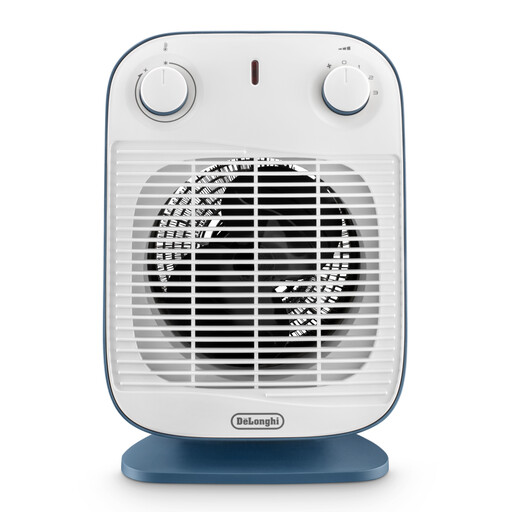
Why it suits this profile: This fan heater has a 2,000-watt output, three heat settings and an adjustable thermostat. That makes it straightforward for anyone who wants to get started without a complicated app or remote control.
The three settings mean you do not have to heat exclusively at maximum power. According to the product information, the overheat protection switches the appliance off if an abnormality is detected.
2,000 watts, three heat settings, thermostat and frost-protection function; suitable for indoor use on a table or floor.

Why it suits this profile: The combination of 2,000 watts, 70° oscillation, remote control, timer and temperature setting from 5–35 °C is ideal for users who want plenty of control options.
The product information gives specific figures for noise, temperature control and safety features. According to DREO’s own research, the intelligent control system can save up to 40% energy; this still depends on how the heater is used and the room itself.
25–42 dB according to the product specification, 12-hour timer, 70° oscillation, tip-over and overheat protection.
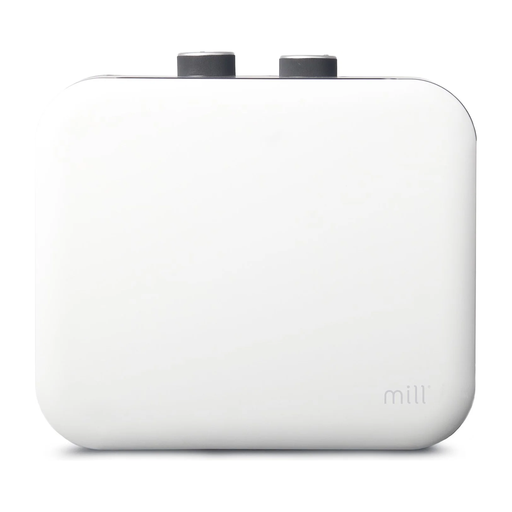
Why it suits this profile: This compact model combines a PTC element with a fan, two settings of 1,200 and 1,800 watts, and a mechanical thermostat. According to the product information, it is designed for regular use in rooms of up to approximately 30 m².
The thermostat and two power settings provide more control than a basic on/off heater. Tip-over and overheat protection are explicitly listed.
PTC heating, mechanical thermostat, compact design, and protection against tipping over and overheating.
A simple calculation can help when comparing models. A 1,500-watt heater uses around 1.5 kWh per hour when running continuously at full power. A 2,000-watt model uses around 2 kWh per hour. Multiply this by your electricity tariff and the actual time the heater is used. A thermostat can reduce average consumption because the appliance does not heat continuously.
Before buying, also check:
We have put together a complete, up-to-date list of products that fully meet these strict selection criteria and the applicable European safety regulations.
That depends on the power rating, how long you use it and your electricity tariff. A 2,000-watt model uses around 2 kWh per hour at maximum power. Use a thermostat, timer or ECO mode to limit unnecessary heating.
Lifespan varies by brand, model and usage. Dust in the air intake, frequent moving and incorrect storage can affect performance. Allow the heater to cool down, unplug it before cleaning and follow the maintenance instructions in the manual.
Only use a model if the manual permits this, and make sure it is placed on a stable surface with plenty of space around it. A timer, tip-over protection and overheat protection are useful features, but do not leave a heater running unattended and never place it next to bedding, curtains or other flammable materials.
