
Vandaag of morgen in huis

Kwaliteit gegarandeerd

Welkomstaanbiedingen ontgrendelen: GRATIS bezorging | Tot 80% korting | Gratis 30 dagen JoyPlus-proefperiode
Download de app
A chilly home office, a brisk bedroom, or a living room that just can't get warm enough? An electric heater is often the quickest solution. But the market is flooded with models that promise the world. Before making a purchase, it's crucial to know what to look for to avoid wasting money on a device that doesn't meet your expectations.
As a Joybuy Product Recommendation Officer, I'm here to help you separate fact from fiction. We'll look at the most common pitfalls and the specifications that truly matter.
Many heaters are marketed with vague claims. These are the three main points to be critical of:
To make the right choice, focus on these three objective criteria.
The power, expressed in watts (W), determines how quickly and effectively a heater can warm a space. A simple rule of thumb for an averagely insulated room is about 85-100 watts per square meter (m?).
The technology determines the user experience.
Modern features make a big difference in usability and energy consumption.
Below are a few models that score well based on their specifications, catering to different needs.
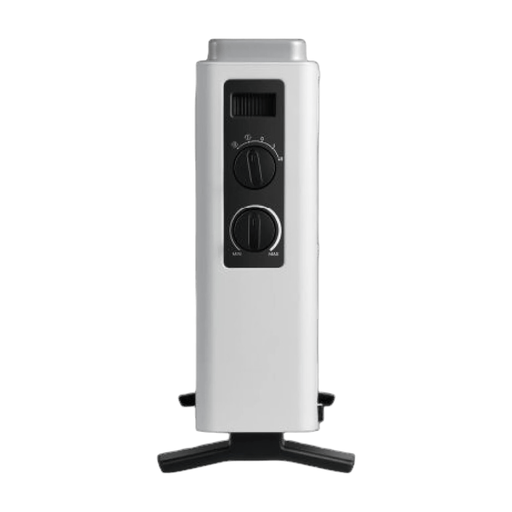
Why This Fits Their Persona: Ideal for those seeking a simple, reliable, and silent heat source for an office or bedroom. No complex features, just effective supplemental heating.
As a convection heater, this model is inherently silent, avoiding the pitfall of a noisy fan. The mechanical thermostat helps regulate energy consumption.
Silent Operation: No fan, making it ideal for quiet spaces. Safety: Equipped with overheat protection.
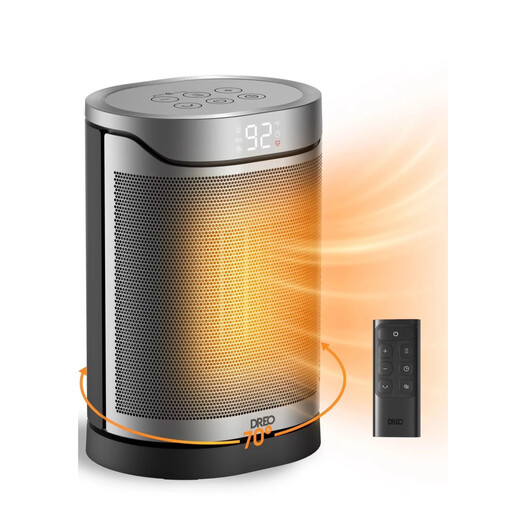
Why This Fits Their Persona: Perfect for those who value comfort and control. Its quiet operation, remote control, and precise thermostat make it ideal for a bedroom or a quiet workspace.
This model tackles the pitfalls of noise and energy waste. According to the manufacturer, Dreo, its DC motor ensures a low noise level (25-42 dB), and the precise thermostat prevents unnecessary power consumption.
Quiet and Fast Heat: Heats up quickly thanks to its ceramic element, yet remains quiet. Full Control: Includes a remote, 12-hour timer, and an adjustable thermostat.
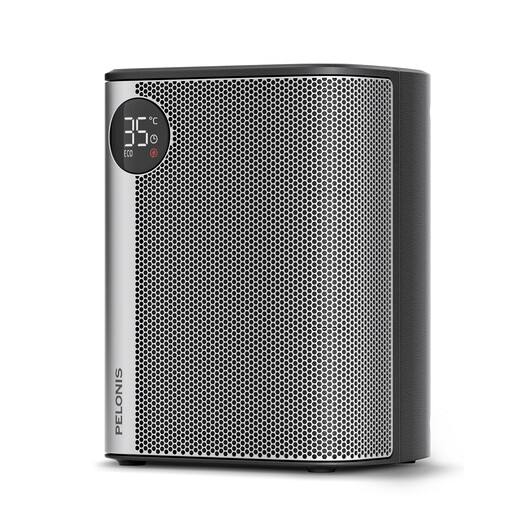
Why This Fits Their Persona: Suitable for those who want to efficiently heat a larger area, like a living room or spacious hobby room, without a sky-high energy bill. The combination of power and smart features is key here.
This model tackles the "energy-efficient" myth with a concrete solution: its ECO mode. This feature automatically adjusts the power based on the ambient room temperature, which genuinely helps to optimise consumption.
Powerful and Efficient: 2000W of power for rapid heating and an ECO mode for efficiency. Comprehensive Features: Includes a 24-hour timer, thermostat, and all necessary safety features.
We have compiled a complete, up-to-date list of products that fully meet these strict selection criteria and European safety regulations.
Consumption depends directly on the power (wattage) and how long the heater is on. The calculation is simple: (Power in watts / 1000) x Number of hours x Electricity price per kWh = Cost. A 1500W heater running for 3 hours consumes 1.5 x 3 = 4.5 kWh. With an electricity price of, for example, €0.30 per kWh, this would cost €1.35. A thermostat and timer are therefore crucial to control costs.
Not necessarily in terms of consumption per hour. A 2000W ceramic heater consumes just as much as a 2000W convection heater. The advantage lies in its efficiency: a ceramic element heats up faster and retains heat better. This means the heater needs to run at full power for less time to reach and maintain the desired temperature, which ultimately leads to lower total consumption.
It is recommended to be cautious. If you plan to use a heater overnight, you must choose a model with all the key safety features:
Also, ensure the heater has clear space around it and is not near bedding, curtains, or other flammable materials. A bathroom heater is specifically designed for damp spaces and should not be used interchangeably in other rooms. Always check the manufacturer's manual for specific safety instructions.
