
Vandaag of morgen in huis

Kwaliteit gegarandeerd

Welkomstaanbiedingen ontgrendelen: GRATIS bezorging | Tot 80% korting | Gratis 30 dagen JoyPlus-proefperiode
Download de app
A chilly home office, a brisk bedroom, or just an extra source of warmth to supplement your central heating? An electric heater is a flexible solution. But the market is flooded with models that promise the world. Before you make a choice, it's wise to look past the marketing buzzwords. Many heaters lead to an unnecessarily high energy bill or simply fail to meet expectations.
Here, we'll highlight the most common pitfalls and provide objective guidance to help you find the right electric heater for your situation.
Manufacturers often use clever terms to promote their products. Don't fall for these common misconceptions:
To avoid a bad purchase, focus on the facts. These three specifications are crucial for making the right choice.
The required power depends on the size of the room and its insulation. A simple rule of thumb for a room with a standard ceiling height (2.5 meters) in a reasonably insulated home is:
For a 15 m? home office, you would need a heater with a power output of approximately 1125W to 1500W to heat the space effectively. A model with adjustable power settings, such as a 2000W heater with a lower 1000W mode, offers more flexibility.
The way a heater distributes heat determines the user experience. The most common types are:
Safety is non-negotiable. A good electric heater must be equipped with at least:
Always check that these two features are explicitly mentioned in the product description.
Based on the criteria above, we have selected a few models that suit different user profiles.
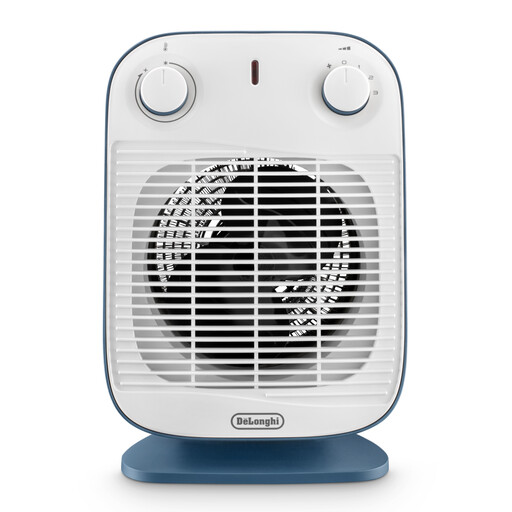
Why This Fits Their Persona: Ideal for a dorm room or as simple supplemental heating. This model provides quick warmth without unnecessary extras. It's a functional, affordable choice from a well-known brand for anyone needing to heat a small space quickly.
This is a straightforward fan heater. No false promises about silence. However, the adjustable thermostat helps manage power consumption, making it an honest choice in its category.
Offers a powerful 2000W output for rapid heating and has an IP21 rating, meaning it's protected against dripping water. Includes overheat protection.
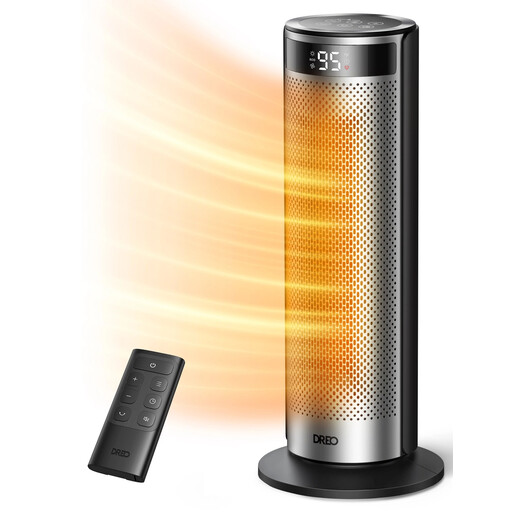
Why This Fits Their Persona: For those seeking comfort and control in the living room or home office. This tower heater combines a modern design with features like a remote control, timer, and a precise thermostat for optimal ease of use.
It tackles the 'silent heater' myth by specifying concrete noise levels (25-42 dB). The 'energy-efficient' claim is substantiated with a smart thermostat adjustable by degree and an ECO mode.
The 70° oscillation ensures wide and even heat distribution. According to the manufacturer Dreo, its Hyperamic technology provides heat-up within 2 seconds. Includes tip-over and overheat protection.
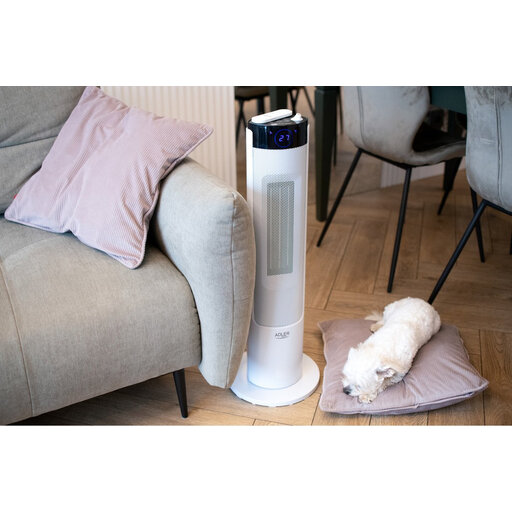
Why This Fits Their Persona: Perfect for those who want more than just heat. This tower heater addresses a common downside of heating: dry air. The built-in humidifier makes this a 2-in-1 solution for a comfortable indoor climate.
Instead of vague claims about 'better air quality,' this model offers a concrete feature: a humidifier with a 1-liter water tank. This is a tangible solution to a real problem.
Combines heating (up to 2200W) with humidification. Features an LCD display, remote control, timer, and the necessary safety features (tip-over and overheat protection).
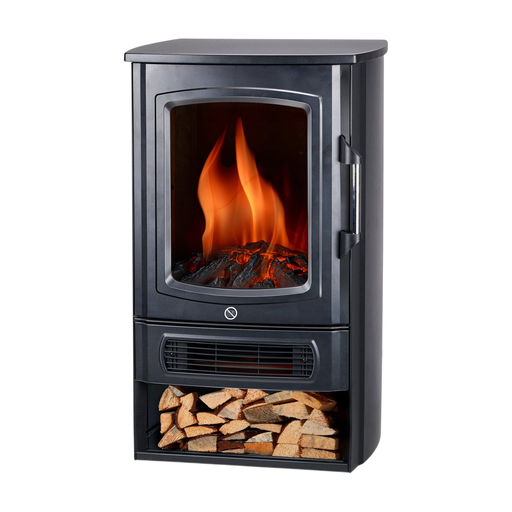
Why This Fits Their Persona: For those who see a heater not just as a functional appliance, but as part of their interior design. This model mimics the look of a classic fireplace, adding ambiance to the room in addition to providing warmth.
The focus here is honestly on the design. The product doesn't promise technological marvels but delivers what it projects: an atmospheric heat source. The flame effect can even be used without heat, purely for ambiance.
The realistic flame effect creates a cozy atmosphere. The heater offers two heat settings (1000W/2000W) and a turbo function for rapid heating. Includes overheat protection.
We have compiled a complete, up-to-date list of products that fully meet these strict selection criteria and Dutch safety regulations.
The cost depends on your current electricity price. The calculation is simple: a 2000 Watt heater consumes 2 kilowatts (kW) per hour. Multiply this by the price per kilowatt-hour (kWh) you pay. For example, with an electricity price of €0.35 per kWh, using this heater at full power costs €0.70 per hour (2 kWh * €0.35). A model with a good thermostat will not run continuously at full power, which reduces the final cost.
Not directly. Both a ceramic and a traditional 2000W fan heater consume 2000W of power. The difference lies in the heat delivery. A ceramic heater has an element that retains heat better and releases it more evenly. This allows the thermostat to turn the heater off sooner while maintaining a comfortable ambient temperature. This can indirectly lead to lower overall consumption, but the power draw is identical.
Yes, provided you choose the right type and follow safety guidelines. For a heater for the bedroom, a silent heater like a convection heater is a good option. If you want faster warmth, choose a ceramic heater with a low specified noise level. Always ensure the model has tip-over and overheat protection. Use a timer to automatically turn the heater off and never place it too close to bedding or curtains. Never cover the heater.
