
Vandaag of morgen in huis

Kwaliteit gegarandeerd

Welkomstaanbiedingen ontgrendelen: GRATIS bezorging | Tot 80% korting | Gratis 30 dagen JoyPlus-proefperiode
Download de app
An electric heater seems simple: plug it in, set the temperature and you’re done. Yet many people buy a model that isn’t suited to their room or how they plan to use it. A 2000-watt heater can warm a room quickly, but it can also use up to 2 kWh per hour when running continuously at full power. And a quiet heater isn’t necessarily suitable for a bedroom if its display lights up brightly or its thermostat isn’t accurate.
In this buying guide, you’ll find out what to look for, which marketing claims to treat with caution and which type of electric heater is right for your needs.
A higher power rating doesn’t mean a heater will warm every room more efficiently. It mainly tells you how much electricity the appliance can use at maximum power. For a small study, 600 to 1500 watts may be enough. For a larger living room or a poorly insulated space, a 1800 to 2000-watt model may be more practical.
Also check the stated room coverage. This depends on factors such as ceiling height, insulation, windows and the outdoor temperature. A claim such as “suitable for up to 20 m²” is an indication from the product description, not a guarantee for every home.
A heater isn’t automatically energy-efficient just because it has an ECO mode. A ceramic heater converts electrical energy into heat, just like other electric heaters. An ECO setting can limit average consumption by adjusting the power or temporarily switching the heater off once it reaches the set temperature.
According to information provided by brands such as PELONIS and DREO, their ECO or adaptive controls can reduce energy use. Treat this as a product claim and focus on the specific features: an adjustable thermostat, multiple settings and a timer.
Overheat protection and tip-over protection are important features, but they don’t make unsafe use safe. Never cover a heater with clothes, towels or blankets. As a general rule, keep it at least one metre away from curtains, furniture, paper and bedding, following the product instructions. Don’t use an electric heater in a damp room unless the model is explicitly designed for this and has an appropriate IP rating.
Look at both the maximum power and the lower settings. A heater with 600, 1200 or 1500-watt settings gives you more choice than a model that only runs at 2000 watts. For quick electric heating in a living room, 1800 to 2000 watts is common. For a desk, small bedroom or study, a compact 600W heater may be enough to warm the immediate area.
A heater with a thermostat switches the heating element on and off to maintain the set temperature. A heater with a timer helps prevent the appliance from running for longer than necessary. A heater with a remote control, app control or display is handy when you’re in bed or on the sofa, but check whether you can also use the basic controls without an app.
For the Netherlands, the plug, mains voltage and user manual are also important. Plug the appliance directly into a suitable socket and avoid using extension leads with high-powered models. Check for the CE mark and read the safety instructions before use.
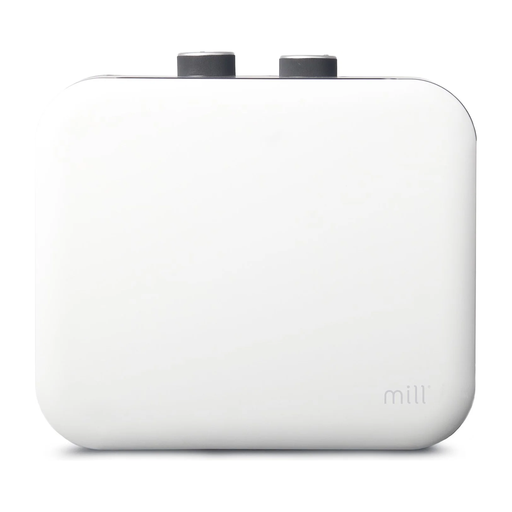
Why it suits this profile: This compact model has two settings, 1200 and 1800 watts, a mechanical thermostat and a stated coverage of up to 30 m². It’s straightforward to use, with no app or complicated settings to worry about.
It isn’t limited to a single high-power setting. The thermostat and two wattage options help you avoid heating continuously at maximum power.
PTC ceramic element, tip-over and overheat protection, portable design and a weight of 2,2 kg.

Why it suits this profile: If you value a wide range of controls, this model offers an adjustable thermostat from 5–35 °C, a remote control, 70° oscillation and a timer of up to 12 hours.
The product information states a noise range of 25–42 dB and lists several safety features. According to information provided by DREO, these include tip-over and overheat protection.
2000 watts, stated coverage of 15–25 m², child lock and a portable tower design.

Why it suits this profile: Designed for bathrooms, this wall-mounted model combines 1400 and 2000-watt settings with a weekly timer, LCD display and integrated towel rail.
The product description states an IPX2 rating and says it is suitable for bathroom use. However, it must be positioned and earthed as instructed in the manual; IPX2 does not make the appliance suitable for direct contact with water.
Programmable weekly timer, thermostat from 10–49 °C, ceramic element and automatic shut-off if the temperature drops suddenly, according to the product information.
We’ve put together a complete, up-to-date list of products that meet these strict selection criteria and the applicable European safety requirements.
Calculate energy consumption with this simple formula:
power in kW × operating time in hours = consumption in kWh
A 2000-watt heater uses 2 kWh when running at full power for one hour. With a thermostat, average consumption may be lower because the element doesn’t need to heat continuously. Only switch the heater on in the room you’re using, and close doors and windows while it’s running. Don’t leave a heater running unattended, and unplug it when you won’t be using it for an extended period.
It can be, if the model has a low noise level, a thermostat and a timer. A fan heater distributes heat quickly, but you may be able to hear it. Also check whether the display can be dimmed, and keep the appliance well away from bedding and curtains.
At full power, a 2000-watt heater uses around 2 kWh per hour. Actual consumption depends on the temperature setting, insulation, operating time and how the thermostat works. Multiply the number of kWh by your current electricity tariff to estimate the cost.
Only if the product information says it’s suitable and the model has an appropriate IP rating. A standard portable heater isn’t automatically suitable for bathroom use. Keep the appliance away from splashes, wet hands and standing water, and always follow the installation instructions.
