
Vandaag of morgen in huis

Kwaliteit gegarandeerd

Welkomstaanbiedingen ontgrendelen: GRATIS bezorging | Tot 80% korting | Gratis 30 dagen JoyPlus-proefperiode
Download de app
An electric heat pad can be a real help on cold days, when you’re working from home, or if you need targeted warmth for your back, neck or feet. Yet the differences between models are greater than the soft outer layer might suggest. Making the wrong choice could leave you with a heating surface that’s too small, an awkward power cable, or a product you barely use because of safety restrictions.
More settings don’t automatically mean more convenience. Also check how long the product stays on, whether it has an automatic shut-off, and whether the controls remain clear during use. A heat pad with three well‑spaced settings can be more practical than a model with more settings but no clear timer.
A surface of 40 x 30 cm is fine for a limited body part, while a heat mat of 40 x 40 cm gives you a bit more room to move. For a bed or for covering several body zones, you’ll need an electric underblanket. So pay attention to the actual dimensions, not just terms like “large” or “full body”.
A wireless heat pad often works with a power bank, but that isn’t always included in the packaging. With the Medisana OL 600 Outdoor Heating Pad, for example, a USB-A power bank is required but not supplied. Also check whether your existing power bank has enough capacity and the right connection.
Look at the number of temperature settings and the shut-off time. The Medisana HP 518 has four heat settings and, according to the product information, switches off automatically after 90 minutes. The Medisana OL 600 has three settings and an automatic shut-off after 20 minutes. That shorter usage time suits outdoor activities or short heating sessions well.
An automatic shut-off is a practical safety feature, but it doesn’t replace supervision. Always follow the instructions for use and don’t use an electric heating product while you’re asleep.
For a heat pad for back and neck, a compact size and a design that’s easy to position are important. A heating mat of 40 x 30 cm targets a smaller area. A square mat of 40 x 40 cm is more flexible if you want to use it alternately on your lap, stomach or back.
If you mainly suffer from cold feet, you’d be better off looking at a heated foot warmer. For warmth in bed, an electric underblanket makes more sense than a small heating pad. That way you avoid buying a product for a purpose its size isn’t suited to.
A removable, washable cover makes regular maintenance easier. Check whether the control or cable needs to be detached first, and at what temperature the cover can be washed. According to the product description, the Medisana HP 518 can be washed at 30 °C once the control has been removed. With the Medisana HP 405, the fleece cover is also removable and washable.
For home use, mains‑powered models are practical. A wireless heat pad with a USB connection is more convenient for travel, sports fields or sitting outside, but you’ll need to provide a suitable power bank yourself. A reusable hot water bottle works without electricity, while disposable heat pads are thrown away after use. Those alternatives therefore have different costs and usage characteristics.
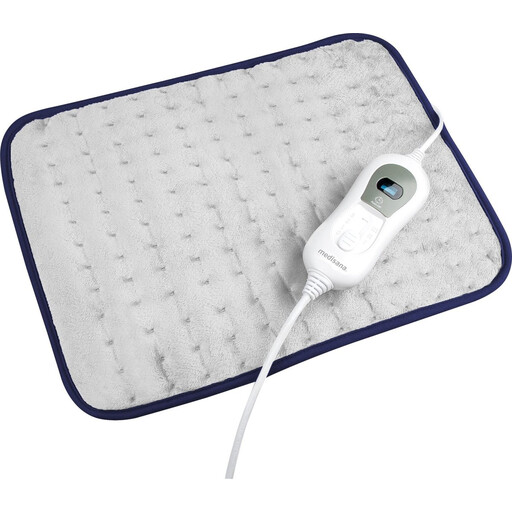
Why this fits the profile: This compact heating pad, measuring 40 x 30 cm, offers a straightforward foundation for home use, with three heat settings and mains power.
The specifications state the size, the 100 W power, the three settings and the automatic shut-off after 90 minutes. So you don’t have to rely on vague marketing terms.
Fleece cover with Oeko‑Tex 100 certification according to the product information; washable cover, detachable cable and overheat protection.
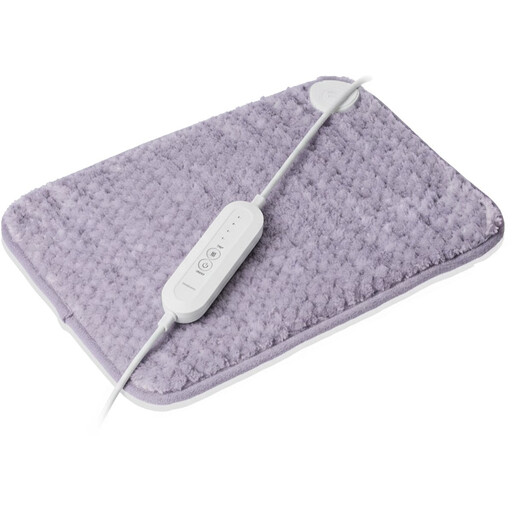
Why this fits the profile: The soft coral‑fleece finish, four heat settings and choice of several colours appeal to anyone who values comfort and a quality feel.
The automatic shut-off after 90 minutes and the stated overheat protection make the safety features verifiable rather than vaguely described.
Four adjustable heat settings; detachable control and washable at 30 °C according to the product description.
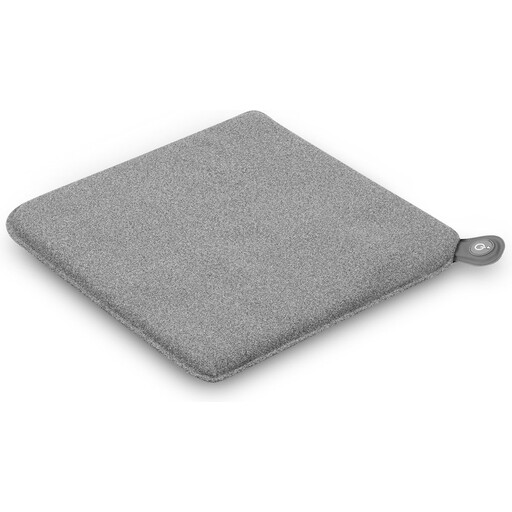
Why this fits the profile: The wireless operation via a USB‑A power bank and the 40 x 40 cm size make it ideal for travel, sport and outdoor use.
The product information explicitly states that the power bank is not included. The 20‑minute shut-off time is also clearly indicated.
Three heat settings; removable, machine‑washable cover with zip and a portable design weighing 310 g.
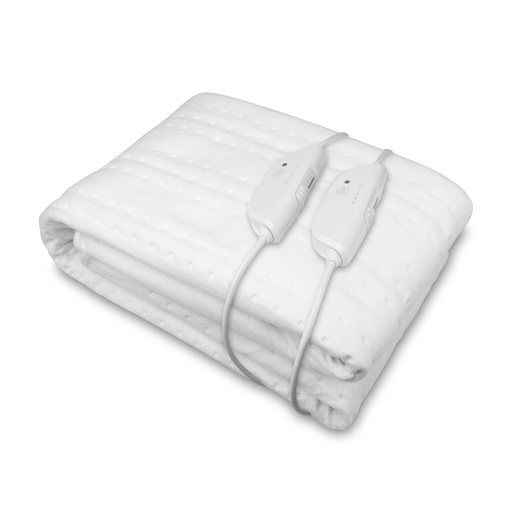
Why this fits the profile: If you want to warm a larger sleeping surface, an electric underblanket measuring 150 x 160 cm is far more suitable than a small heating pad.
The dimensions and its application as an underblanket are clearly described. That means you can judge in advance whether the size will fit your bed.
XL size of 150 x 160 cm; multiple temperature settings, remote control and washable polyester according to the product information.
We’ve put together a full, up‑to‑date list of products that fully meet these strict selection criteria and comply with current European safety regulations.
Always use an electric heat pad flat and unfolded. Don’t place heavy objects on top of it, and keep the control and cable dry. Stop using it immediately if you notice any damage, an unusual smell or visible wear. A heat pad is not a medical device; if you have health concerns or reduced heat sensitivity, it’s wise to consult a healthcare professional.
The power consumption depends on the wattage and the length of use. A 100 W model theoretically uses 0.1 kWh per hour on the highest setting. Your actual consumption may be lower if you use a lower setting. For an exact calculation, multiply the power in kilowatts by the usage time and your current electricity tariff.
That depends on use, storage and maintenance. Regularly check the cable, control, cover and heating zone. Only store the product once it has fully cooled down, and avoid sharp creases. Follow the washing instructions; incorrect washing can damage the electrical components. For the products mentioned, the minimum statutory warranty of two years applies according to the product information.
Don’t use a heat pad while you’re asleep, unless the manual for that specific product expressly allows it. An automatic shut-off, such as after 20 or 90 minutes, is intended as a safety feature and not an invitation to leave the product unattended.
That depends on the purchase price, how long you use it and the cost of energy. An electric model is reusable, whereas disposable heat pads are replaced after a single use. A reusable hot water bottle doesn’t need electricity, but has to be filled with hot water each time. So compare not only the purchase price, but also ease of use, lifespan and maintenance.
