
Vandaag of morgen in huis

Kwaliteit gegarandeerd

Welkomstaanbiedingen ontgrendelen: GRATIS bezorging | Tot 80% korting | Gratis 30 dagen JoyPlus-proefperiode
Download de app
An electric grill can be a handy addition for a quick meal, panini, grilled vegetables, or a tabletop grill for several people. Yet many people buy a model based solely on its wattage or an appealing product claim. This can lead to a grill that is too small, difficult to clean, or less versatile than expected.
With this practical buying guide, you can compare a contact grill, tabletop grill, electric barbecue and teppanyaki grill on features that really make a difference in a British kitchen.
A high wattage does not automatically mean a grill is better suited to how you’ll use it. It mainly tells you about the maximum electrical power and possibly how quickly the appliance heats up. Heat distribution, plate size and thermostat control are at least as important.
A compact model of 800 to 1,000 watts can be suitable for paninis or one to two people. For a large meal with meat, fish and vegetables all at once, a larger surface area with around 1,800 to 2,400 watts is more practical.
An appliance can look spacious in the product photo but have a limited cooking area. Always check the dimensions of the plates, not just the external measurements.
A panini grill with plates measuring roughly 23 × 14.5 cm is handy for a small household. A tabletop grill with 1,250 cm² or a long teppanyaki plate offers more space when you’re cooking at the table with several people.
A grill with a non-stick coating can make releasing food easier, but also check how the plates are cleaned. Are they removable? Can they go in the dishwasher? Is there a fat collection tray? With fixed plates, you’ll often have to rely on carefully wiping them down with a damp cloth.
Also watch out for contradictory information. “Dishwasher-safe parts” does not mean the entire grill can go in the dishwasher. The housing, plug and cable must never be submerged in water.
For everyday grilling, having the right power and temperature control is important. A grill with adjustable temperature is more flexible for different ingredients:
Some contact grills work with automatic programmes. With the Tefal OptiGrill models, according to the product description, a sensor adjusts the cooking to the thickness of the food. This is a product claim from Tefal; check the manual and instructions for correct use.
A ridged plate gives grill marks and is suitable for meat, fish and vegetables. A flat grill plate works better for eggs, pancakes, bacon or smaller ingredients. A multifunctional grill can also function as:
Always check which plates are actually supplied. A model may have multiple functions but sometimes require a separate cooking plate or accessory.
A slanted plate or collection tray can channel fat and meat juices away from the food. This can make cooking less greasy, but it is not a guarantee of a specific nutritional value. According to Tefal’s own product information, the slanted plate on some OptiGrill models can support up to 44% less fat usage. Consider this a brand claim, not a general result for every type of cooking.
Also look out for:
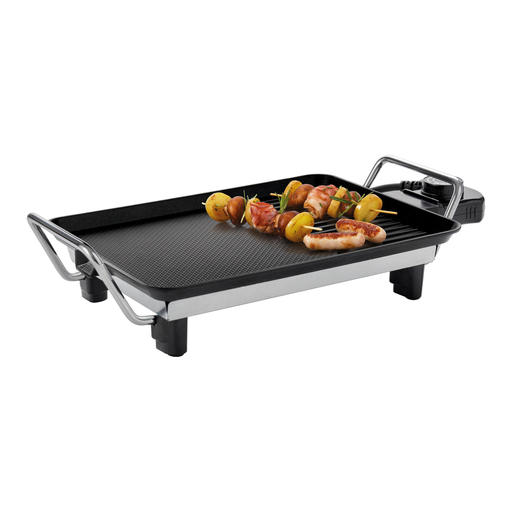
Why this fits the profile: This compact model is designed for simple meals for around two people. With 1,000 watts and a cooking surface of 23 × 14.5 cm, it takes up relatively little space.
The product information states the exact plate size and wattage. This means you can see upfront that this is not a model for large gatherings.
Compact design, vertical storage, non-stick plates and a removable drip tray according to the product specifications.

Why this fits the profile: If you want one appliance for grilling, paninis, barbecuing and oven use, this offers multiple cooking modes and automatic programmes.
The functions are clearly described: two plates, adjustable thermostat, interchangeable plates and an oven setting. The plates are described as dishwasher-safe.
2,100 watts, nine automatic programmes, floating top plate and a cooking surface of 30 × 20 cm.
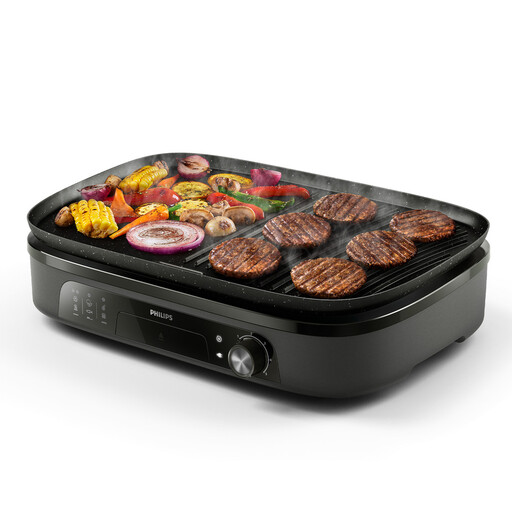
Why this fits the profile: This tabletop grill is designed for families and dining with several people. The 1,250 cm² surface offers space for different ingredients.
Five temperature levels, a removable fat collection tray and detachable plates make operation and maintenance clearly manageable.
2,400 watts, ridged and flat sides, and according to the product information, dishwasher-safe removable parts.
Why this fits the profile: The compact plate measuring 28 × 20 cm is suitable for one or two people, breakfast, vegetables and small portions of meat or fish.
The capacity, 1,000-watt power and five temperature settings are clearly stated. This makes the intended use clear from the start.
A combination of a flat teppanyaki and ridged grilling zone, removable thermostat and a pouring spout for fat drainage.
We have put together a full, up-to-date list of products that fully meet these strict selection criteria and comply with current European safety regulations.
For paninis and small portions, 800 to 1,000 watts can be enough. For a family grill or large tabletop grill, around 1,500 to 2,400 watts is more practical. Always also look at the cooking surface and temperature control.
Only if the manufacturer allows it and the grill is placed on a dry, stable surface. Use an earthed socket and suitable protection against moisture. Do not place the appliance in the rain and check the manual before using it outdoors.
The lifespan depends on use, cleaning and the quality of the non-stick coating. Use wooden or silicone utensils, let the appliance cool down completely and follow the cleaning instructions. A statutory conformity guarantee of at least two years applies in the EU; additional manufacturer conditions may vary.
