
Workshop host running several cooking rounds
If you want participants to cook several small breads side by side, compare the usable shape and dimensions of the cooking surface with the size of each portion of dough.


Choose the cooking surface based on the size of your rolled-out flatbread and how many people need to cook at once. A flat griddle gives you room to cook several smaller breads side by side, while a round pan or griddle is suited to one larger bread or other dishes. Also compare the usable cooking surface, temperature control, location of the socket and cleaning instructions. The stated wattage alone won’t tell you how evenly a particular dough will cook.
If you want participants to cook several small breads side by side, compare the usable shape and dimensions of the cooking surface with the size of each portion of dough.
If you prefer to roll out one larger bread at a time, check that it will fit on the griddle and can still be turned easily.
If you’ll also use the pan for other dishes or with different groups, check the rim, cleaning instructions and electrical connection.
Choose this shape when: you need to cook several smaller breads side by side and want to turn them easily.
Bear in mind: the space you’ll need on the table and the wattage. Tristar lists a cooking surface of 46 × 26 cm and 2000 W for the BP-2965; Princess lists 60 × 36 cm and 2500 W for the 102325. The larger griddle also takes up more space.
Choose this shape when: you want to make other dishes as well as flatbread, or prefer a round cooking surface. Tristar lists a diameter of 30 cm for the PZ-2963; Princess lists a diameter of 40 cm and a supplied divider for the 162365.
Bear in mind: the raised rim may make turning the bread different from using an open griddle. Check whether the divider can be removed if you want to cook one large bread; Princess states that the 162365 is not dishwasher-safe.
Choose this shape when: making one larger, thin bread at a time matters more than cooking several at once. Severin lists a removable round griddle with a diameter of 38 cm for the CM 2199.
Bear in mind: Severin describes the CM 2199 as suitable for crêpes and galettes; this isn’t a cooking test with thicker flatbread dough. The manufacturer also states that the parts are not dishwasher-safe.
| What to consider | What should you check? | Who should pay particular attention? |
|---|---|---|
| Cooking several breads at once | Compare the size of the rolled-out dough with both dimensions of the cooking surface, and leave enough room to turn the breads. | If I want to cook several smaller breads side by side during a workshop, I look at the usable griddle size so participants spend less time waiting for a cooking spot. Around 36% of consumers say throughput is their top buying priority. |
| Room for one larger bread | Measure a rolled-out test portion and compare it with the stated diameter or cooking surface dimensions. | If I want to make one larger round bread, I check that it will fit and can still be turned; the pan capacity or external dimensions won’t tell me that. Around 29% of consumers prioritise the size needed for one individual bread. |
| Using it for other dishes too | Consider whether you’ll use the extra features, whether a divider is removable and how the temperature is controlled. | If I also want to use the pan for other dishes, versatility matters more than having an open cooking surface alone. Around 21% of consumers make use beyond flatbread their top priority. |
| Cleaning and setup | Read the instructions for each part and plan a stable spot near a suitable socket, away from walkways. | If I need to clean and set up the equipment between groups, clear cleaning instructions and a practical place to plug it in are important. Around 14% of consumers put cleaning and setup at the top of their list. |
A capacity in litres doesn’t tell you how many rolled-out breads will fit on the cooking surface.
Compare the size of a rolled-out test portion with the stated diameter or both dimensions of the griddle. This helps you avoid extra cooking rounds because the dough doesn’t fit.
Manufacturers state the wattage, but the product specifications listed here don’t compare cooking results using the same flatbread dough.
Use the stated wattage to check whether the electrical connection at your venue is suitable. Assess the cooking surface, temperature control and recipe separately.
Cleaning instructions vary by model and component.
Before cleaning, check the manual for the pan, removable griddle, lid and electrical parts. Washing by hand may take extra time between cooking rounds.
Offers both a flat griddle and round electric frying pans, so you can compare the two styles.
Offers a flat Table Chef and a round multifunctional frying pan, with different cooking surfaces and uses.
The CM 2199 is a round crêpe and galette griddle to consider if you’re planning to cook one thinner bread at a time.
The Joybuy products below are flat electric griddles and grills. Focus on how much smooth cooking surface you need, and which temperature controls and cleaning method will work for your workshop.
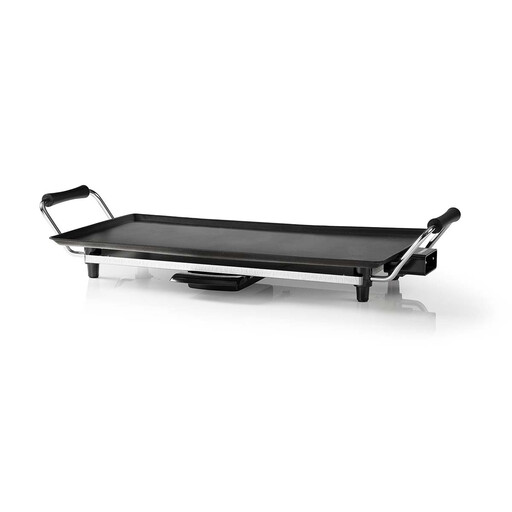 No image available
The flat griddle is an option if you want to cook smaller breads side by side.
Stated cooking surface: 47,5 × 26,5 cm. The product name lists 2000 W; the description mentions an adjustable, detachable thermostat and a non-stick coating.
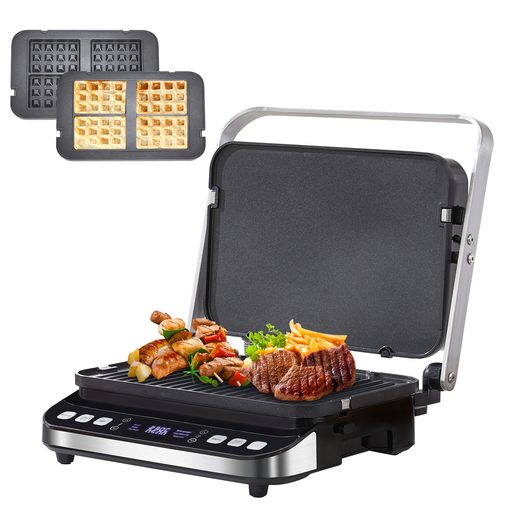 No image available
The combination of a flat griddle and a ridged grill plate may suit you if you want to switch between these cooking styles during the workshop.
The product description lists removable plates, adjustable temperature, a timer and a maximum power of 2000 W. The plates are described as dishwasher-safe.
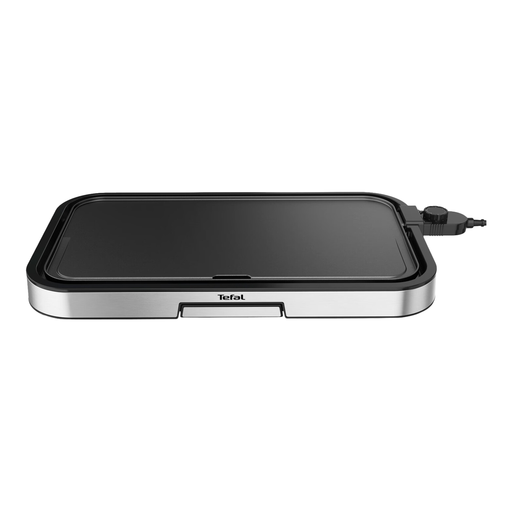 No image available
This plancha is an option if you’re looking for a smooth cooking surface and adjustable temperature for cooking together.
The product name lists 2400 W. The description mentions smooth plates, a non-stick coating and a dishwasher-safe drip tray. According to the product specifications, the griddle itself is not removable; clean it under the tap with washing-up liquid.
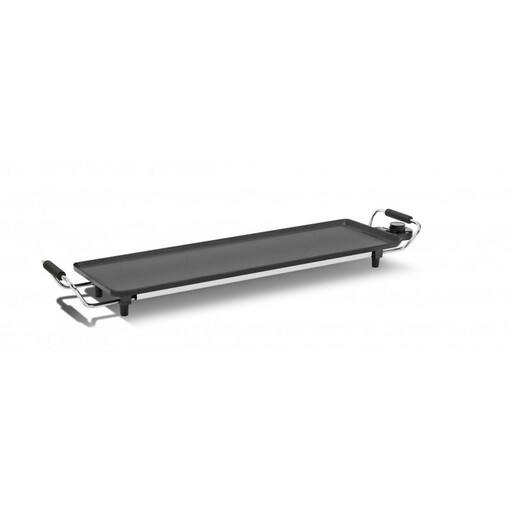 No image available
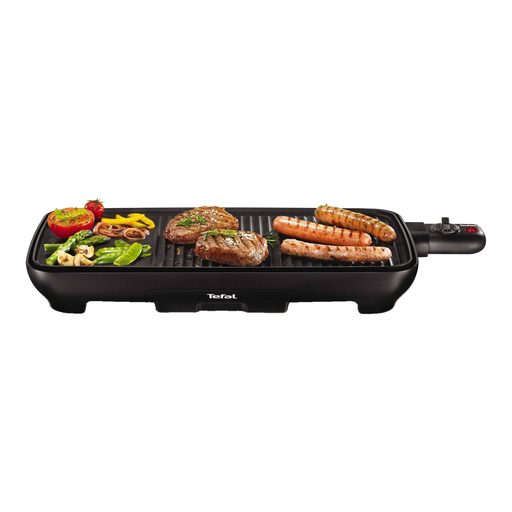
The long, flat shape is worth considering if it suits the table space you have and the size of your dough portions.
Stated cooking surface: 70 × 22 cm. The product name lists 1800 W and five settings; the description mentions an adjustable thermostat and a removable drip tray. The main unit must not be immersed in water, according to the description.
 No image available
This compact plancha may work if you only need a small flat area; check that it’s large enough for your bread.
The product name lists 2000 W. According to the description, one third of the surface is flat and the rest is a grill area. The thermostat is removable and has six settings.
Roll out a test portion first and compare its size with the usable cooking surface. King Arthur Baking gives a bread size of around 6 inches for its own dough and also lists an electric griddle as a cooking option; don’t assume that size will work for a different recipe.
Check the stated wattage and whether the electrical connection at your venue is suitable. Brandweer Nederland advises plugging high-power appliances directly into a socket rather than using a cable reel or extension block; if you use a cable reel, unwind it fully. This advice doesn’t confirm that a particular socket is suitable.
It depends on the model and component. Tristar lists dishwasher-safe removable parts for the BP-2965, while Princess states that the 162365 is not dishwasher-safe. Follow the instructions for your exact appliance and keep electrical parts out of the cleaning process as directed.
No. The Netherlands Food and Consumer Product Safety Authority describes CE marking on applicable electrical products as the manufacturer’s declaration that the product complies with relevant European requirements. It isn’t an independent comparison of cooking results or a guarantee that a particular model is suitable for your recipe. Whether the product requirement applies depends on the product specifications.
According to the Netherlands Food and Consumer Product Safety Authority, businesses that prepare, process or sell food, such as hospitality and craft businesses, must follow an HACCP food safety plan. Whether this applies to a particular workshop depends on how it is organised and what activities it involves.