
Cooking for a crowd
You want to heat chapatis one after another and are mainly concerned with the usable flat cooking surface and how much space the appliance takes up. Compare the cooking surface with the size of your chapatis.


A flat electric griddle is a sensible choice for heating chapatis one after another, provided its usable cooking surface and the space you have on your worktop suit your needs. A round crêpe maker may be more compact, while a deep electric pan is worth considering if you want to use it for other dishes too. Its capacity in litres tells you nothing about the flat space available for chapatis. An adjustable thermostat lets you alter the heat, but the stated specifications don’t prove a particular heating time or how evenly the heat is distributed.
You want to heat chapatis one after another and are mainly concerned with the usable flat cooking surface and how much space the appliance takes up. Compare the cooking surface with the size of your chapatis.
You want to be able to change the setting between batches. Compare the temperature controls on the different models, and don’t assume that wattage alone tells you how well a model will heat chapatis.
You may be looking for a smaller griddle, or want to use the same appliance for other dishes too. The key question is how much flat cooking space you need to heat your chapatis.
Start with the shape and usable cooking surface. Also check whether the temperature is adjustable and how much space the whole appliance takes up. The Netherlands Food and Consumer Product Safety Authority says CE marking is mandatory for electrical consumer products placed on the market in the Netherlands. Check the marking and product details for the specific item you’re considering.
A good fit for: heating several chapatis one after another on a large, flat surface, if you have enough worktop space.
Bear in mind: Tristar BP-2965 and Princess 102300 each have a stated cooking surface of 46 × 26 cm, according to their manufacturers. This doesn’t guarantee how many chapatis will fit.
A good fit for: a more compact griddle, if the diameter of your chapatis fits within the cooking surface.
Bear in mind: Severin gives the plate diameter of the CM 2198 as approximately 30 cm; the manufacturer doesn’t specify its chapati capacity.
A good fit for: cooking chapatis as well as other dishes, especially if you want a lid or a deep pan shape.
Bear in mind: Nedis gives the capacity as 7,0 l, but that doesn’t tell you how many chapatis will fit on the base. Assess the shape of the base separately.
| What to consider | What to check | Who will find this important? |
|---|---|---|
| Usable flat surface | Compare the dimensions of your chapatis with the cooking surface, and measure the overall size of the appliance too. | I want to fit enough chapatis in each batch without them overlapping; around 36% of consumers put usable batch space first. |
| Adjustable heat | Check whether the exact model has an adjustable thermostat or temperature control. | If a batch doesn’t heat the way I want, I want to be able to change the setting for the next one; around 29% of consumers prioritise adjustable heat. |
| Cleaning and safe use | Check the manual to see which parts are washable and how to keep the electrical control dry. | If I use the appliance regularly, I want to know how to clean and use it safely; around 21% of consumers make this their top buying priority. |
| Storage or versatile cooking | Compare the appliance’s full dimensions and the shape of its base; don’t use its capacity in litres as a measure of flat cooking space. | I want an appliance that’s easy to store or can be used for other dishes too, without overlooking the cooking space I need; around 14% of consumers prioritise compactness or versatility. |
Capacity describes the volume of a pan. A chapati needs to fit on the usable flat part of the base.
Compare the shape and dimensions of the base with your chapatis before choosing a deep pan.
Wattage alone doesn’t tell you how long a chapati takes to heat or how evenly the heat is distributed from one batch to the next.
Compare the cooking surface and temperature controls first. Don’t assume wattage alone proves how quickly or evenly the appliance heats.
Cleaning instructions vary by model. Severin says that parts of the CM 2198 aren’t dishwasher-safe; the Nedis manual says to keep the temperature control out of the water.
Check the manual for the exact model and keep any removable electrical control dry.
The BP-2965 is a flat electric griddle with a stated cooking surface of 46 × 26 cm. Compare those dimensions with your chapatis and the space available on your worktop.
The 102300 Table Chef Pro Classic is a flat griddle with a stated cooking surface of 46 × 26 cm.
The CM 2198 is a round crêpe maker with a diameter of approximately 30 cm, according to Severin.
The FCSP110EBK40 is a deep electric pan for anyone who also wants to prepare other dishes in the same appliance.
This selection includes flat electric griddles and crêpe makers for heating chapatis in batches. Compare the shape and stated dimensions of the plate with your chapatis. Also check the CE marking and product details for the specific item you’re considering.
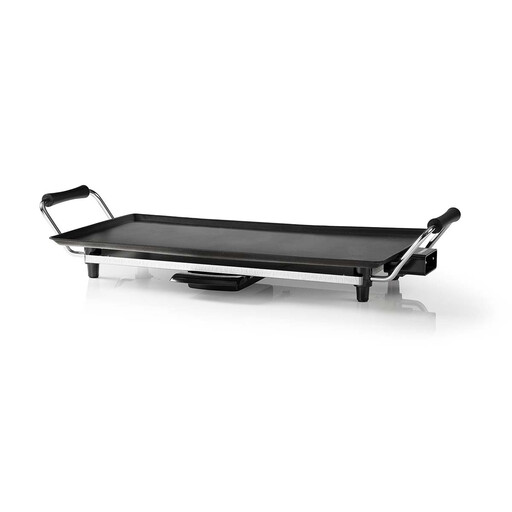 No image available
The stated plate dimensions give you a useful starting point for comparing the griddle with the chapatis you want to heat.
Cooking surface: 47,5 × 26,5 cm. Power: 2000 W. The product information lists a non-stick coating, an adjustable thermostat, cool-touch handles and a detachable drip tray.
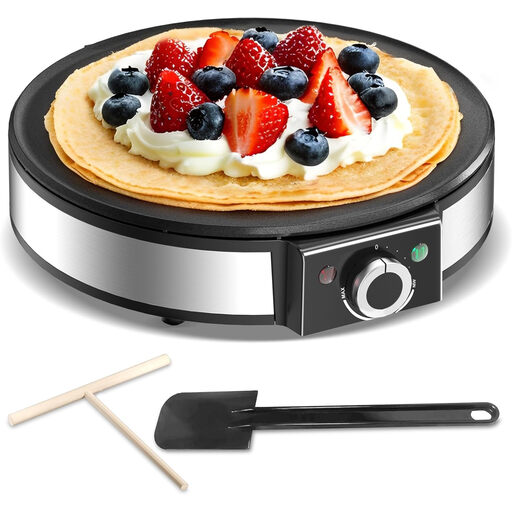 No image available
The temperature control and flat plate are worth considering if you’re thinking about using a crêpe maker to heat chapatis.
The product information lists a large non-stick plate, temperature control, a spatula and a batter spreader.
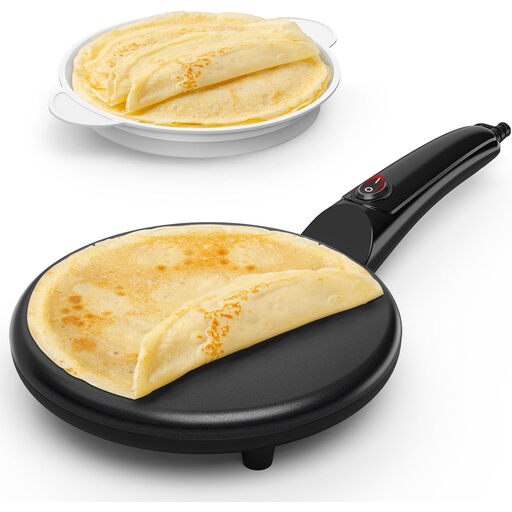 No image available
A flat crêpe plate may work for chapatis if its dimensions suit the size of your bread; check the measurements before buying.
The product information lists a large non-stick plate and a handle. No plate dimensions are provided.
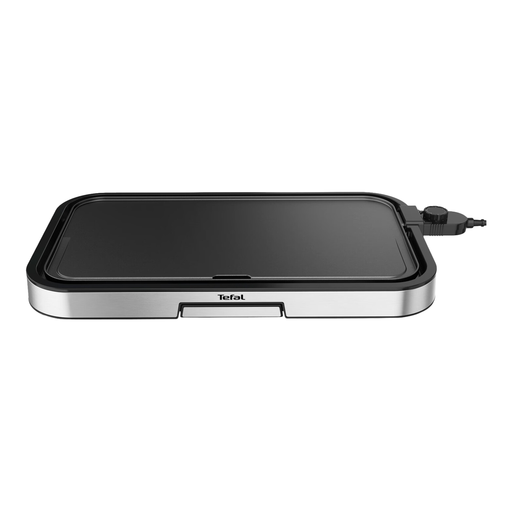 No image available
This flat plancha is worth a look if you’re after a generous cooking surface. Check the exact dimensions before estimating how many chapatis will fit.
Power: 2400 W. The product information lists an XXL cooking surface, adjustable temperature and a smooth non-stick plate.
 No image available
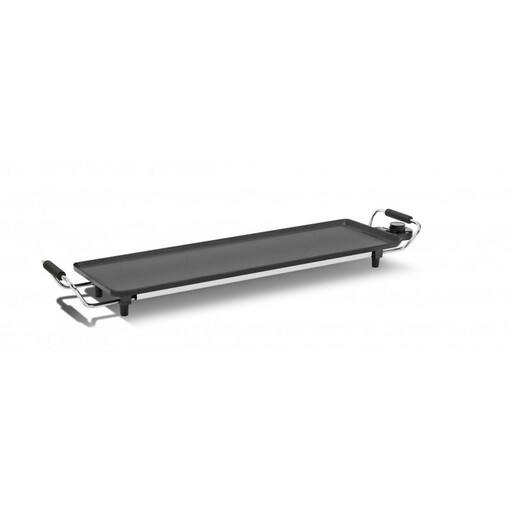
The long plate may suit back-to-back batches if its 22 cm width works for your chapatis; check how much space the appliance takes up.
Cooking surface: 70 × 22 cm. Power: 1800 W. The product name lists five temperature settings and says it’s suitable for 3 to 6 people; this isn’t a stated chapati capacity.
Measure your chapatis and compare them with the shape and dimensions of the cooking surface. A pan’s stated capacity in litres doesn’t measure its flat cooking area, and the chapati capacity of the models mentioned hasn’t been measured.
Follow the manual for the exact model. The Nedis manual for the FCSP110EBK40 says to place the appliance on a stable, heat-resistant surface, never leave it unattended and let it cool before moving it. Check which parts are washable for each model, and keep any detachable electrical control dry.
The Voedingscentrum advises letting leftovers cool within two hours, refrigerating them and reheating them until piping hot all the way through. Its specific advice for opened, unfilled roti is to keep it in the fridge for two days; don’t automatically apply this to filled chapatis or products with different storage instructions on the packaging.
When you buy from a business online, you’re often entitled to a 14-day cooling-off period, according to the Dutch government. You’re also entitled to a product that works as it should. The Dutch government says there’s no fixed statutory guarantee period in the Netherlands; if a product is faulty, contact the seller.
Yes. The Netherlands Food and Consumer Product Safety Authority says CE marking is mandatory for electrical consumer products placed on the market in the Netherlands. Check the marking and product details for the specific item you’re considering. CE marking doesn’t mean that every appliance has undergone a compulsory independent inspection.