
Workshop host running several batches
You want to match the tier space and water management to back-to-back groups. The total capacity in litres does not tell you how many suitable portions you can actually prepare in each batch.


Start by checking the dimensions of your rice cake mould and the space needed for steam to circulate. A rice bowl or stated capacity does not guarantee that your recipe set-up will fit. Then consider how much you want to prepare in each batch and whether you would benefit most from multiple tiers, the option to top up the water, easy cleaning or a compact design.
You want to match the tier space and water management to back-to-back groups. The total capacity in litres does not tell you how many suitable portions you can actually prepare in each batch.
Your recipe calls for a mould or cloth, so the available internal space and room for steam to circulate matter more than a rice programme alone.
You need a set-up that fits on your available worktop and is practical to clean and store after the workshop.
| What to consider | What should you check? | Who is this important for? |
|---|---|---|
| Usable space per batch | Measure the mould, the available height and the usable base area of each tier; check that steam can circulate around your set-up. | If you are running several batches, you will want to know how many moulds fit at once; around 26% of consumers prioritise usable portions per batch. |
| Fit for your recipe | Choose your recipe first and measure the mould it calls for; try the complete set-up before the workshop. | Your rice cake mould or cloth needs to fit properly in the steamer; around 26% of consumers prioritise a fit with their recipe. |
| Water and controls | Check the timer for the exact model and whether the manufacturer allows you to top up the water while steaming. | For back-to-back batches, you will want to manage water and timing carefully; around 21% of consumers prioritise uninterrupted operation. |
| Cleaning and serving | Check which parts the manufacturer says are dishwasher-safe and plan how to serve or quickly cool the rice cakes once they are ready. | Afterwards, you will want to clean the parts easily and handle any leftovers safely; around 16% of consumers prioritise cleaning and safe food handling. |
| Worktop space and power supply | Check the dimensions of the appliance and set-up, its stated power rating and the power supply available at the venue. | On a small worktop, the steamer needs to fit without you overlooking the available power supply; around 11% of consumers prioritise space and power. |
Capacity in litres does not tell you whether your mould will fit on the base, have enough clearance or leave room for steam to circulate. You may need an extra batch if your set-up does not fit.
Measure the usable internal space of each tier and try the complete recipe set-up before the workshop.
A supplied rice bowl does not confirm that the mould and cloth in your rice cake recipe will fit. You may need a separate mould that is suitable for the intended food contact.
Choose your recipe first, then check which mould and support will fit the exact model.
Capacity and programmes alone say nothing about the conditions for repeated or professional use, or whether the workshop venue has a suitable power supply.
Check the manual and terms of use for the exact model. Assess any Netherlands Food and Consumer Product Safety Authority (NVWA) requirements based on the actual workshop arrangements.
The Convenient Series VC502D10 is worth looking into if you are preparing several workshop batches.
The KITCHENminis 0415090011 is designed for those who want to set two smaller batches separately.
The 11582NL multifunction food steamer is worth considering if tier space per batch is important.
The Cook@Home 19270-56 offers a multi-tier set-up worth considering as a point of comparison.
The FS 5100 is worth considering if separate drip trays and compact storage are important to you.
These product options are relevant for steaming during a rice cake workshop. Check that your mould fits, how the tiers are arranged and how much room the set-up needs for your recipe.
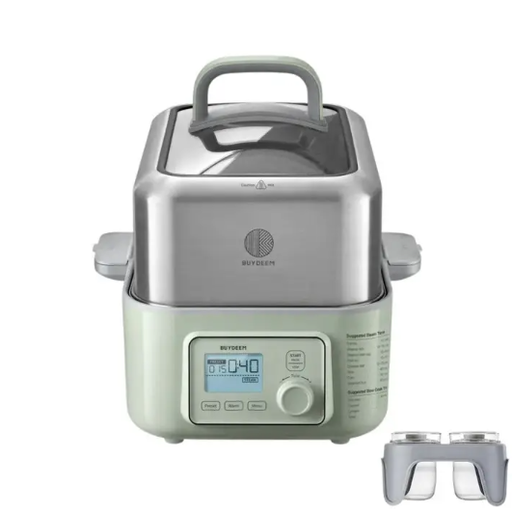 No image available
Worth considering if you want to steam during the workshop and use several cooking components; check that your rice cake mould fits in the steaming tier.
The product name states a capacity of 5 litres and a stainless steel steaming tier. The product description also mentions a ceramic plate and a glass casserole pot.
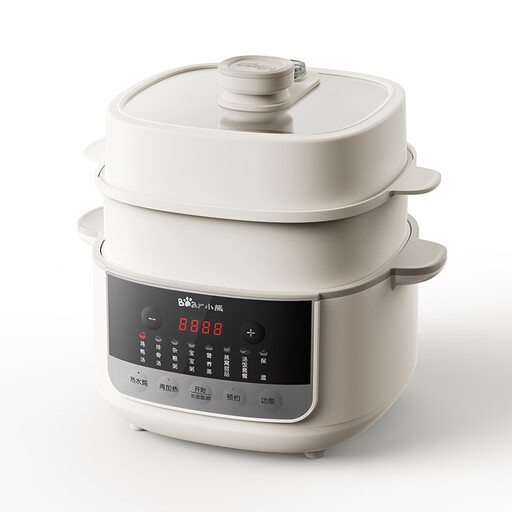 No image available
The steaming basket and separate pots offer different configurations to consider for a workshop; check the dimensions before choosing a rice cake mould.
The product description lists a 2.5-litre main pot and four small pots, each with a capacity of 0.4 litres, as well as a steaming basket.
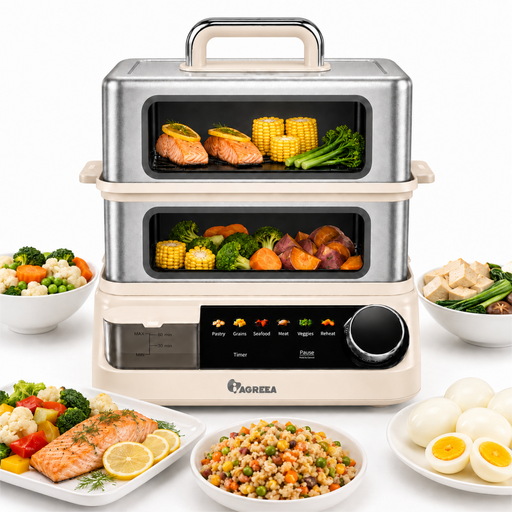 No image available
The two-tier set-up may be useful if you want to steam different foods at the same time; measure the space available for your mould on each tray.
The product name states a capacity of 14 litres and 2,000 W. The product description lists two 300 × 230 mm trays, a 2.5-litre external water reservoir and six programmes.
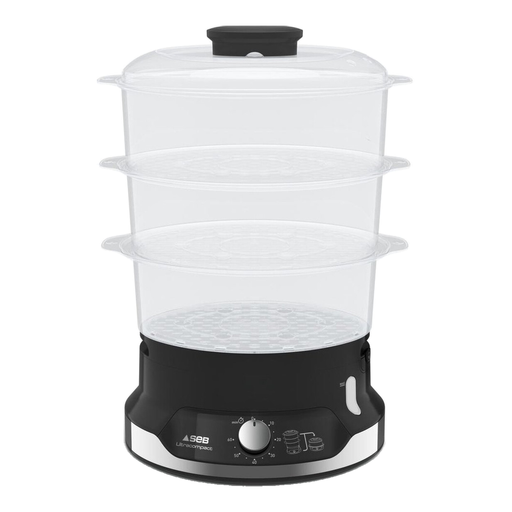 No image available
A model with stackable tiers worth considering if you want to divide up several batches; check that your chosen mould fits in a tier.
The product name states 800 W, 9 litres and three tiers. The product description mentions a timer of up to 60 minutes and the option to top up the water while steaming.
 No image available
Could be worth a look if you want to compare the listed cooking functions; check that your chosen recipe mould fits in the removable bowl.
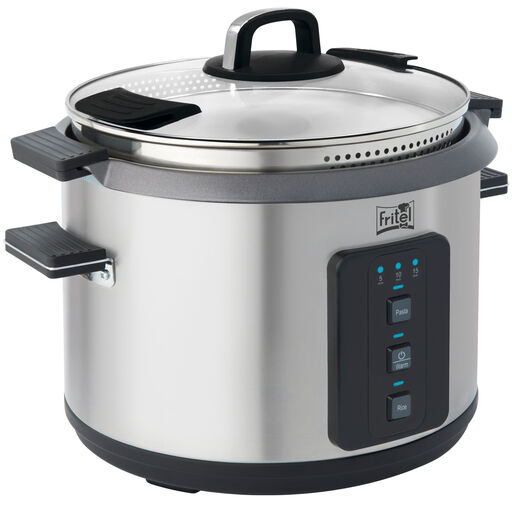
The product name states 6 litres, 1,100 W, three functions and a removable bowl. Steaming is listed as one of the functions.
Not without checking the recipe and your set-up. Tefal lists a rice and pulses programme for the VC502D10, while the rice cake recipe consulted uses a mould and cloth. So a rice programme does not confirm that your mould will fit or indicate the right quantity and cooking time.
Plan how to store them separately from your choice of appliance. The Netherlands Nutrition Centre recommends cooling leftovers quickly to 4 °C and keeping them refrigerated for no more than two days.
Do not assume this is safe without checking: compare the stated power rating with the power supply available at the venue. The Fire Service advises plugging high-power appliances directly into a socket rather than using a cable reel or extension lead. Also check the venue’s requirements for your workshop set-up.
This depends, among other things, on how the workshop is run and whether you sell food. According to the Netherlands Food and Consumer Product Safety Authority’s guidance, you need to register if you sell food several times a year; if you sell food once a year, the guidance says registration is not required. For multiple sales, the NVWA also describes a food safety plan or hygiene code. Assess the requirements based on your circumstances.
Check whether replacement tiers or a rice bowl are available for the exact model and what the seller says about servicing. For a consumer purchase, your statutory warranty rights against the seller apply alongside any manufacturer’s warranty; in the Netherlands, there is no fixed general period for how long a product should reasonably last.