
Vandaag of morgen in huis

Kwaliteit gegarandeerd

Welkomstaanbiedingen ontgrendelen: GRATIS bezorging | Tot 80% korting | Gratis 30 dagen JoyPlus-proefperiode
Download de app
An electric food slicer can be useful if you want to slice bread, cold meats, cheese, vegetables or fruit into evenly sized slices at home. However, models vary considerably in slicing thickness, size, safety features and ease of cleaning. A low price also says little about how convenient a machine is for everyday use.
A higher wattage does not automatically mean that a machine is better suited to your kitchen. The blade design, drive system and stability on the worktop also play an important role. For bread and softer foods, a suitable serrated blade and an easily adjustable carriage are particularly important.
Also note the difference between an electric slicer and a food chopper. A food chopper uses rotating blades and usually cuts ingredients into smaller or less evenly sized pieces. It is suitable for foods such as onions, herbs or mince, but it does not replace a bread slicer or a cheese and meat slicer.
Not every appliance can produce wafer-thin slices. So check the range in millimetres. A setting of 0-15 mm allows for thin slices of cold meats or cheese as well as thicker slices of bread. In practice, the result also depends on the food’s hardness, shape and temperature.
Crumbs and food residue quickly collect around the blade and carriage. A fixed blade or housing that is difficult to reach can make daily maintenance unnecessarily cumbersome. For a home bread slicer, a removable carriage or detachable blade is therefore a practical feature to look for.
A folding food slicer can also save space. However, check that the appliance stands securely when unfolded and that the folded design does not expose any vulnerable parts.
First look at the adjustable range, then at the blade diameter. A larger blade can be useful for wide loaves or larger pieces of meat, but it often takes up more space too. According to the product specifications, the FRITEL SL 3110 has a 17 cm serrated stainless steel blade and a slicing thickness of 0 to 15 mm.
Precise thickness adjustment is important for thin cold meats and cheese. For bread, you should also consider whether the carriage is long enough and whether it holds the food securely while slicing.
A food slicer should be placed on a flat, stable surface. Non-slip feet, a broad base and a smoothly moving carriage help you guide the food past the blade in a controlled way. A collection tray can catch crumbs and slices as they fall.
Pay attention to the controls: a safety switch, momentary or continuous operation and a sturdy food holder are more useful than a long list of marketing features. A child-safe on/off switch reduces the risk of accidental activation, but children must not operate the appliance and supervision is still required.
A removable stainless steel blade is easier to clean than a fixed blade. Always check the instructions to see which parts must be washed by hand. The motor housing must not be immersed in water.
The FRITEL Slicer SL 3110 is offered with a two-year warranty period. For each model, check the current warranty terms, included accessories and instructions for use in the Netherlands.
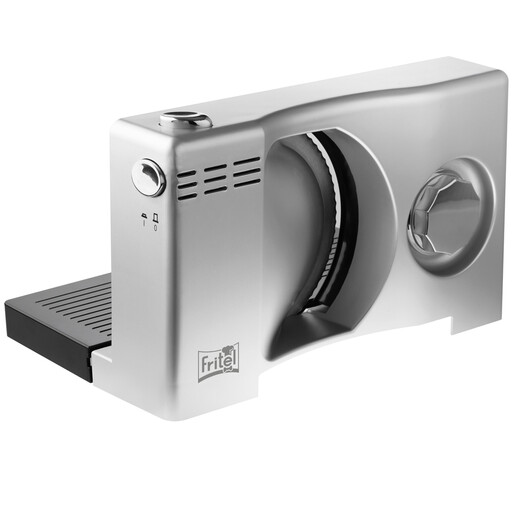
Why it suits this profile: This model combines adjustable slicing thickness with a folding design. It is therefore suitable for households that occasionally slice bread, cheese or cold meats and have limited cupboard space.
The product specifications list a range of 0-15 mm, a removable carriage and a removable serrated blade. This makes the key purchasing information easy to verify.
100 W motor with drive system, 170 mm blade diameter, folding design and plastic collection tray.
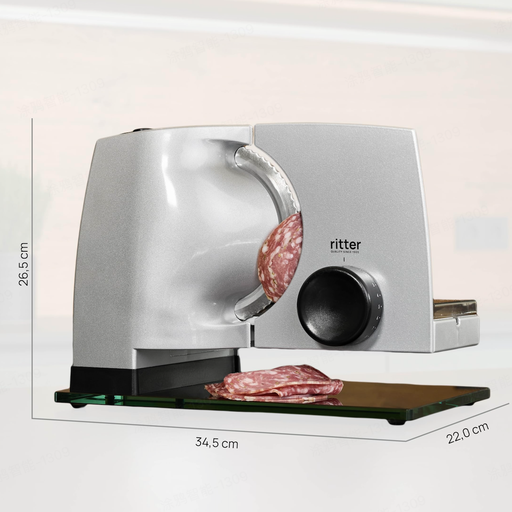
Why it suits this profile: This model is aimed at users who regularly slice different types of food and value quality materials, ease of use and a wide range of thickness settings.
The product information mentions a detachable carriage, a safety glass plate and both momentary and continuous switches. This addresses maintenance, stability and control.
Serrated blade, slicing thickness of up to 20 mm, metal construction and an 18 cm cutting path according to the product description.
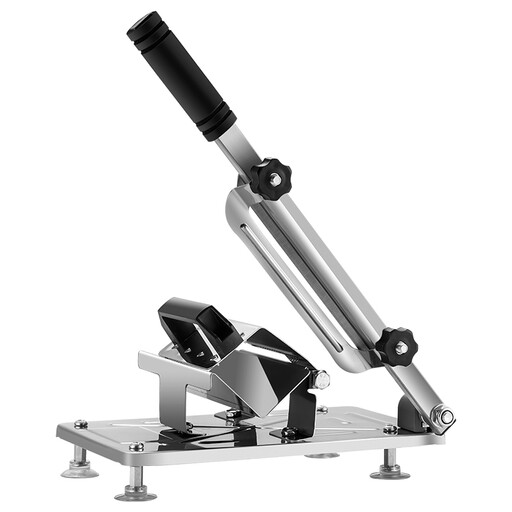
Why it suits this profile: If you are mainly looking for a meat slicer for larger or longer pieces, you can compare this model as a specialised option. However, check the available technical information and dimensions before purchasing.
The name and product category make it clear that this is a meat slicer. So compare the blade size, slicing thickness, carriage and safety features with your intended use beforehand.
Stainless steel construction according to the product name and an extended design. The available product specifications should determine your final choice.
A bread slicer is not intended to process frozen or exceptionally hard products unless the manufacturer expressly states otherwise. Do not use the machine continuously for longer than specified in the instructions.
We have put together a complete, up-to-date list of products that fully meet these strict selection criteria and the applicable European safety regulations.
That depends on the blade and the construction. A serrated blade is often used for bread and, according to the product description, may also be suitable for cheese and cold meats. Always check the permitted uses, blade diameter and carriage length.
A range of 0-15 mm is suitable for many household applications: thin slices for cold meats and cheese, and thicker slices for bread. If you want to process extra-thick slices or larger pieces, you can compare a model with a range of up to 20 mm.
Consumption depends on the motor power and how long the machine is used. A 100 W model running for a few minutes at a time uses relatively little electricity. More importantly, only use the machine when necessary and unplug it after use.
