
Vandaag of morgen in huis

Kwaliteit gegarandeerd

Welkomstaanbiedingen ontgrendelen: GRATIS bezorging | Tot 80% korting | Gratis 30 dagen JoyPlus-proefperiode
Download de app
An electric food slicer can be handy for thinly sliced cold meats, bread, cheese, vegetables and fruit. It helps you work faster and set the slicing thickness more precisely than you can with an ordinary kitchen knife. Even so, many consumers buy a model that disappoints after just a few uses.
The main problems usually aren’t down to power alone. A machine may seem powerful enough, for example, but still be impractical because the blade is difficult to clean, the cutting surface is too small or there isn’t enough protection for your fingers. Use these points to compare electric food slicers based on practical features rather than marketing claims.
Higher power sounds appealing, but it doesn’t tell you everything about how a machine will perform day to day. The motor gearing, blade diameter and stability of the machine all play a part too. For regular use, a sturdy housing, non-slip feet and a smoothly moving carriage are just as important.
Also check the recommended operating time. According to the product information, the Fritel SL 3710 can run for a maximum of 10 minutes at a time, followed by 30 minutes to cool down. This makes it suitable for normal portions, but less suited to long slicing sessions.
A serrated blade can be suitable for bread and a range of soft or firm foods. For wafer-thin cold meats or smooth slices of cheese, a smooth blade may be more practical. Some models are therefore supplied with two blades.
Check whether the blade can be removed too. A removable blade and a detachable carriage make cleaning easier. This is important if you switch between slicing bread, raw vegetables and cold meats.
An electric food slicer has a sharp, fast-spinning blade. A food holder or finger guard supplied with the machine isn’t an optional extra; it’s essential. Always use the holder when the piece of food gets smaller.
Before use, check that:
The adjustable slicing thickness determines how many different tasks the machine can handle. A range of 0 to 15 mm is enough for many household uses. You can use it to slice bread, cheese, vegetables and cold meats, for example.
A model with a range of up to 20 or 23 mm gives you more flexibility for thicker slices. Don’t just look at the maximum setting: check how precisely the dial adjusts and how the carriage feeds food towards the blade.
A larger blade diameter can accommodate wider items, but it also means you’ll need enough room to use and store the machine. The Fritel SL 3710 has a blade diameter of 190 mm, while the Fritel SL 3110 has a 170 mm blade.
A serrated blade is useful for bread. A smooth blade may be better suited to fine cold meats and some types of cheese. If you slice a variety of foods, you could choose an all-purpose slicer with two blades, such as the Severin AS 3915. According to the product information, it comes with a smooth blade and a serrated blade.
A metal construction generally feels sturdier than a model made mainly of plastic, but the overall design is what matters most. Look for:
When choosing a professional food slicer for home use, stability, maintenance and the availability of parts are especially important. When buying, check which accessories and care instructions the manufacturer lists.
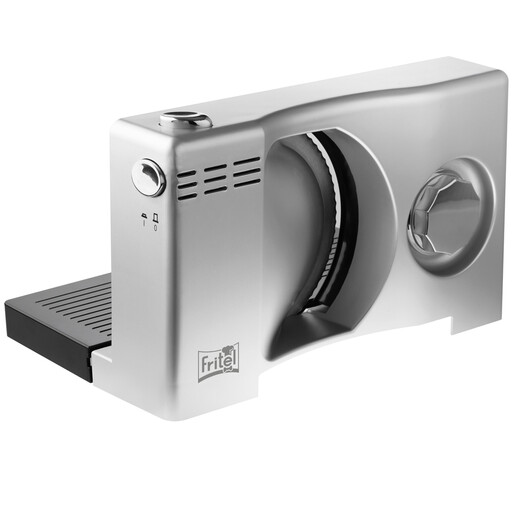
Why it suits this type of user: This compact model is ideal for households that want to slice bread, cheese, cold meats, vegetables or fruit from time to time and have limited storage space.
Its foldable design takes up less storage space. The child-safe on/off switch and food holder help make it safer to use.
Slicing thickness of 0-15 mm, serrated stainless steel blade, detachable carriage and product weight of 2,566 kg.
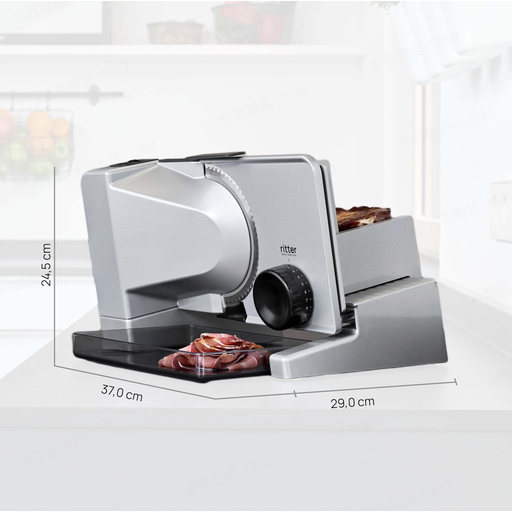
Why it suits this type of user: This model is a good fit for home cooks who slice food often and value a wide range of thickness settings, a metal construction and greater control over operation.
The product description lists a smooth blade and a serrated blade, a safety momentary switch and a separate setting for continuous operation.
Slicing thickness of up to 23 mm, a cutting path of 24 cm, metal construction and electronic speed control according to the product specifications.
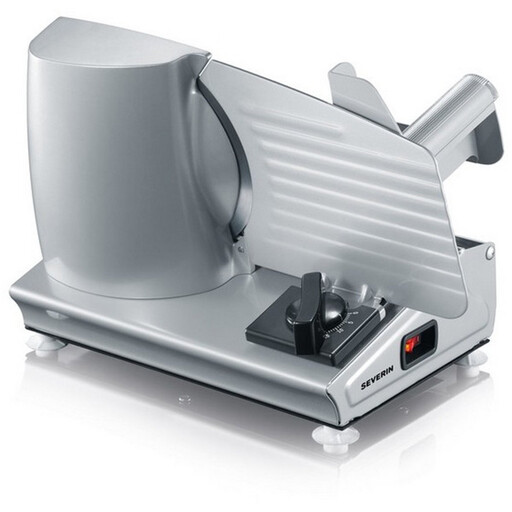
Why it suits this type of user: This all-purpose slicer is a good choice for people who regularly prepare bread, cheese, cold meats and other ingredients, and want to use different types of blade.
The set includes a smooth blade and a serrated blade. The metal sliding plate, finger guard and rubber feet help prevent practical safety and stability issues.
180 watt power, continuously adjustable slicing thickness of 0-15 mm, tilting carriage and a 131 cm cable.
A Fritel slicer is worth considering if you’re looking for a compact model with straightforward controls for occasional to moderate use with bread and cold meats. With a range of 0-20 mm, the SL 3710 offers a little more flexibility than the SL 3110, but its instructions recommend cooling breaks during longer sessions.
A Severin slicer with two blades is practical if you regularly switch between bread and meat. Check which blade is suitable for the food before use, and unplug the appliance before changing blades.
A Ritter slicer may suit you if you’re looking for a metal design, a larger cutting area and extra settings. The Ritter Sono¹ has a stated slicing thickness of up to 20 mm, a cutting path of 18 cm and a detachable carriage. The right choice will depend on your available worktop space, how often you’ll use it and your budget.
If you’re specifically looking for a slicer for bread and cheese, focus on the blade supplied, the carriage and how easy it is to clean. For a cold meat slicer, fine thickness settings and a smooth blade are often more important than a high wattage alone.
We’ve put together a complete, up-to-date list of products that meet these strict selection criteria and the applicable European safety regulations.
Yes, if the product description lists bread as a suitable food and the machine has an appropriate blade, usually a serrated one. Don’t use an unsuitable or damaged blade for crusty bread. The food holder is still essential when the piece of bread gets smaller.
Switch off the appliance, unplug it and wait until the blade has come to a complete stop. Only remove parts that the manual says can be detached. Don’t clean the motor housing under water. A removable blade and detachable carriage make maintenance easier.
Energy use depends on the power rating and how long you use the machine. A 100-watt model running for a few minutes uses less energy per session than a 180-watt machine running for a long time. So think about your own slicing routine and, where possible, stick to the recommended short sessions rather than leaving the machine running continuously when you don’t need to.
