
Vandaag of morgen in huis

Kwaliteit gegarandeerd

Welkomstaanbiedingen ontgrendelen: GRATIS bezorging | Tot 80% korting | Gratis 30 dagen JoyPlus-proefperiode
Download de app
An electric food chopper can take care of a great deal of chopping, from onions and herbs to nuts, vegetables, sauces, purées and meat. However, models vary considerably in capacity, blade design and ease of use. A compact mini chopper can be useful for a single portion, while a multifunctional chopper is better suited to families or larger amounts of preparation.
The product name does not tell you everything. Pay particular attention to the following common pitfalls.
Higher power does not automatically mean that every ingredient will be processed more effectively. The result also depends on the blade shape, how the blades are positioned in the bowl and how you add the ingredients. A 200-watt model may be suitable for herbs and soft vegetables, but less appropriate for regular use with meat or hard nuts.
Always check the combination of power, blade material, recommended ingredients and maximum operating time.
A 1.5-litre bowl does not always have room for 1.5 litres of ingredients. Manufacturers sometimes state the total capacity, while the practical filling capacity is lower. Overfilling can result in uneven chopping, leaks or additional strain on the motor.
For small portions, a mini chopper of around 0.5 litres is often sufficient. For a family, models with a capacity of 1 to 2 litres are more practical. Also check whether the bowl has measurement markings.
Sharp blades, a blade shaft that is difficult to reach or a motor unit that cannot be exposed to water can make daily use less convenient. Check whether the bowl, lid and blades are removable and whether the product information confirms that they are dishwasher-safe.
An electric kitchen appliance should only operate when the bowl and lid are correctly fitted. Unplug the appliance before removing parts or cleaning it. The blades remain sharp on every model, even when they are dishwasher-safe.
The stated power is usually expressed in watts. The models in this selection range from 200 watts to 600 watts for general-purpose food choppers. Short pulses are often sufficient for soft ingredients. If you regularly process meat, nuts or firmer vegetables, look for a higher wattage and multiple speed settings.
An appliance with one speed is straightforward to use. Two speeds or a pulse function give you more control over the texture. A low speed may be suitable for soft ingredients, while a higher setting may be intended for firmer foods. Always follow the instructions.
A food chopper with a glass bowl is transparent, allowing you to monitor the texture while chopping. According to the product specifications of various models, glass is less likely to absorb odours and stains than some plastic bowls, but it is heavier and can break.
Plastic bowls are often lighter and suitable for everyday use. When preparing baby food, purées or liquid mixtures, check whether the manufacturer states that the appliance is suitable for these purposes. Hot ingredients are not permitted in every model.
Stainless steel blades are a popular choice for a vegetable chopper and food processor. Do not only consider the material; also look at the number and shape of the blades. A four-blade or multi-layer system can reach ingredients at different heights in the bowl. This can help produce more even results, but the preparation method remains important: cut large pieces into smaller ones first and use short pulses.
A standard meat and vegetable chopper is not the same as a specialised meat grinder. A meat grinder with grinding plates is specifically designed for mincing meat. A food chopper may chop or finely process meat according to the product description, but it is not always suitable for large quantities or prolonged use.
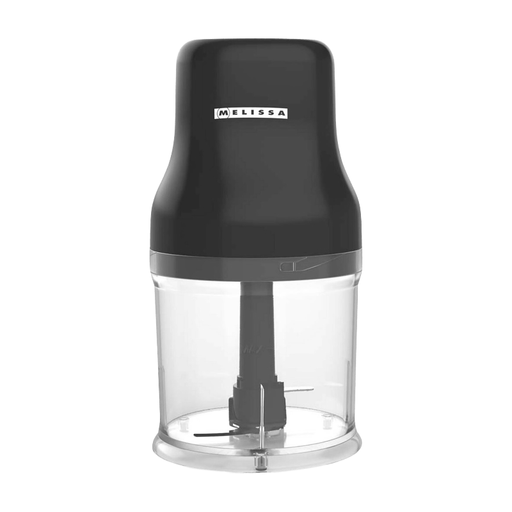
Why it suits this profile: The 500 ml capacity is suitable for small to medium-sized portions. The single-button control is easy to understand for anyone using an electric food chopper for the first time.
The transparent bowl makes the quantity visible. The product information states a maximum operating time of 30 seconds per cycle, encouraging you to work with short pulses rather than running the appliance continuously.
200 watts, two stainless steel blades, non-slip feet, and a dishwasher-safe bowl and blades according to the product description.
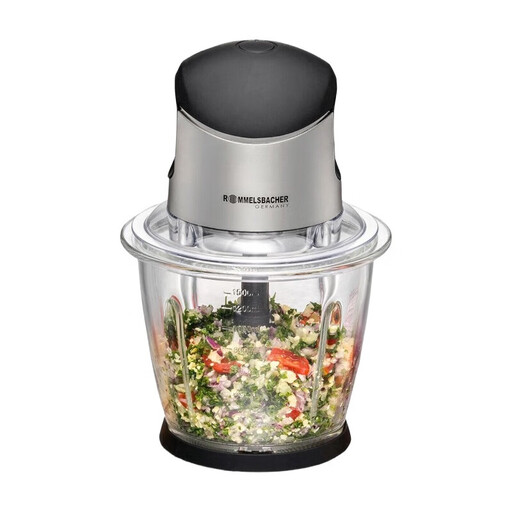
Why it suits this profile: The 1.5-litre glass bowl provides more space for families and keen home cooks preparing several ingredients one after another.
The capacity and bowl material are clearly specified. According to the product information, the removable parts are dishwasher-safe, making cleaning easier.
500 watts, a four-part stainless steel blade, a 1.5-litre glass bowl and a safety system to prevent accidental activation.

Why it suits this profile: According to the product description, this set is designed for meat, vegetables, purée, sauces and baby food. Three bowls allow you to process ingredients separately.
The capacity is divided between bowls of 2.5, 2.2 and 1.8 litres. This means you do not have to overload a single bowl when preparing different types of food.
350 watts, two speeds, 304 stainless steel bowls and a triple-curved blade system according to the product information.
We have put together a complete, up-to-date list of products that fully meet these strict selection criteria and the applicable European safety regulations.
This varies from model to model. According to the product description, a multifunctional chopper may be suitable for small quantities of meat, while a specialised meat grinder uses grinding plates and is often a better choice for regular mincing. Always check the permitted ingredients, quantity and operating time.
For herbs, garlic, nuts or a single portion, 0.5 to 0.9 litres is often practical. For families and multiple portions, a large-capacity food chopper of around 1.5 to 2 litres is generally more suitable. Pay attention to the difference between the bowl’s total capacity and its maximum filling capacity.
Energy consumption depends on the wattage and how long the appliance is used. A 500-watt appliance theoretically uses 0.5 kWh after running continuously for one hour, but food choppers usually operate for only a few seconds per preparation. As a result, daily running costs mainly depend on how often and for how long you use the appliance.
