
Vandaag of morgen in huis

Kwaliteit gegarandeerd

Welkomstaanbiedingen ontgrendelen: GRATIS bezorging | Tot 80% korting | Gratis 30 dagen JoyPlus-proefperiode
Download de app
An electric food chopper can process onions, herbs, vegetables, nuts, meat, dips and pesto in next to no time. However, it is not wise to look only at the wattage or an attractive offer. A small bowl may be inconvenient for a family, while a powerful model may simply be too large for everyday use in a compact kitchen.
By comparing models carefully, you can avoid these three common pitfalls:
For light tasks, such as chopping herbs, soft vegetables or small quantities of sauce, a compact model with 200 to 300 watts may be sufficient. For harder ingredients such as nuts, raw vegetables or meat, a model with 400 to 500 watts is more practical. A 500-watt food chopper generally offers greater motor reserve, but always check the instruction manual.
Some appliances may only be operated in short pulses. For example, the Kenwood CHP61 specifies a maximum of 30 seconds of continuous use, followed by a cooling period. This is relevant if you want to prepare several portions one after another. A multifunctional food chopper is therefore not automatically suitable for prolonged continuous use.
A food chopper with a glass bowl is useful when you want to see the ingredients directly and reduce the chance of odours or stains lingering. Glass is heavier than plastic, however. Also pay attention to the difference between the bowl’s total capacity and its maximum filling quantity.
With liquid preparations, take extra care to avoid leaks and observe the maximum filling mark. Do not use hot liquids unless the manufacturer explicitly permits this.
Stainless steel blades are standard on an electric food chopper. However, the number of blades is only one part of the design. The way they are arranged in the bowl and the option to use short pulses also affect the texture.
Two speeds are often sufficient: a lower setting for coarse chopping and a higher setting for finer results. Models with several settings give you more control, but they are not always necessary for simple preparations.
Also check whether the bowl, lid and blades can be removed. A dishwasher-safe food chopper can save time, but check exactly which parts are dishwasher-safe. The motor base, plug and cable must never be immersed in water.
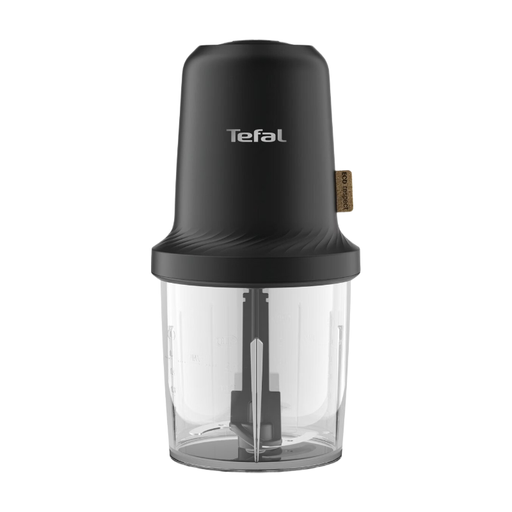
Why it suits this profile: The 500-watt motor, one-button operation and 0.5-litre bowl make it straightforward to use for small, everyday preparations.
The product information states both the motor power and the capacity for solid and semi-liquid ingredients. This makes the practical capacity clearer than relying on a large bowl measurement alone.
500 watts, two stainless steel blades, a BPA-free bowl and a two-year manufacturer’s warranty according to the product details.
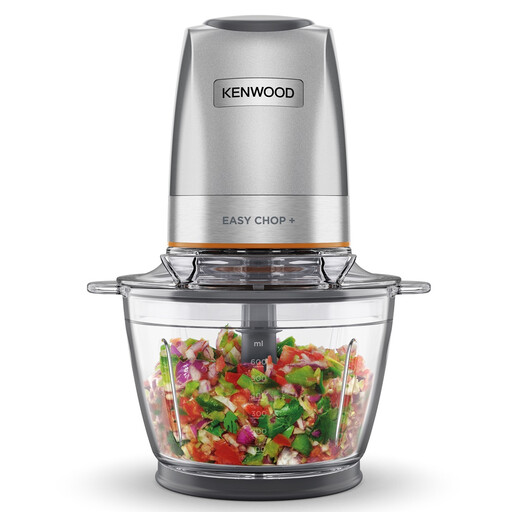
Why it suits this profile: The 600 ml glass bowl, non-slip ring and two speeds are well suited to users who value control and tidy preparation.
The bowl capacity, two speeds and non-slip ring are clearly specified. Before buying, check the manual to see which removable parts can go in the dishwasher.
Glass bowl, QuadBlade blade system, two speeds and a lid with an option for adding liquid, according to the product description.
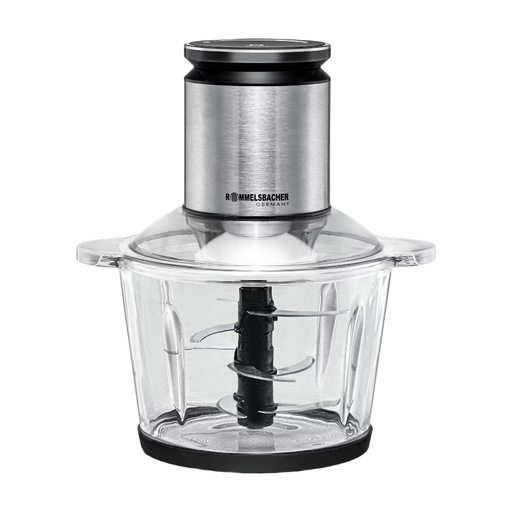
Why it suits this profile: The 2.7-litre capacity and 22 adjustable speed levels are designed for larger quantities and a range of textures.
The large glass bowl makes the capacity easy to assess, while the safety lock prevents the appliance from starting unless the lid is in place. The blades remain sharp and require careful handling.
800 watts, nine stainless steel blades, a 2.7-litre glass bowl and removable dishwasher-safe parts according to the product information.
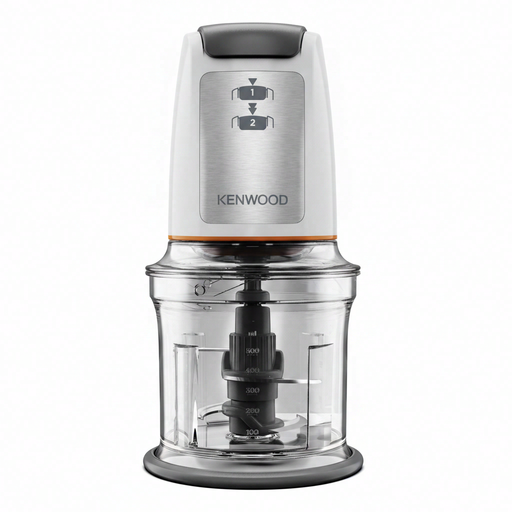
Why it suits this profile: This compact 500 ml, 1.09 kg model is easy to store and designed for small portions.
The manufacturer specifies a maximum operating time of 30 seconds followed by a cooling period. This information helps prevent overloading through prolonged use.
500 watts, four stainless steel blades, two speeds, overheat protection and a lock between the bowl and lid.
We have compiled a complete, up-to-date list of products that fully meet these strict selection criteria and the applicable European safety regulations.
An electric food chopper only works effectively when you prepare the ingredients properly. Cut large pieces into smaller cubes beforehand and do not fill the bowl above the marked level. Use short pulses for an even texture. This prevents the ingredients at the bottom from becoming finely chopped while the pieces at the top remain barely touched.
Also keep the following points in mind:
That depends on the model and the product information. Several of the models mentioned are described as suitable for meat, but cut the meat into small pieces first and do not process more than the maximum filling capacity. Use short pulses for greater control.
For herbs, soft vegetables and dips, 200 to 300 watts may be sufficient. If you regularly want to chop nuts, raw vegetables or meat, consider 400 to 500 watts. Also check the maximum operating time, as wattage alone does not determine how long the appliance can run continuously.
Energy consumption per session is generally limited because a food chopper only runs for a short time. The exact consumption depends on the wattage and total operating time. A 500-watt model running for one minute theoretically uses around 0.008 kWh. The purchase price, replaceable parts and ease of cleaning therefore often have a greater impact on the total cost of use than a short preparation cycle.
