
Vandaag of morgen in huis

Kwaliteit gegarandeerd

Welkomstaanbiedingen ontgrendelen: GRATIS bezorging | Tot 80% korting | Gratis 30 dagen JoyPlus-proefperiode
Download de app
An electric food chopper can process onions, herbs, vegetables, nuts, meat and sauces quickly. Yet many consumers buy a model that proves less practical than expected after just a few weeks. The issue is usually not its appearance, but the combination of bowl capacity, motor load, materials and cleaning.
A higher wattage sounds appealing, but on its own it says little about performance during everyday use. Also check whether the appliance is designed for short pulses or longer periods of operation. Some models, for example, may run for only around 30 seconds at a time and then need to cool down. This is usually not a problem for small portions, but it can become inconvenient when processing larger quantities.
A 1-litre bowl does not automatically mean that you can process 1 litre of ingredients at once. The maximum filling quantity depends on the recipe and the texture of the food. Liquid preparations may also have a different limit from solid ingredients. So look at the usable capacity, rather than simply focusing on the large number printed on the packaging.
A cheap kitchen chopper may seem attractive, but loose parts, a difficult-to-clean lid or a bowl that absorbs odours can make everyday use less pleasant. Check whether the bowl, blade and lid are removable, and which parts are dishwasher-safe according to the product description. The motor base must not be immersed in water.
For a mini food chopper used mainly for herbs, garlic, fruit or soft vegetables, a compact motor may be sufficient. A 200 to 350-watt model is often suitable for small portions. If you also want to chop nuts, meat or harder vegetables, consider around 400 to 800 watts, combined with a suitable blade design and a pulse button.
Multiple speed settings give you more control over the texture. A low setting is practical for soft ingredients, while a higher setting or pulse function can help with harder ingredients. Always follow the instructions for maximum quantities and permitted operating times.
A 500 to 600 ml bowl is suitable for sauces, herbs, baby food or a small quantity of vegetables. For a family or larger portions, 1 to 2 litres is more practical. An electric food chopper with a glass bowl is transparent, does not absorb odours according to the product specifications and can feel sturdy, but it is heavier than plastic.
Also check the temperature restrictions. A standard food chopper is not automatically suitable for hot liquids. Allow ingredients to cool when instructed by the manufacturer.
A stainless-steel blade is common in vegetable choppers, herb grinders and many food processors. A multi-level or four-part blade can process ingredients at different levels, but the final result still depends on the quantity, size of the pieces and pulse duration.
Important safety features include:
A food chopper with a grinding function may be useful if you also want to process coffee, herbs or other hard ingredients. Ideally, use a separate grinding bowl for this, so flavours are less likely to mix.
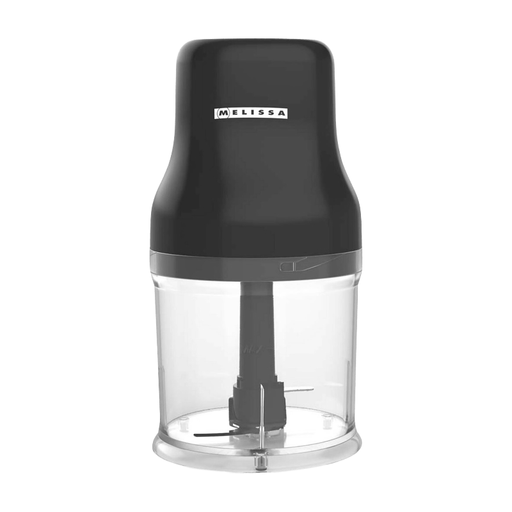
Why it suits this profile: This compact model has a 500 ml bowl and is designed for small everyday portions, such as onions, herbs, fruit and vegetables.
The capacity and power are clearly stated. Do not expect to process large quantities or use it for long periods; for those needs, this is a less suitable choice.
200 W, 500 ml, stainless-steel blades, non-slip feet, and a dishwasher-safe bowl and blades according to the product information.
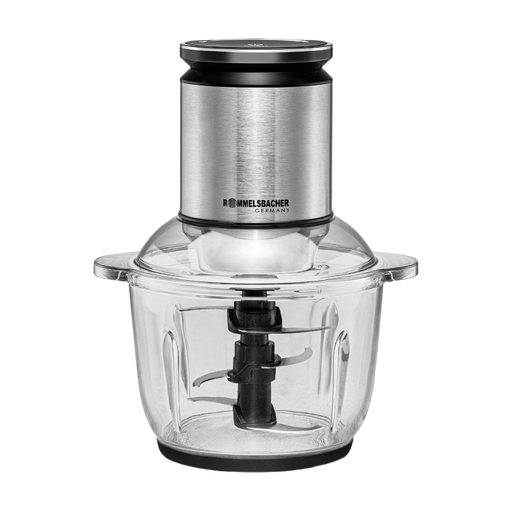
Why it suits this profile: The large 2-litre glass bowl and 22 speed settings are ideal for families and keen cooks who want to prepare a variety of textures.
The bowl capacity, short maximum operating time of 0.5 minutes per cycle and cleaning instructions are clearly specified.
600 W, 2-litre glass bowl, six-part stainless-steel blade, 22 speeds and dishwasher-safe removable parts.
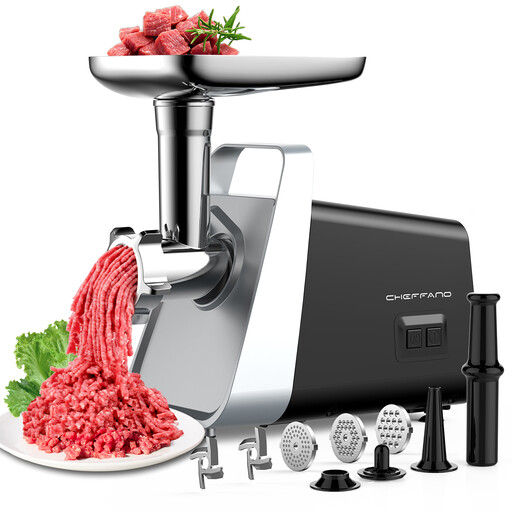
Why it suits this profile: This is more of a meat grinder than a standard mini food chopper, making it suitable for users who want to prepare mince, sausages and different grind sizes.
The supplied plates and blades give a clearer indication of the types of processing possible than a general claim of versatility.
Three grinding plates, two stainless-steel blades, a sausage-filling attachment and a kubbe set according to the product description.
We have put together a complete, up-to-date list of products that fully meet these strict selection criteria and the applicable European safety regulations.
A food processor is suitable when you need to process larger quantities and use more cutting functions. A hand blender works directly in a pan or measuring jug and is practical for smooth soups and sauces. A blender is mainly designed for liquid preparations and smoothies. An electric food mixer is often more versatile, but it also takes up more space.
For coffee or spices alone, a separate coffee grinder or herb grinder may make more sense. If you mainly process meat, a specialised meat grinder is a better choice than a small kitchen chopper. For small kitchens, an electric food chopper is often a practical middle ground.
Not as standard. Check the instructions and product information. Various models warn against hot or boiling liquids. Allow ingredients to cool before processing them if the manufacturer does not permit use with hot ingredients.
This depends on how often it is used, the ingredients, cleaning and whether you follow the maximum operating time. Cut hard ingredients into smaller pieces, do not overfill the bowl and allow the motor to cool between cycles. The statutory guarantee is generally at least two years; some brands also mention repair options or a spare-parts service.
The electricity used per preparation is usually limited because the appliance only runs for a short time. Actual consumption depends on the motor power and operating time. The purchase price, availability of spare parts and whether you use one appliance for several tasks are often more important factors in the overall cost.
