
Vandaag of morgen in huis

Kwaliteit gegarandeerd

Welkomstaanbiedingen ontgrendelen: GRATIS bezorging | Tot 80% korting | Gratis 30 dagen JoyPlus-proefperiode
Download de app
An electric food chopper can take much of the preparation work off your hands. Vegetables, herbs, nuts, dips and sometimes meat can quickly be chopped into smaller pieces. However, not every compact appliance is suitable for everyday use. A small bowl can be impractical for family-sized portions, while a larger model may take up more cupboard space than necessary.
As a Joybuy Product Recommendation Officer, I focus primarily on verifiable features: power, usable capacity, materials, blade construction, controls and cleaning. This helps you avoid choosing based solely on an appealing product photo or a broad marketing claim.
A 1-litre bowl does not automatically mean that you can safely process 1 litre of ingredients. Manufacturers sometimes state both the total bowl capacity and a lower recommended filling level. For example, the Philips HR1393/00 has a 0.7-litre bowl, while its stated usable capacity is 0.5 litres. The Russell Hobbs 24662-56 has a 1-litre glass bowl with a filling capacity of 500 ml.
Practical rule: check the usable or recommended capacity, not just the largest figure.
Motor power tells you something about electricity consumption and available drive power, but it is not the only factor affecting the chopping results. The shape of the bowl, blade positioning and recommended operating time also matter. A 200-watt mini food chopper may be suitable for herbs and small portions, while a 400- or 500-watt model offers more room for firm ingredients.
Also check the operating restrictions. According to the product information, the Kenwood CHP61.000WH may run for a maximum of 30 seconds at a time, after which the motor must cool down. This is important if you want to prepare several portions one after another.
With a dishwasher-safe food chopper, it is often only the bowl, lid and blades that are suitable for the dishwasher. The motor base, plug and cable must not be immersed in water. Check exactly which removable parts can go in the dishwasher.
With sharp blades, removing and rinsing them by hand is also a safety matter. Always unplug the electric food chopper before taking it apart or cleaning it.
For everyday chopping of onions, garlic, herbs and soft vegetables, a compact kitchen chopper with around 200 to 300 watts is often sufficient. If you also want to process nuts, firmer vegetables or meat, consider models with 400 to 800 watts. Power should always be assessed together with the operating instructions.
A food chopper for vegetables and meat is not automatically suitable for processing large quantities of raw meat. Check the maximum quantity, blade shape and the manufacturer's instructions. Cut larger ingredients into pieces beforehand and use short pulses if recommended.
A food chopper with a glass bowl is transparent and generally less likely to absorb odours or colour than some plastic bowls. However, glass is heavier and can break if dropped heavily or exposed to sudden temperature changes. For example, the Bear QSJ-D03Q1 states that the bowl and lid are not heat-resistant and must not be placed in the microwave.
A food chopper with stainless steel blades is a popular choice because of its rust-resistant material. However, the number of blades is not the only consideration. Also check whether the blades are removable and whether the bowl has a non-slip base.
Two speed settings or a pulse function give you greater control over the texture. A low setting may be suitable for softer ingredients or a coarser chop, while a higher setting is intended for finer processing, provided the manual recommends it. A model with multiple speeds is particularly useful if you prepare herbs, dips and nuts.
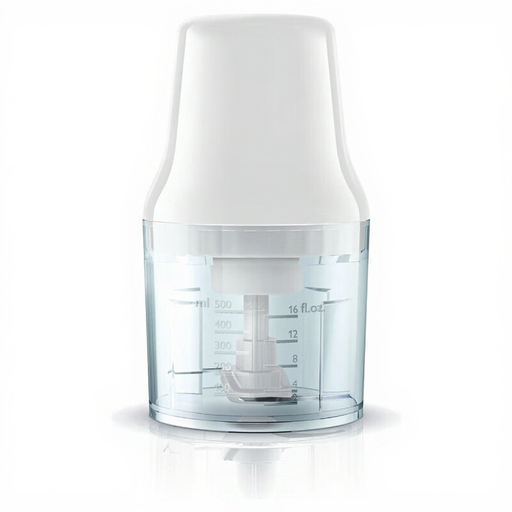
Why it suits this profile: The 0.5-litre usable capacity and simple push-button operation are ideal for small everyday preparations without complicated settings.
The product information states both the total 0.7-litre bowl capacity and the 0.5-litre usable capacity. This makes the portion size clearer in advance.
450 watts, stainless steel blade and dishwasher-safe accessories according to the product description.
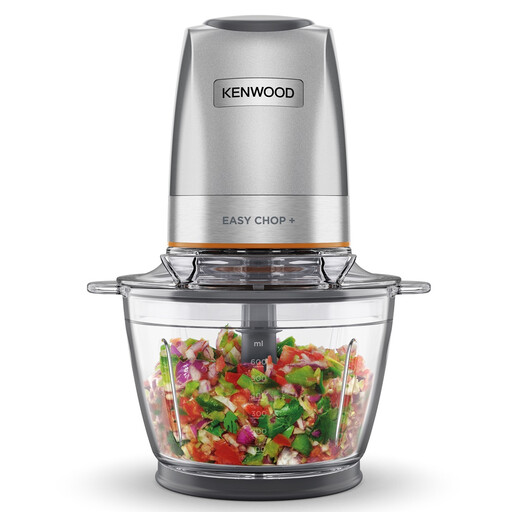
Why it suits this profile: The 600 ml glass bowl, two speed settings and non-slip ring provide practical control for everyday cooking.
The bowl capacity, two settings and non-slip feature are clearly stated. Check the manual to see which parts are dishwasher-safe.
Glass bowl, 500 watts, two speed settings and quadblade blade system according to the product details.
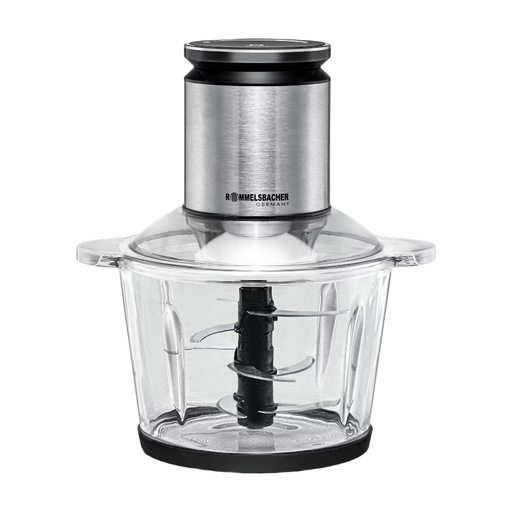
Why it suits this profile: The large 2.7-litre bowl and 22 speed settings are designed for different textures and larger quantities.
The manufacturer states that it has a glass bowl, adjustable blade speed and dishwasher-safe removable parts. The motor unit must stay out of the dishwasher.
800 watts, 2.7-litre capacity, nine stainless steel blades and a safety lock according to the product information.
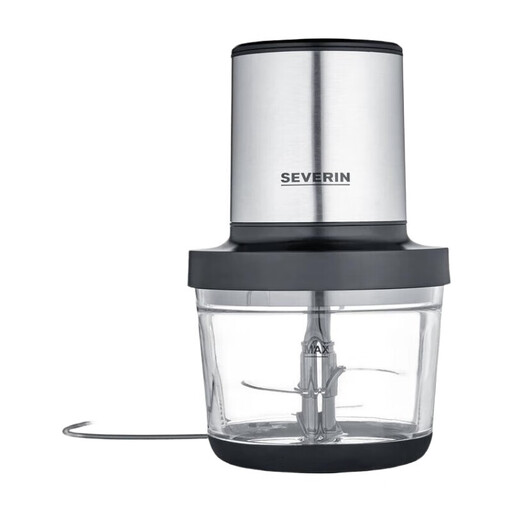
Why it suits this profile: The 1-litre capacity provides more space than a standard mini food chopper without taking you into the territory of very large appliances.
The glass bowl lets you see the contents, while the pulse function helps you carry out short processing cycles. Bear in mind the instruction to let the motor cool down between batches.
400 watts, 1000 ml glass bowl, stainless steel blades, pulse function and ice-crushing function according to the product details.
We have put together a complete, up-to-date list of products that fully meet these strict selection criteria and the applicable European safety regulations.
An electric food chopper is intended for household use. If in doubt, check the manual before processing meat, ice, nuts or liquids. This helps prevent overloading, leaks and unnecessary wear.
For herbs, garlic, onions, dips and small portions, 500 ml is often practical. For several people or larger quantities of vegetables, a food chopper with a capacity of 1 litre or more is more convenient. Always take the usable capacity into account, as it may be lower than the total capacity.
No. Check whether the manufacturer lists these ingredients and review the recommended quantity. A food chopper designed for nuts and herbs may not be suitable for raw meat. Cut ingredients into small pieces beforehand and use short pulses if this is stated in the instructions.
Energy consumption depends on the wattage and the short amount of time the appliance runs. A 500-watt model used for a few seconds will generally use very little energy per preparation. Total running costs are also affected by maintenance, replaceable parts and the lifespan of the bowl and blades.
