
Vandaag of morgen in huis

Kwaliteit gegarandeerd

Welkomstaanbiedingen ontgrendelen: GRATIS bezorging | Tot 80% korting | Gratis 30 dagen JoyPlus-proefperiode
Download de app
An electric food chopper can take over much of the prep work, from onions and herbs to nuts, meat, sauces and purées. Yet many models look similar at first glance, while differences in bowl capacity, controls, blades and cleaning can be significant. A low price is not always a bargain if the bowl is too small, components are difficult to clean or the motor does not match your intended use.
As a Joybuy Product Recommendation Officer, I filter the most important product specifications and compare them side by side. This helps you assess marketing claims more accurately and choose the right mini food chopper, multifunctional chopper or larger electric food chopper for your needs.
Higher power sounds appealing, but it does not tell the whole story about practical performance. Blade design, the drive system, operating time and ingredient quantity all influence the result. A 200-watt model may be perfectly suitable for small portions of soft vegetables, herbs and fruit. For meat, nuts or larger quantities, a spacious bowl and a well-matched motor are more important than a high wattage figure on the packaging.
Also check whether the manufacturer specifies a maximum operating time or recommends pulse operation. Some models, for example, specify a short cycle of up to 30 seconds followed by a cooling break.
A 1.5-litre bowl provides more space than a 500 ml bowl, but the maximum fill level may be lower than the stated capacity. This is particularly relevant for liquid mixtures, meat and ingredients that move around during chopping. An overfilled bowl can produce uneven results and place unnecessary strain on the lid or motor.
For one or two people, a mini food chopper with a capacity of 500 to 900 ml is often practical. Families and home cooks who regularly prepare larger quantities will benefit more from a 1- to 2-litre model.
For a food chopper with dishwasher-safe components, this usually applies to the bowl, lid and blades. The motor unit must never be placed in water or in the dishwasher. Always check the product information to see which parts are dishwasher-safe. Pay particular attention to removable blades: they are sharp and must be taken out of the bowl carefully.
Consider both the stated wattage and the controls. A single push button is easy to use for everyday chopping. Two speed settings or a pulse function provide greater control over texture. A short pulse is useful for coarsely chopped onions or herbs, while longer operation can produce a smoother purée.
For regular use as a meat and vegetable chopper, a stable base, a locking system and a robust blade assembly are all important considerations. Several models in this selection offer between 300 and 500 watts. The Kenwood Duo Prep CHP80 lists 800 watts and two speeds, but has a smaller 500 ml chopping bowl.
A food chopper with a glass bowl lets you monitor the texture as you chop. According to product descriptions from various brands, glass does not absorb odours and is suitable for everyday use, but it is heavier and can break if handled incorrectly or exposed to major temperature changes.
Plastic bowls are often lighter. For plastic models, check whether the product information states that the material is BPA-free and whether the bowl is suitable for hot ingredients. With stainless-steel bowls, such as the one used by IAGREEA, it is harder to see the results, but the material is durable and less prone to staining.
A food chopper with stainless-steel blades is suitable for a wide range of ingredients, but the number of blade levels is not the only factor to consider. A four-blade system may distribute ingredients differently from a two-blade system. Cut large pieces into smaller ones beforehand and do not exceed the indicated fill line.
Pay attention to these safety features:
A visible CE marking is a relevant checkpoint, but it is not a quality ranking. Also review the warranty information and the contact details of the responsible manufacturer or seller.
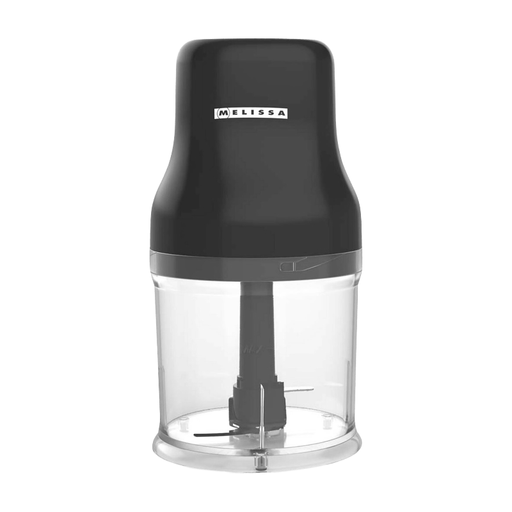
Why This Fits Their Persona: A compact choice for small households and straightforward daily prep involving vegetables, fruit, herbs and nuts.
The specifications clearly state a 500 ml capacity and 200 watts. This makes the intended use more transparent than models that rely solely on broad claims of versatility.
Stainless-steel blades, one-button operation, non-slip feet and a dishwasher-safe bowl and blades according to the product information.
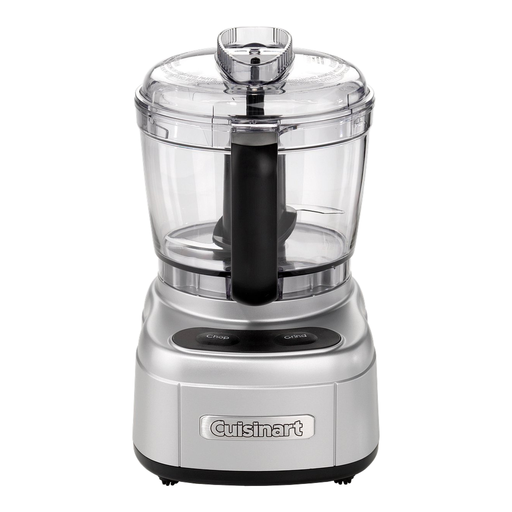
Why This Fits Their Persona: Ideal for anyone looking to combine a compact footprint with chopping, grinding, puréeing and emulsifying.
The capacity is specified as 0.9 litres and the model includes pulse operation. This gives you greater control over both portion size and texture.
Stainless-steel chopping and grinding blade, two programmes, BPA-free bowl and dishwasher-safe components according to the product description.
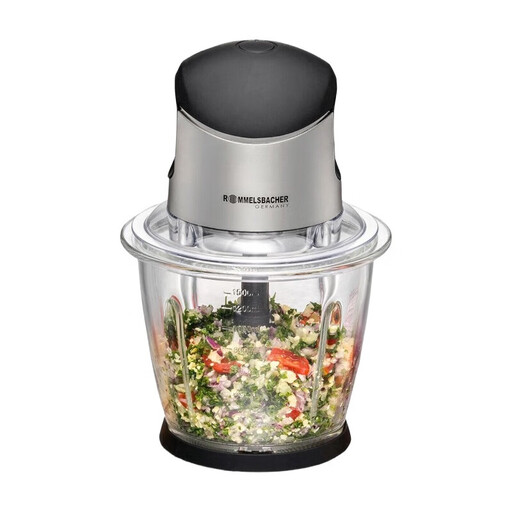
Why This Fits Their Persona: The 1.5-litre glass bowl is well suited to larger quantities of vegetables, herbs, nuts or meat in a family kitchen.
The bowl capacity, 500-watt motor and number of speed settings are listed separately. This prevents confusion between capacity and motor power.
Four-blade stainless-steel assembly, glass bowl, internal safety lock and dishwasher-safe removable components according to Rommelsbacher.
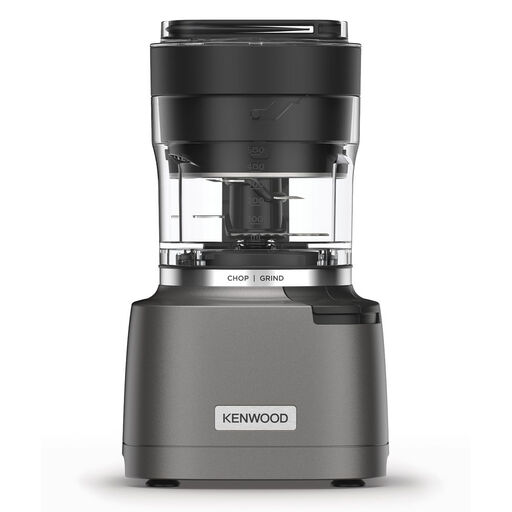
Why This Fits Their Persona: Ideal for anyone who wants to grind coffee, herbs or other hard ingredients as well as chop, without having to store two separate appliances.
The additional grinding cup is a tangible feature. However, note the 500 ml chopping capacity: this model is versatile, but it is not designed for large family portions in a single cycle.
800 watts, two speeds, separate chopping and grinding components and dishwasher-safe parts according to the product information.
Browse a current selection of models and compare bowl materials, blades, capacity and cleaning options before you order.
That depends on the product specifications and the instructions for use. Models such as the Rommelsbacher MZ 400 and MZ 500, Bear models and various multifunctional choppers list meat and vegetables among their intended applications. Cut ingredients into smaller pieces beforehand, remove bones and tough peels, and follow the maximum fill level and operating time.
Its lifespan depends on usage, maintenance and workload. Use short pulses when recommended, avoid overloading the appliance and allow the motor to cool between demanding cycles. Clean the blades immediately after use and never immerse the motor unit. In the EU, consumers generally receive at least a two-year statutory guarantee; some manufacturers also offer a longer manufacturer’s warranty.
A food chopper usually runs for only a short time during each preparation. The stated wattage—for example, 200, 400 or 500 watts—is the maximum electrical power drawn during operation, not a fixed consumption figure per meal. Short pulses generally have less impact on electricity use than running the appliance continuously. Use the machine only for as long as necessary to achieve the desired texture.
