
Vandaag of morgen in huis

Kwaliteit gegarandeerd

Welkomstaanbiedingen ontgrendelen: GRATIS bezorging | Tot 80% korting | Gratis 30 dagen JoyPlus-proefperiode
Download de app
An electric food chopper can take a lot of the prep work off your hands. Onions, herbs, vegetables, nuts, sauces and some types of meat can be processed more quickly than with a knife. However, models vary considerably in capacity, controls, blades and recommended running time.
The biggest mistake is focusing only on the wattage or an appealing product name. A compact 200-watt mini food chopper may be suitable for small portions, while a larger electric food chopper with a bigger bowl may be a better fit for families. So keep an eye out for these three common pitfalls.
More power doesn’t automatically mean that every ingredient will be processed better. Blade design, bowl capacity and the maximum running time all play a part. A 500-watt model with a 500 ml bowl is practical for small quantities, but isn’t designed for processing large portions all at once.
Also check whether the stated power is continuous power or maximum input power. Some meat mincers, for example, list a peak power rating. Always compare the full product details.
A 1-litre bowl may have a lower maximum fill level. This matters when processing wet ingredients, meat and mixtures that move around while chopping. Overfilling can lead to uneven results, leaks or extra strain on the motor.
For one or two people, 500 to 600 ml is often practical. Families, or anyone preparing larger quantities of vegetables, sauce or mince, may be better off looking at models with a capacity of 1 to 2 litres.
A multifunctional food chopper may be described as suitable for chopping, mixing or puréeing, but capabilities vary by model. A vegetable chopper with one universal blade isn’t the same as a meat mincer with several grinding plates.
Check which accessories are included:
Small food choppers of around 200 watts are suitable for herbs, fruit, soft vegetables and small portions. Models from 300 to 600 watts generally offer more capacity for firmer ingredients, depending on the blade design and the instructions for use.
Always check the maximum running time. Some models can run for no more than 30 seconds at a time and then need to cool down. This isn’t a fault, but it can be a practical limitation when preparing large quantities. Use short pulses and follow the instructions.
A food chopper with stainless steel blades is suitable for a range of everyday kitchen tasks. Check whether the blade can be removed and whether the model has one or more blade levels. A multi-blade system may reach ingredients more evenly in a deeper bowl, but the result also depends on the quantity and size of the pieces.
If you mainly want to process raw or cooked meat, you may need a separate meat grinder or meat mincer. A dedicated meat mincer uses grinding plates and a feed tube. A standard food processor designed for chopping and puréeing will usually cut meat into smaller pieces, but won’t produce exactly the same texture as mince made using a grinding plate.
A food chopper with a glass bowl is handy if you want to see the contents while it’s running. Glass is also less likely to absorb odours, but it’s heavier and can break if dropped. Plastic bowls are often lighter.
Also check:
Always take care when handling sharp blades. Unplug the appliance before taking it apart or cleaning it. Don’t process hot liquids unless the instructions say it’s safe to do so.
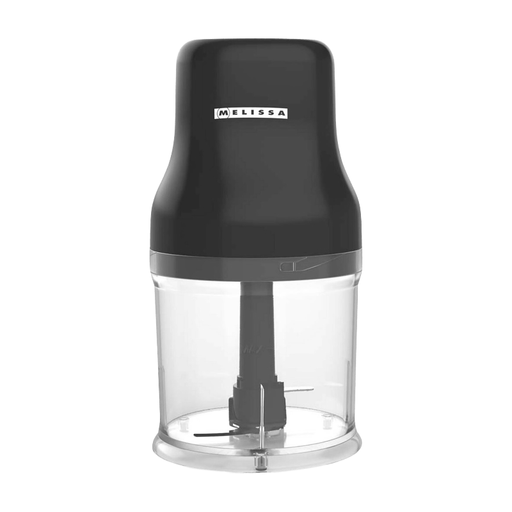
Why it suits this profile: Its compact 500 ml capacity is a good fit for small everyday portions. The one-button operation is simple to use if you mainly want to chop vegetables, fruit, herbs and nuts.
The product details specify a maximum capacity of 500 ml and a maximum running time of 30 seconds per cycle. That makes its limits clearer than those of models that only make a general claim about power.
200 watts, two stainless steel blades, BPA-free parts, and a dishwasher-safe bowl and blade set according to the product description.
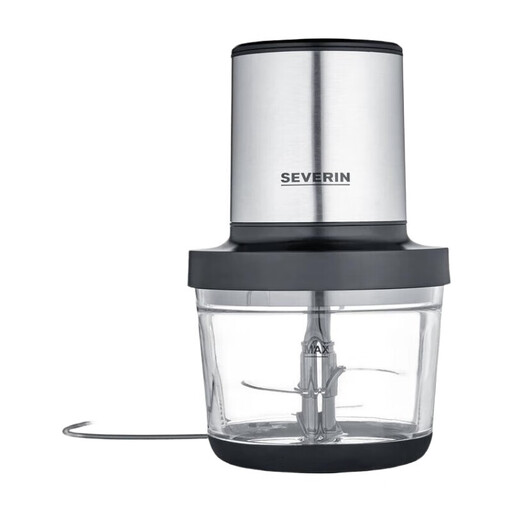
Why it suits this profile: The 1,000 ml glass bowl has room for larger batches, while the stainless steel blades are suitable for a range of ingredients, including vegetables, herbs, nuts and meat.
The specifications list the motor power, bowl capacity and materials. So you don’t have to rely on the wattage figure alone.
400 watts, a 1-litre glass bowl, stainless steel blades and, according to the product description, a pulse function and the ability to crush ice.
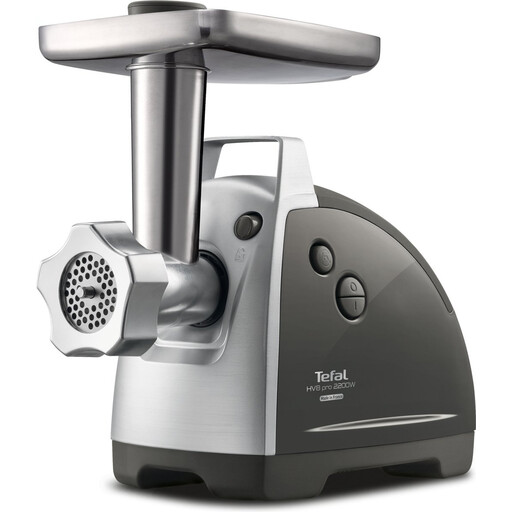
Why it suits this profile: This meat mincer comes with three grinding plates and extra accessories, including attachments for making sausages. It’s a good fit for anyone who regularly minces meat and wants a choice of textures.
The product details specify three grinding plates for fine, medium and coarse results. That’s more informative than a food chopper that’s only described as being generally suitable for meat.
2200 watts starting power according to the product details, three grinding plates, sausage-making accessories and a reverse function.
We’ve put together a complete, up-to-date list of products that meet these strict selection criteria and the applicable European safety regulations.
Only if the manufacturer says it’s suitable for this use. A mini food chopper can break meat down into smaller pieces, but the result is different from mince made in a meat mincer with grinding plates. Cut the meat into small pieces, remove any hard bones and don’t overfill the bowl.
Its lifespan depends on how it’s used, cleaned and loaded. Using short pulses, sticking to the maximum running time and not exceeding the fill mark can help reduce unnecessary strain. Also check the warranty and availability of replacement parts.
Energy use depends on the wattage and how long the appliance actually runs. A 500-watt appliance running for a few seconds won’t necessarily use much more energy than a lower-powered model that needs to run for longer. So consider both power and running time, rather than relying on just one figure.
