
Vandaag of morgen in huis

Kwaliteit gegarandeerd

Welkomstaanbiedingen ontgrendelen: GRATIS bezorging | Tot 80% korting | Gratis 30 dagen JoyPlus-proefperiode
Download de app
An electric food chopper can save you time when chopping onions, herbs, vegetables, nuts and meat, or making sauces. However, not every compact kitchen chopper is suited to the same tasks. A small bowl can fill up quickly, the motor may overheat and a slippery base can make it harder than necessary to use.
So if you only look at the wattage or an attractive product photo, you could miss some common pitfalls.
A 500-watt motor sounds powerful, but the results also depend on the blade shape, bowl capacity, pulse function and permitted operating time. According to the product information, some models can only run for 30 seconds at a time. The motor then needs to cool down.
So always check:
A 1-litre bowl doesn’t always mean you can process 1 litre of ingredients. Manufacturers sometimes specify a maximum fill level that’s lower than the bowl’s total capacity. A leakproof bowl is also important when working with liquids.
A mini food chopper with a capacity of 400 to 600 ml can be practical for one or two people. For larger portions, meal prep or several family members, a capacity of around 1 to 2 litres is more useful. So check the usable capacity, not just the figure in the product name.
A multifunctional food chopper may be described as chopping, mixing, puréeing or grinding. That doesn’t mean every model is equally suitable for raw meat, ice or prolonged mixing. Check the manual and product specifications for each ingredient.
It’s also worth knowing the difference between an electric food processor and a simple vegetable chopper. A food processor may have several bowls, blades or functions. A compact chopper is often simpler, quicker to clean and suited to smaller quantities.
For everyday chopping of onions, herbs and soft vegetables, a low to medium power rating may be enough. If you also want to process nuts, meat or hard vegetables, look for a model with a suitable motor and multiple speeds.
A pulse function gives you more control over the texture. Short pulses are useful for a coarser chop, while running the chopper for longer will generally give you a finer consistency. A one-touch button is simple to use, but offers fewer settings.
Where possible, choose a food chopper with stainless steel blades. This material is often listed in product specifications because it’s suitable for contact with food and easy to clean. However, the number of blades isn’t the only factor. Their position and shape also affect how evenly ingredients are chopped.
Also check whether:
Never touch sharp blades directly, even when the appliance is unplugged.
A food chopper with a glass bowl may appeal if you’d prefer a less absorbent material that won’t take on odours or colour from ingredients. Glass is heavier than plastic, though, and can break if knocked hard or exposed to a sudden change in temperature.
Check which parts are dishwasher-safe, too. With some models, only the bowl, lid and blades can go in the dishwasher. The motor base should never be submerged in water.
If you’re using a chopper for meat, dips or sauces, a bowl that seals securely is especially important. If you mainly prepare herbs and small quantities, a compact chopper should do the job.
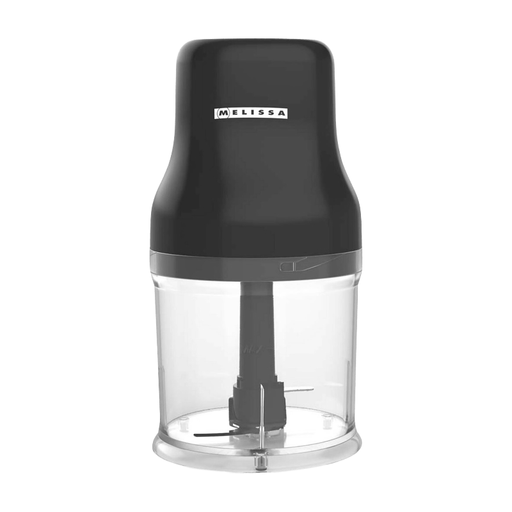
Why it suits this profile: The 500 ml capacity is practical for small portions of vegetables, fruit, herbs and nuts. The one-button control keeps operation simple.
The product information gives a maximum operating time of 30 seconds per cycle. This makes the limit clear before you start.
200 watts, stainless steel blades, non-slip feet, and a dishwasher-safe bowl and blades according to the product description.
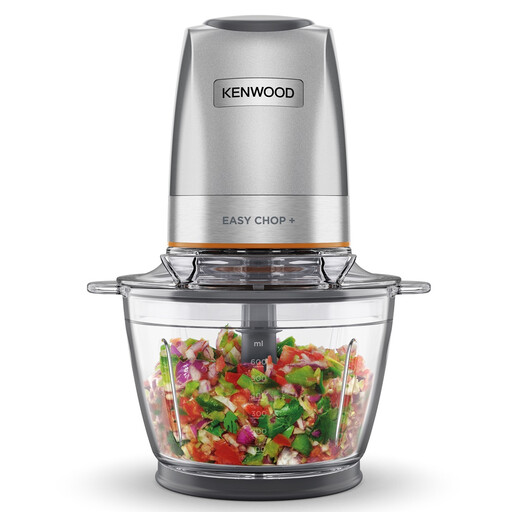
Why it suits this profile: The 600 ml glass bowl, two speeds and one-touch controls make it a good fit for everyday use with sauces, herbs, vegetables and smaller portions.
The capacity, two speeds and non-slip ring system are clearly specified. This makes it easier to understand what the compact bowl is designed for.
500 watts, a glass bowl, four stainless steel blades and, according to the product description, an ice-crushing function.
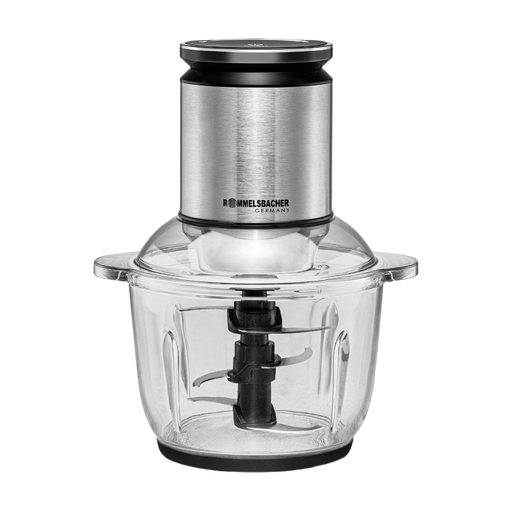
Why it suits this profile: The 2-litre bowl and adjustable speed are designed for larger quantities and a range of preparations, such as dips, pesto, vegetables and minced meat.
The product information specifies a short maximum operating time of 0.5 minutes per cycle. This helps you avoid mistaking a high power rating for unlimited continuous use.
600 watts, 22 speed settings, a 2-litre glass bowl and removable, dishwasher-safe parts according to the product details.
An electric vegetable chopper is useful if you cook often, prepare larger quantities or want to process ingredients such as meat and nuts. A manual option, such as the Alpina Manual Chopper Speedy, doesn’t need electricity and takes up little space. However, you’ll need to supply the pulling force or movement yourself, and it’s less suited to larger portions.
When buying a food chopper, think about how you’ll use it most often. A capacity of 400 to 600 ml is usually enough for salsa or herbs. For a family, larger quantities of sauce or chopping several ingredients one after another, a larger glass bowl makes more sense.
We’ve put together a complete, up-to-date list of products that meet these strict selection criteria and the applicable European safety regulations.
It depends on the specific model. Check whether the manufacturer lists meat as a suitable ingredient and bear the maximum quantity in mind. Cut the meat into smaller pieces first and clean the bowl thoroughly after use.
Its lifespan depends on how you use and maintain it, and whether you follow the recommended operating times. Let the motor cool down when instructed in the manual, don’t overfill the bowl and carefully remove any residue around the blades. Many products have a minimum statutory guarantee of two years in the EU; check the terms for the item you choose.
A food chopper usually runs for only a short time per preparation. Its total energy use is therefore mainly determined by its power rating and how long you use it. A 500-watt model running for one minute would theoretically use around 0.008 kWh. In practice, energy use per preparation is often low, but the exact amount depends on how long and how often you use the appliance.
