
Vandaag of morgen in huis

Kwaliteit gegarandeerd

Welkomstaanbiedingen ontgrendelen: GRATIS bezorging | Tot 80% korting | Gratis 30 dagen JoyPlus-proefperiode
Download de app
An electric food chopper can take over a lot of chopping tasks: from onions and herbs to nuts, vegetables and meat. However, there are big differences between models. A compact mini chopper is handy for small portions, while a kitchen chopper with a large glass bowl is a better fit for families or those who want to process multiple ingredients at once.
The pitfalls often lie not in the appearance, but in the details. A shiny casing says little about the bowl's capacity, the operating time, or how easy it is to clean. Therefore, pay close attention to these three points.
A higher wattage doesn't automatically mean you can process larger quantities. The bowl capacity and the maximum fill line are just as important. A 500-watt food chopper with a 500 ml bowl is suitable for smaller portions, but less practical when you're cooking for several people.
Also, check whether the manufacturer distinguishes between the total capacity and the usable capacity. For example, with the Russell Hobbs 24662-56, the glass bowl has a total capacity of 1 litre, while its stated fill capacity is 500 ml.
A chopper is sometimes described as suitable for chopping, mixing, puréeing and grinding. This only tells you something if it's also clear which blade, which speed and which ingredients are permitted. An onion chopper with a single speed might be fine for soft vegetables, but it offers less control for nuts, meat or herbs.
Pay attention to the number of blades, the blade shape, and the presence of a pulse function. Multiple speeds, like those on the Rommelsbacher MZ 600, make it easier to adjust the texture.
Sharp blades, a lid that's difficult to close, or parts that aren't dishwasher-safe can make daily use less pleasant. Look for a safety lock that only allows the appliance to start when the bowl and lid are correctly in place.
A chopper with dishwasher-safe parts is practical, but always check which parts this applies to. The motor base, plug and cord should not be submerged in water.
For onions, herbs, fruit and soft vegetables, a lower power rating may be sufficient. For a chopper intended for meat and vegetables, nuts or harder ingredients, a motor of around 300 to 600 watts is a logical starting point within this product category. However, wattage is not a standalone measure of quality.
More important is the short operating time per cycle. Several models are designed for pulses of about 30 seconds to one minute, followed by a cooling-down period. Follow the manual to prevent overheating and unnecessary motor wear.
A chopper with a glass bowl is transparent, so you can monitor the texture while chopping. According to the product descriptions of the models mentioned, glass is less likely to absorb odours and stains than some plastics, but it is heavier and more fragile. Stainless steel bowls are sturdy and suitable for larger portions, but you can't see the mixture as well.
A stainless steel blade is standard for vegetables, herbs and meat. Four or six blades can reach ingredients at different heights in the bowl. This can help with more even processing, but the way you pre-cut your ingredients remains important.
A chopper with multiple speeds gives you more control:
A food chopper is not a replacement for every type of electric kitchen appliance. If you mainly want to make mince, sausages or achieve different grinding textures, you'd be better off looking at a dedicated meat grinder. For chopping, mixing and puréeing, a kitchen chopper is usually sufficient.
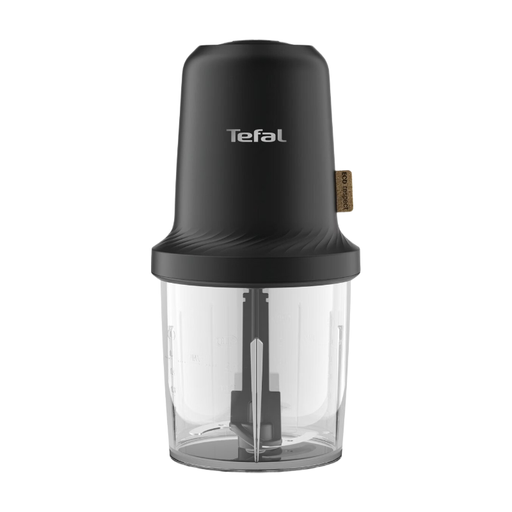
Why it suits this profile: The one-button operation and 0.5-litre capacity make it straightforward to use for small, daily portions.
The product information specifies 500 watts, two stainless steel blades and a leak-proof bowl for liquid mixtures up to 500 ml.
500 watts, 0.5-litre capacity and a stated BPA-free bowl; suitable for chopping, stirring and mixing.
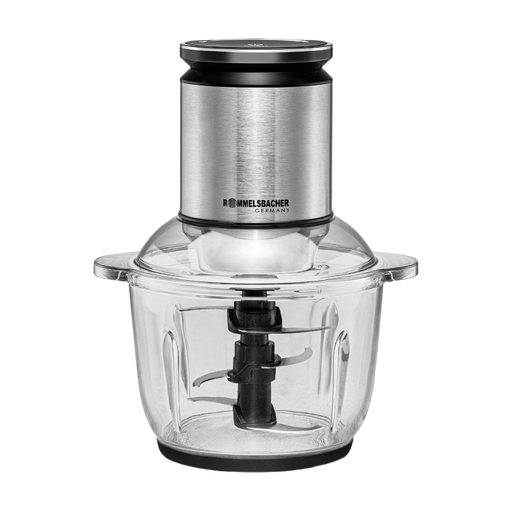
Why it suits this profile: The spacious bowl and adjustable speed are ideal for home cooks who prepare a variety of dishes.
The specifications mention a 2-litre glass bowl, 22 speed settings and a safety lock that prevents it from starting unless the lid is correctly in place.
600 watts, six stainless steel blades and dishwasher-safe removable parts.

Why it suits this profile: Three stainless steel bowls provide separate options for vegetables, meat and preparations like purées.
The product description specifies 2.5, 2.2 and 1.8-litre bowls and a maximum pulse duration of 30 seconds per cycle.
350 watts, two speeds and three 304 stainless steel bowls for different ingredients.
We have compiled a complete, up-to-date list of products that fully meet these strict selection criteria and comply with current European safety regulations.
Pre-cut large ingredients into smaller pieces and do not fill the bowl beyond the indicated limit. It's best to use short pulses when you want to maintain a coarse texture. Let the appliance cool down if the manual specifies a maximum cycle time.
Always unplug the appliance from the socket before removing any parts. The blades can be extremely sharp, so always handle them by the plastic part or the designated grip. Do not process boiling hot ingredients unless the manual explicitly allows it.
That depends on the model and the product information. Some models are designed for mincing meat, while a vegetable or herb chopper is primarily designed for softer ingredients. Check the blade, bowl capacity and the permitted operating time. For large quantities of raw meat, a specialised meat grinder is usually more appropriate.
The lifespan depends on usage, maintenance, load and whether you follow the prescribed cycle time. Overfilling, running it continuously for long periods and processing non-permitted hard materials can strain the motor. Clean the removable parts after each use and store the blades safely.
A model rated at 200 to 600 watts uses relatively little energy during a short chopping cycle. The actual consumption depends on the power rating and the total usage time. A powerful motor that runs for just a few seconds won't necessarily use more electricity than a lower-wattage model that has to run for longer.
