
Vandaag of morgen in huis

Kwaliteit gegarandeerd

Welkomstaanbiedingen ontgrendelen: GRATIS bezorging | Tot 80% korting | Gratis 30 dagen JoyPlus-proefperiode
Download de app
An electric food chopper can take care of much of the chopping: from onions and herbs to meat, nuts, vegetables and sauces. Yet many households end up buying a model that is too small, difficult to clean or unsuitable for their favourite ingredients. The wattage on the packaging does not tell the whole story.
With this practical buying guide, you can compare a mini food chopper, multifunctional food chopper and electric meat mincer based on the features that really make a difference in a Dutch kitchen.
Higher power sounds appealing, but it does not automatically mean that a food chopper will process every ingredient more effectively. The blade design, bowl shape, controls and maximum operating time also determine the results. A compact vegetable chopper rated at 200 watts may be suitable for small portions of soft vegetables, while a model for regular meat mincing will require different specifications.
A 2- or 3-litre bowl may seem spacious, but you cannot always fill it completely. Ingredients need room to move and the lid must close securely. Check whether the manufacturer distinguishes between total capacity and the recommended amount of food.
For a sauce or dip, a 500 ml bowl is often practical. Families preparing several portions of raw vegetables, filling or mince will get more use from a food processor with a capacity of around 2 to 3 litres.
A blade with multiple cutting surfaces can be useful, but it requires extra care when cleaning. Check whether the bowl, lid and blades can be removed and whether these parts are dishwasher-safe. The motor base must never be immersed in water.
Also pay attention to the operating time. Some models are designed for short pulses of around 30 seconds. A powerful electric meat mincer, on the other hand, may have a maximum continuous operating time of, for example, 10 minutes, after which it needs to cool down.
For herbs, fruit, onions and small quantities of vegetables, a compact model is often sufficient. If you also want to process meat, nuts or hard vegetables, it is worth checking the following:
A nut grinder or herb chopper may also require a separate grinding cup. An appliance that only comes with a chopping bowl is not automatically suitable for all hard ingredients.
An electric food chopper with a glass bowl is transparent, allowing you to monitor the texture of the mixture. Glass is also non-porous, but it is heavier and can break if knocked hard. Plastic is generally lighter and often more convenient for everyday use.
Pay attention to these points:
A simple kitchen helper with one push button is suitable if you mainly chop onions, vegetables or herbs. A multifunctional food chopper can also mix, purée or grind. If you often prepare mince, sausages or kebbe, you will get more use from a food chopper with a meat mincer and matching discs.
Always check exactly what is included. An accessory for making sausages, a pusher or a second grinding bowl can extend the appliance’s capabilities, but these items are not supplied as standard with every model.
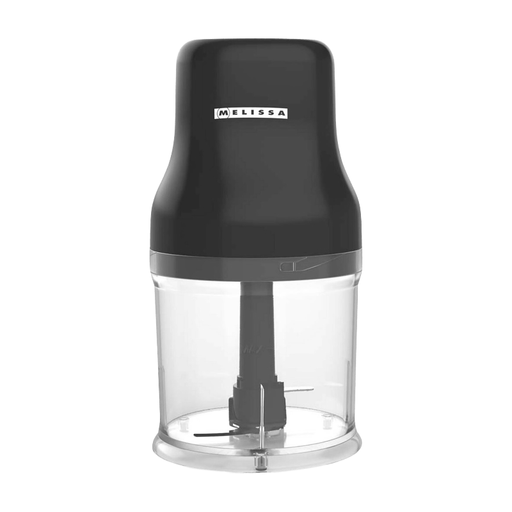
Why it suits this type of user: This compact mini food chopper takes up very little space and is designed for portions of up to 500 ml. That makes it a good choice for students, small households and cooks who occasionally chop herbs, fruit, nuts or vegetables.
The capacity and power are clearly specified: 0.5 litres and 200 watts. The instructions state a maximum operating time of 30 seconds per cycle, allowing you to use the appliance in a controlled way.
Stainless steel blades, non-slip feet, and a bowl and blades that are stated to be dishwasher-safe according to the product information.
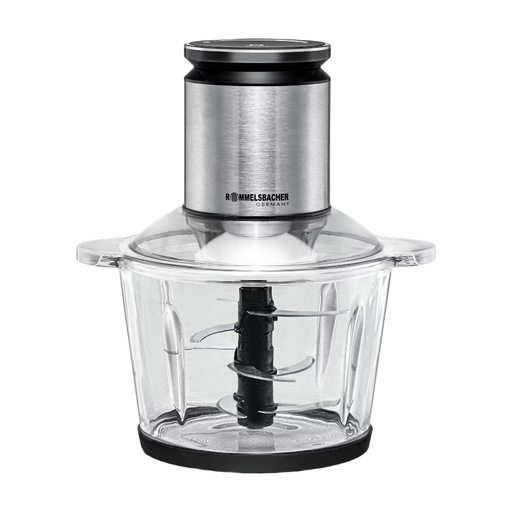
Why it suits this type of user: The spacious 2.7-litre glass bowl is suitable for families and anyone who regularly prepares salads, dips, pesto or larger quantities of filling.
The product description lists 22 adjustable speed settings, a 9-part stainless steel blade and a 2.7-litre glass bowl. This means the key specifications can be checked rather than being presented merely as marketing claims.
800 watts, a glass bowl, 22 speed settings and removable parts that are stated to be dishwasher-safe according to the product information.
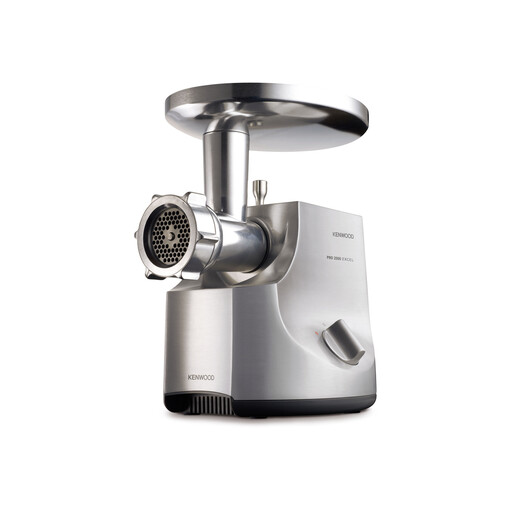
Why it suits this type of user: This model is aimed at users who mainly mince meat and want to use accessories for different mincing textures or sausage preparation.
The set includes three stainless steel mincing discs for fine, medium and coarse mincing. The instructions also specify a maximum continuous operating time of 10 minutes, with a cooling period between batches.
2000 watts, a 3-litre bowl and accessories for sausages and kebbe, in addition to the three included mincing discs.
We have put together a complete, up-to-date list of products that fully meet these strict selection criteria and the applicable European safety regulations.
That depends on the model. A standard food processor can chop meat when the manufacturer states that it is suitable for this purpose, but an electric meat mincer is specifically designed to feed meat through mincing discs. Always check the included accessories, maximum quantity and recommended operating time.
Its lifespan depends on the materials, maintenance, frequency of use and following the instructions. Allow the motor to cool down when a short operating time is specified, do not overload the bowl and unplug the appliance before dismantling and cleaning it. In the EU, the products mentioned are covered by the statutory minimum guarantee of two years; additional rights may apply.
Consumption per preparation is usually limited because a food chopper only runs for a short time. For example, an 800-watt model uses 0.8 kWh if it were to run continuously for one hour. In practice, you will often use the appliance for just a few seconds or minutes. The actual cost depends on the operating time and your electricity tariff.
