
Vandaag of morgen in huis

Kwaliteit gegarandeerd

Welkomstaanbiedingen ontgrendelen: GRATIS bezorging | Tot 80% korting | Gratis 30 dagen JoyPlus-proefperiode
Download de app
An electric fan heater can quickly warm up a bedroom, home office or garage. However, models vary considerably in power, controls, noise levels and safety features. A heater that works well under a desk is not necessarily suitable as a workshop or construction-site heater.
Watch out for three common pitfalls: marketing claims about “fast heat” with no clear way of measuring it, high power that can quickly increase your energy bills, and missing information about safety features or conditions of use. The checks below will help you compare a ceramic heater, a PTC heater or another electric heater more practically.
A 2,000-watt model will generally provide more heating capacity than a compact 1,500-watt heater, but it will also use more electricity when running at full power. Actual consumption depends on the selected setting, the thermostat and how long you use it.
Here’s an example: a 2,000-watt heater theoretically uses 2 kWh if it runs continuously at full power for one hour. So check more than just the maximum power rating: see whether the appliance has multiple heat settings or a thermostat.
Noise claims are only useful when the manufacturer gives a figure in dB and explains the conditions under which it was measured. A fan will still be audible, particularly on a higher setting.
You should also take claims such as “energy-efficient” with a pinch of salt. DREO states that certain models can save up to 40% energy through power control and thermostat use. This is a brand claim, not a guarantee for every room or user. Look for features such as an ECO mode, temperature control and a timer.
A heater with overheat protection or tip-over protection can switch the appliance off in certain unsafe situations. That doesn’t mean you can cover the air outlet or place the heater close to curtains, bedding or furniture.
Use a fan heater on a flat, stable, dry surface. The safety information for the products mentioned recommends keeping a sufficient distance from flammable materials. Check the power cord and unplug the heater before cleaning it.
Compact models of around 1,500 to 2,000 watts are often practical as supplementary heating for a bedroom, study or office. The capacity you need depends on insulation, ceiling height, the outside temperature and how quickly you want the room to warm up. Any room-size figure in a product listing is a guide, not a guarantee.
A more powerful model may be better suited to a garage, warehouse or workshop. If so, check the connection, maximum power and permitted operating environment especially carefully. A 5 kW or 9 kW model won’t necessarily be suitable for a standard household socket.
A PTC heater uses a ceramic heating element. Products with this technology are often combined with multiple heat settings and a fan. In practice, the main benefits are an immediate flow of warm air and the option to adjust the power.
Check how many settings the heater has. A model with 900, 1,300 and 1,500 watts gives you more choice than one that only switches on or off. A ceramic heater’s low setting may be more comfortable for longer use, while the high setting is designed to provide extra heat more quickly.
A heater with a thermostat can adjust its heating output once it reaches the set temperature. A timer stops the heater running unnecessarily. Some models have a 12-hour timer, while others offer up to 24 hours.
Oscillation, for example 70° or 90°, spreads warm air across a wider area. This can be useful in a living room or office, but it doesn’t replace correct positioning. Also check whether button, remote-control or app operation suits the way you plan to use the heater.
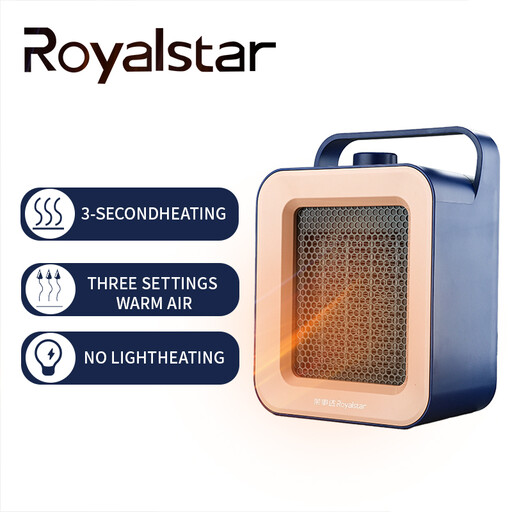
Why it suits this type of user: This is a compact portable heater with three settings: fan only, low heat and high heat. That makes it easy to use in a small room, home office or study.
The product information specifies the 1,500-watt output and available heat settings, so you don’t have to choose based on a vague claim about speed alone.
1,500 W output, three operating settings and guidance to place it on a stable, non-flammable surface.
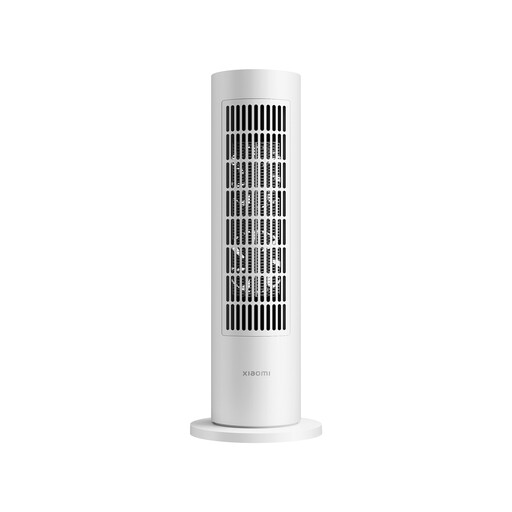
Why it suits this type of user: A handy choice if temperature control and remote operation matter to you. According to the product information, this model has 2,000 watts of power, 70° oscillation, four settings, a timer, and app and voice control.
The specifications list specific features rather than relying on vague claims such as “smart” or “fast”: PTC heating, a thermostat, timer, oscillation and automatic shut-off.
2,000 W, 70° oscillation, app control, thermostat, timer, and tip-over and overheat protection according to the product information.
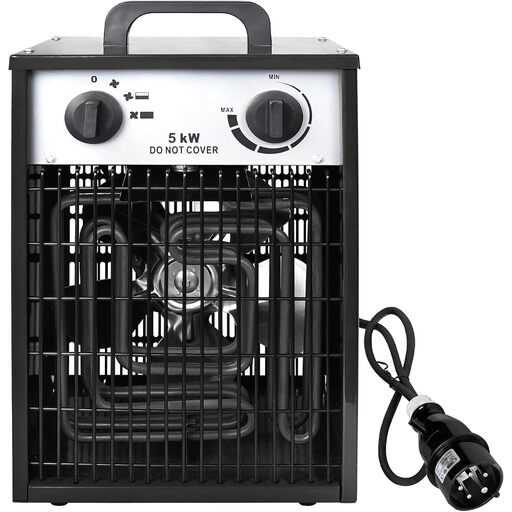
Why it suits this type of user: Designed for users looking for a higher-powered heater for a workshop, garage or construction site. The product name specifies four heat settings and overheat protection.
The power rating and intended use are clearly stated. Before buying, make sure your electrical connection is suitable for 5 kW.
5 kW output, four heat settings and stated overheat protection for use in places such as workshops, garages and warehouses.

Why it suits this type of user: A good choice if you’re looking for a quiet fan heater with a timer, remote control and precise temperature settings. The stated noise level ranges from 25 to 42 dB, depending on the setting.
The product information gives specific figures for noise, power, temperature control and the timer. The claim of up to 40% energy savings comes from DREO itself and will depend on how you use the heater.
1,500 W, temperature settings from 5–35 °C, 12-hour timer, remote control, stated noise level of 25–42 dB and multiple safety features.
We’ve put together a full, up-to-date list of products that meet these strict selection criteria and the applicable European safety requirements.
It can be, as long as the model is intended for indoor household use and is positioned correctly. Ideally, choose an appliance with a thermostat, timer, tip-over protection and a stated noise level. Keep the heater away from bedding and curtains, and always follow the instructions.
That depends on the heater’s power rating and your electricity tariff. A 2,000-watt appliance theoretically uses 2 kWh per hour on its maximum setting. A thermostat or lower heat setting can reduce the time it spends running at full power. Check your own electricity tariff to work out the current cost.
Its lifespan depends on build quality, how often you use it, how much dust it collects and how well it’s maintained. Keep the ventilation openings clean, use the appliance according to the instructions and store it somewhere dry. Replace the heater if its cable, plug or casing is damaged.
