
Vandaag of morgen in huis

Kwaliteit gegarandeerd

Welkomstaanbiedingen ontgrendelen: GRATIS bezorging | Tot 80% korting | Gratis 30 dagen JoyPlus-proefperiode
Download de app
An electric cooking pot can be useful for ramen, soup, hotpot, pasta, stews and steamed ingredients. However, many models look similar, even though they can differ considerably in capacity, controls and maintenance. Students, single-person households and families often face the same buying problems: a pot that turns out to be too small, a non-stick coating that gets damaged quickly, or an appliance that is less versatile than the product title suggests.
A higher power rating does not automatically mean that a pot will cook more effectively. 1000 to 1600 watts can provide rapid heating, but this level of power is not always necessary for a small meal. With a slow cooker or electric stew pot, the key is even, sustained heating. Look at the combination of power, capacity and heat settings.
A 5-litre pot cannot always be filled to the brim. Soup, hotpot and boiling water need room to prevent spillages. Also check whether the stated capacity refers to the total capacity or the recommended fill level. For one person, a 1 to 1.6-litre mini electric cooking pot is often more practical than a large model. For a family or a shared hotpot meal, 5 to 7 litres may be more suitable.
A cooking pot with a non-stick coating is generally easy to clean, but metal spatulas, abrasive scourers and excessively high temperatures can damage the coating. A ceramic inner pot has different properties: it is not the same as a non-stick coating and can crack if exposed to a sudden change in temperature. Always check the cleaning instructions and use a stable, heat-resistant surface.
Use this guide as a practical starting point:
A large pot not only takes up more room, but can also be awkward to use for small portions. Measure your worktop and storage space before ordering.
A basic pot with low and high settings is suitable for ramen, pasta and soup. If you want more control, look for an electric pot with temperature control or several power settings. A slow cooker usually has low, high and keep-warm settings. A multifunctional electric pot may also steam, boil, stew and sometimes lightly fry.
Pay attention to the difference between an adjustable temperature and simply having two power levels. Wattage does not indicate an exact temperature. For fondue, for example, a thermostat with a temperature range is more practical than a knob with only “low” and “high” settings.
At a minimum, check the following:
Extra care is needed with an electric hotpot or fondue pot. Oil, steam and hot surfaces can cause burns. Use the appliance on a stable surface, keep children away and never leave a fondue pot unattended.

Why it suits this profile: The 1.6-litre capacity and compact size are ideal for students, single-person households and small kitchens. According to the product description, the pot is designed for ramen, pasta, eggs and soup.
The limited capacity prevents you from buying an unnecessarily large appliance for small portions. The stated dry-boil protection and automatic switch-off are practical features for everyday use.
1.6 litres, 600 watts, non-stick coating, compact design and two safety features according to the product information.

Why it suits this profile: According to the product specifications, this 5-litre pot is designed for several cooking methods, including hotpot, stewing and slow cooking. It is a good choice for households that want to use one appliance for a range of meals.
The product information lists adjustable power, a detachable cord and dry-boil protection. Before buying, however, check the recommended fill level and care instructions.
5 litres, 1500 watts, four cooking functions, glass lid and non-stick coating according to the product description.
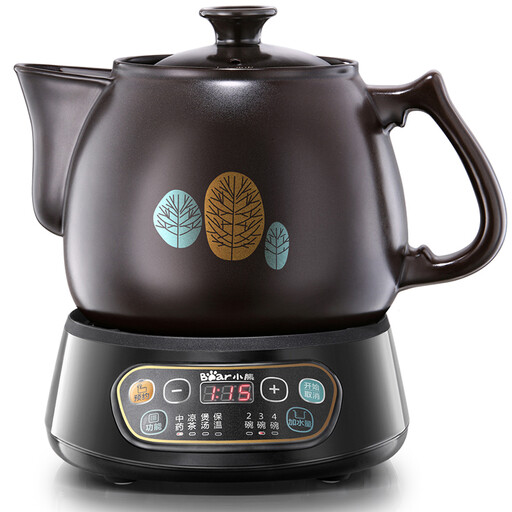
Why it suits this profile: This Chinese herbal medicine pot is designed for herbal infusions, soup and slow cooking. The ceramic pot and digital programme are well suited to users looking specifically for these functions.
Its purpose is more clearly defined than that of a general cooking pot. According to the product description, it has a timer, dry-boil protection and an automatic keep-warm function; the ceramic pot must not be immersed in water.
3.5 litres, 500–595 watts, digital controls, keeps food warm for up to two hours and a ceramic inner pot according to the product details.
We have put together a complete, up-to-date list of products that fully meet these strict selection criteria and the applicable European safety regulations.
For ramen, pasta, soup or rice, 1 to 1.6 litres is usually practical. Choose around 2 to 2.6 litres if you like making extra portions or also want to steam food. Bear in mind that the maximum fill mark is often lower than the total capacity.
Consumption depends on the power rating and how long the pot is used. A 600-watt pot running for 30 minutes uses approximately 0.3 kWh in theory. A 1500-watt model may cook more quickly, but it uses more energy over the same period. A slow cooker often has a lower power rating, but stays on for longer. So do not compare wattage alone; consider your cooking routine too.
Its lifespan depends on the build quality, how it is used and how well it is maintained. Do not use metal utensils in a pot with a non-stick coating, avoid dry boiling and allow ceramic components to cool down gradually. Clean the electrical base only with a damp cloth, and check the cord, plug and pot for damage before every use.
