
Vandaag of morgen in huis

Kwaliteit gegarandeerd

Welkomstaanbiedingen ontgrendelen: GRATIS bezorging | Tot 80% korting | Gratis 30 dagen JoyPlus-proefperiode
Download de app
An electric cooking pot might seem simple: add water, plug it in and start cooking. Yet compact models vary greatly in capacity, power, controls and maintenance. What you need for a student room is quite different from what a household that regularly makes soup, pasta or hotpot requires.
The biggest mistake isn't always choosing a model that's too cheap. More often, you end up with a pot that's too small, proves difficult to clean, or doesn't give you enough control while cooking.
A higher wattage doesn't automatically mean a pot will perform better. A 1000-watt model can boil quickly, but it also uses more electricity over longer cooking sessions than a mini electric cooking pot at 600 watts. For ramen or a small portion of soup, 600 watts can be enough. For multiple portions, steaming and hotpot, extra power is more practical.
So look at the combination of power, capacity and temperature control. A simple low and high setting works for basic dishes. Multiple settings give you more control when gently simmering, cooking rice or keeping soup warm.
A stated capacity of 2 litres doesn't mean you can fill the pot to the brim. Liquid can boil over during cooking. With the Plodon 2.0-litre model, for example, it's recommended to fill it to no more than two-thirds of its capacity.
For one person, 1 to 1.6 litres is often practical. Two people can usually manage with around 2 to 2.6 litres, depending on the dish. If you're cooking for several people, it's better to look at a larger multifunctional cooking pot.
A cooking pot with a non-stick coating is easier to clean, but the coating requires careful use. Metal spatulas, abrasive sponges and high heat can damage the surface. Also check whether the inner pot is removable and whether the electric base must not come into contact with water.
A stainless steel inner pot doesn't have a classic non-stick coating and can be suitable for users who value durability and simple materials. On the other hand, starchy dishes that stick may require more cleaning effort.
First, measure the space where you plan to use and store the pot. A compact cooking pot for a student room, office or camper van needs to be not only small enough for the worktop, but also fit in a cupboard or bag.
Bear in mind:
Shape also matters. A wide electric noodle pot is handy for ramen and ingredients you want to lay flat. A taller pot can be better suited to soup or steaming.
The wattage determines how quickly water heats up, but the result also depends on the lid, the amount of water and the ambient temperature. A 600W model is often aimed at small portions and low energy use per cooking session. A 1000W electric hotpot is more suitable for fast cooking and larger quantities.
A dual control, such as 300/600 watts or low/high, is simple to operate. Three settings offer more flexibility: low for simmering, medium for gentle cooking and high for rapid heating. A variable temperature control isn't essential for ramen or pasta, but can be handy for rice and stewed dishes.
Check whether the product description mentions features such as:
These features don't mean the appliance can be left unattended. Place a portable electric cooking pot on a flat, heat-resistant surface and keep the cord away from heat and water. Allow the appliance to cool down and unplug it before cleaning.
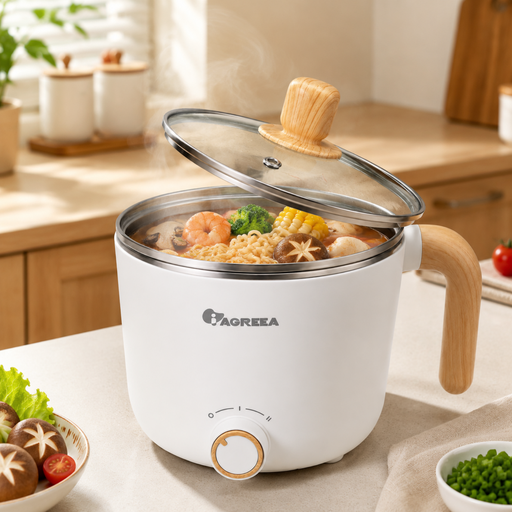
Why this fits the profile: The 1-litre capacity and 300/600-watt power output are well suited to simple one-person meals in a small kitchen, student room or office.
The dual power setting means you don't have to cook on high power for every meal. The stainless steel inner pot avoids a fragile non-stick coating.
1.0-litre capacity, 300/600 watts and suitable for noodles, soup, rice, pasta and eggs.
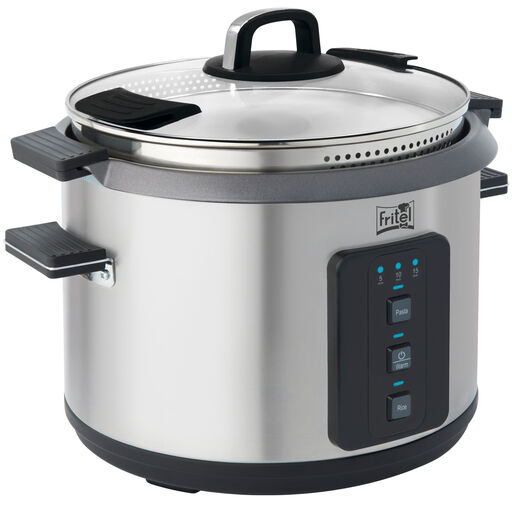
Why this fits the profile: The 6-litre capacity and three programmable functions are aimed at larger households and users who want to prepare pasta, rice and steamed dishes in one appliance.
The generous capacity stops you from overfilling a small pot. The stated PFAS-free inner pot and overheat protection give clear points to check when comparing.
6-litre capacity, 1100 watts, three functions, removable bowl and a stated statutory two-year guarantee.
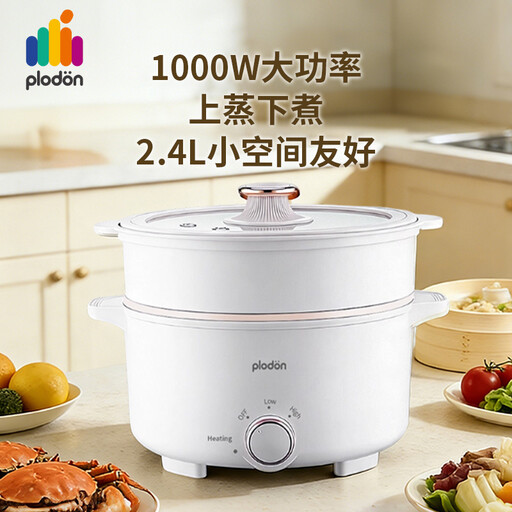
Why this fits the profile: This combination of 2.4 litres, 1000 watts and a removable steamer suits couples and small households who regularly make soup, ramen, pasta and steamed dishes.
The two heat settings offer fast boiling as well as a lower setting for gentle cooking. The separate steamer allows you to steam and boil at the same time, and can be cleaned independently.
2.4-litre capacity, 1000 watts, food-contact coating according to the product description and a removable steamer.
We've put together a full, up-to-date list of products that fully meet these strict selection criteria and comply with current European safety regulations.
Don't fill an electric cooking pot above the indicated limit. Noodles and pasta create foam, which can cause the pot to boil over more quickly. Use wooden, silicone or plastic utensils with a non-stick coating. Clean the inside with a soft sponge and let the pot cool down first.
Never immerse the electric base, plug or cord in water. A glass lid can crack from a sudden temperature change, so let it cool down before rinsing it. Before buying, also check that the manual is available in a language you understand and that the plug is suitable for UK sockets.
That depends on the wattage, cooking time and the amount of food. A mini electric cooking pot at 300 or 600 watts uses less power during cooking, but may take longer to bring water to the boil. For your own use, compare the wattage and the average cooking time. A lid helps to reduce heat loss.
You can with models whose description mentions rice cooking, such as the IAGREEA 1.0 litre and the FRITEL RC 1377. Use the recommended amount of water and stay within the maximum fill mark. Not every ramen cooking pot has a rice programme, so check the functions before you order.
The lifespan depends on use and maintenance. Avoid heating it when empty, using metal utensils, abrasive sponges and prolonged cooking on the highest setting if the manual advises against it. A stainless steel inner pot can be an alternative if you prefer not to use a coating, but it may require more attention when cleaning.
