
Vandaag of morgen in huis

Kwaliteit gegarandeerd

Welkomstaanbiedingen ontgrendelen: GRATIS bezorging | Tot 80% korting | Gratis 30 dagen JoyPlus-proefperiode
Download de app
An electric cooking pot can be a handy addition to a student room, small flat or busy household. With one appliance you can make ramen, soup, pasta, stews or a personal hotpot. However, not every multi-function cooking pot is suitable for every use.
Many buyers focus mainly on wattage or capacity. That can be misleading. A large cooking pot takes up more space than expected, a non-stick coating requires suitable utensils, and an electric hotpot isn't automatically designed for long, slow simmering. Below are the key points to check, along with a selection of popular choices for different situations.
An electric pan with 1,500 or 1,600 watts can heat up quickly, but it also uses more electricity during use than a 300 or 600 watt model. What's more, wattage isn't the only factor that determines speed. The controls, the shape of the base and the heat distribution all affect the cooking result.
For ramen or boiling water, high wattage is practical. For porridge, soup or an electric stew pot, a low setting is more important. So check whether the appliance has multiple heat settings.
A 5-litre electric cooking pot offers room for a group, but you can't fill it to the brim. When boiling stock, pasta or soup, you need extra space to prevent spillovers. A compact pot of 1 to 1.6 litres is better suited to one or two people, while 5 to 7 litres makes more sense for a family or group of friends.
Also pay attention to the dimensions. A wide hotpot pan can take up more space on the worktop than a taller, narrow mini electric cooking pot.
A cooking pot with a non-stick coating can help reduce food residue, but metal spatulas and abrasive scourers can damage the coating. With many electric models, the heating base must not be submerged in water either.
A removable inner pot, a detachable cord or a removable steamer makes cleaning easier. Always check which parts can be washed by hand or in the dishwasher according to the product information.
Use this guide as a practical reference:
Alongside the litre capacity, also check the external dimensions, handles and space for the cord. In a small kitchen, a model that's 30 cm wide can be tricky to store.
A wattage of 300 to 600 watts suits gentle cooking and small portions. Models around 800 to 1,000 watts are more versatile for ramen, pasta and soup. For larger quantities of hotpot or steaming, the stated wattage is often around 1,200 to 1,600 watts.
A dual setting, stepless control or separate simmer function gives you more control than just on/off. An automatic shut-off or dry-boil protection is a useful safety feature, but don't leave an electric cooking pot unattended.
An electric cooking pot has its own heating element, so it generally doesn't work like a regular pot on an induction hob. A separate stainless steel hotpot, such as a model with 304 stainless steel and a composite base, is designed for induction, gas, electric and ceramic hobs. Always check this in the product specifications.
With non-stick pans, it's best to use wooden, silicone or heat-resistant plastic utensils. A stainless steel inner pot doesn't have a non-stick coating, but it can discolour if overheated or not properly maintained. That's a different care profile from a coated pan.
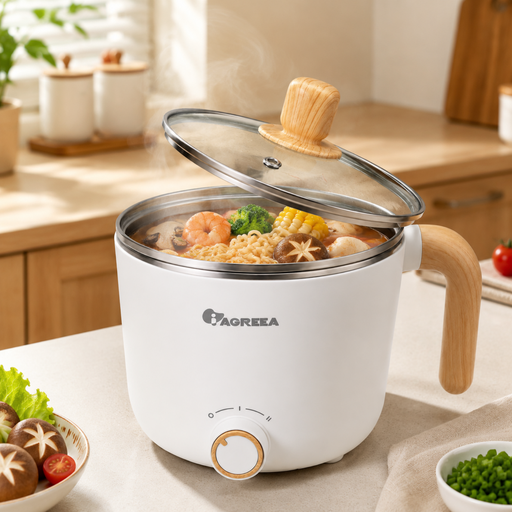
Why it fits this profile: The 1-litre capacity is designed for one to two people. With 300W/600W dual power control, you can cook gently or heat up more quickly for noodles, rice, soup and pasta.
The small capacity stops you buying a large hotpot for a single-person meal. The product information states a stainless steel inner pot rather than a non-stick coating.
1 litre capacity; two power settings; suitable for everyday small portions.
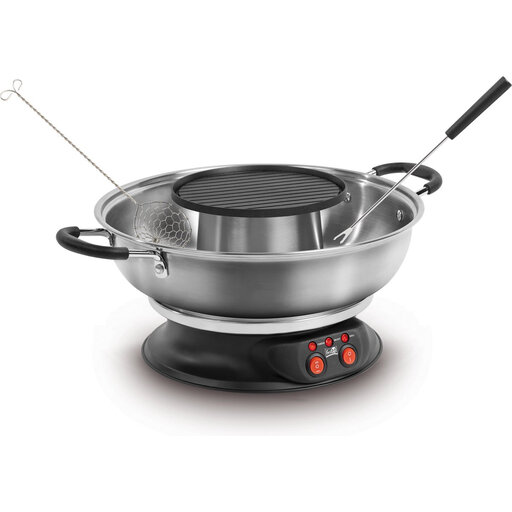
Why it fits this profile: This model combines a 2-litre fondue pot with a grill plate and, according to the product information, is designed for 2 to 6 people. The temperature is adjustable and the wattage is 1,950W.
The capacity and recommended number of people are clearly stated. The pot and grill plate are removable; according to the product description, both are dishwasher-safe.
2 litre capacity; grill and fondue function; six fondue forks; two-year manufacturer's warranty according to the product information.

Why it fits this profile: The 7-litre capacity and stated wattage of 1,600W are designed for large portions, hotpot meals and gatherings. There are two heat settings for fast cooking or gentle simmering.
The large capacity is clearly intended for groups, so you won't mistake the size for a compact cooking pot for small households. The description also mentions a maximum fill line and safety instructions.
7 litre capacity; 1,600W; two heat settings; wide opening and deep pan shape.
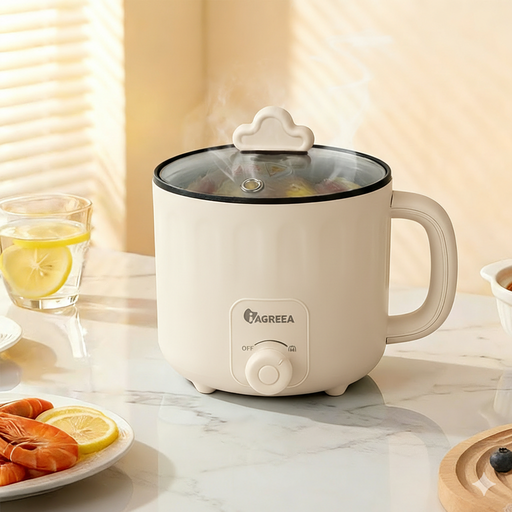
Why it fits this profile: The 1.6-litre capacity is suitable for one or two people. According to the product information, this model has 600W, a non-stick coating, automatic shut-off and dry-boil protection.
The balance between size and capacity is right for small kitchens. The safety features and single-button operation are verifiable specifications; just be sure to use suitable utensils.
1.6 litres; 600W; non-stick coating; compact design for ramen, soup and shabu-shabu.
We've put together a full, up-to-date list of products that fully meet these strict selection criteria and comply with current European safety regulations.
That depends on the wattage, cooking time and amount of food. A small model of 300 or 600 watts uses less electricity per hour than a 1,500 watt appliance, but it may take longer. Compare the stated wattage with your usage and don't choose a large pot for small portions.
Yes, many models are designed for this. Pay attention to the capacity, heat settings and the minimum and maximum fill lines. For one person, 1 to 1.6 litres is often enough. For several diners, a larger hotpot pan is more practical.
The lifespan depends on use and care. Metal utensils, high heat without ingredients and abrasive cleaning products can damage the coating more quickly. Don't heat the electric soup pot when empty, and replace the pot when the coating visibly peels or is badly damaged.
