
Vandaag of morgen in huis

Kwaliteit gegarandeerd

Welkomstaanbiedingen ontgrendelen: GRATIS bezorging | Tot 80% korting | Gratis 30 dagen JoyPlus-proefperiode
Download de app
An electric cooking pot can come in handy for noodles, soup, rice, stews and hotpot. But the difference between a practical pan and a disappointing purchase can be greater than the product photo suggests. A compact pan, for example, may be too small for two generous portions, while a large multicooker can take up more space than you need.
So don’t just look at the number of cooking programmes or a promise of “fast cooking”. Focus on capacity, power, materials, cleaning and safety features.
An electric cooking pot with a capacity of 5 or 6 litres may seem spacious, but you usually shouldn’t fill it right to the brim. Soup, rice, pasta and ingredients that expand need room to prevent the contents from boiling over. So an electric cooking pot 5 litres is suitable for several people, but not necessarily for five large portions.
For one person or a student, a mini electric cooking pot with a capacity of 1 to 1.6 litres is often more practical. For a family or a family hotpot, a capacity of 5 to 7.5 litres is a better fit.
An electric multicooker with 14 programmes sounds versatile, but check that its functions suit the dishes you make. A standard electric hotpot is suitable for boiling, simmering and hotpot. A multicooker may also steam, slow cook or pressure cook.
Also consider the controls. A clear dial can be easier to use every day than a menu packed with digital options. An electric pressure cooker also requires extra care with the locking mechanism, steam outlet and maximum fill level.
A cooking pot with a non-stick coating is usually easy to clean, but metal utensils and scouring pads can damage the inside. Also check whether the inner pot is removable and whether any parts are dishwasher-safe according to the instructions.
For a stainless steel inner pot, use a soft sponge to help prevent scratches and dull patches. An uncoated model can be a practical choice if you’d rather not use a non-stick coating, but burnt-on food may need soaking for longer.
Use this guide as a practical starting point:
Check the dimensions as well as the capacity. A 7-litre pot can take up a lot of room on a narrow worktop, even if its capacity suits your household.
The wattage gives you an idea of the heating power, but it isn’t the only factor that affects cooking time. A 1,000-watt pot may heat up quickly, but temperature control, the amount of food and whether you use the lid also make a difference.
For noodles, soup and hotpot, two settings are often enough. If you want to simmer, steam and slow cook, you’ll get more use from several heat settings or automatic programmes. With a cooking pot with steamer, check that there’s enough room for the ingredients and that the steamer sits securely in the pot.
Check at least the following:
Never force the lid open when using a pressure-cooking function. Wait until the pressure has been released and the float valve has dropped. Don’t fill an electric pressure cooker above the marked level, and keep clear of the steam outlet while releasing steam.
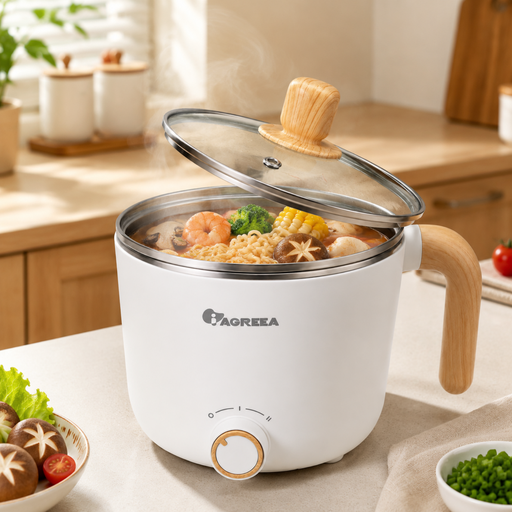
Why it suits this profile: With a capacity of 1 litre, this pot takes up little space and is designed for one or two people. It’s suitable for noodles, soup, rice, pasta, vegetables and eggs.
Its limited capacity makes it clear what size portions the pot is intended for. The 300 and 600-watt settings let you choose between gentle cooking and faster heating.
Stainless steel interior, compact size and two power settings.

Why it suits this profile: This electric multicooker offers 7 functions, including pressure cooking, sautéing, slow cooking, steaming and keeping food warm. Its 7.1-litre capacity is suited to larger households.
The functions are described specifically, rather than simply being listed as general cooking programmes. The wide inner pot gives you extra room to work, but check beforehand that its dimensions will fit on your worktop.
7-in-1 functionality, stainless steel inner pot and a capacity of 7.1 litres.
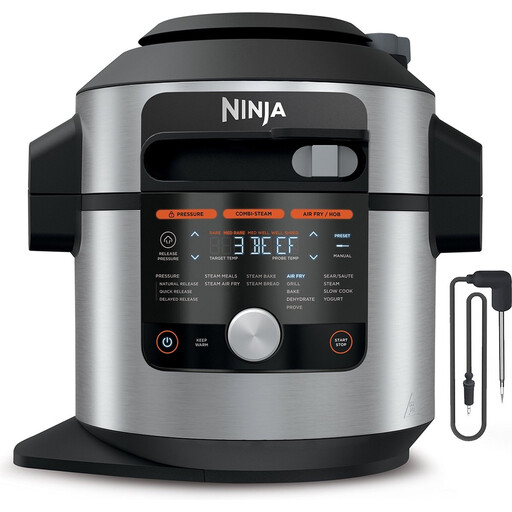
Why it suits this profile: This cooker combines cooking, steaming, baking, grilling and other functions. According to the product information, its capacity is suitable for meals for up to six people.
The 14 listed functions are linked to specific cooking methods. Check the dimensions and weight beforehand to avoid finding that a versatile appliance is too large for your kitchen.
7.5-litre capacity, removable bowl, non-stick coating and temperature settings up to 240 °C according to the product specifications.
We’ve put together a complete, up-to-date list of products that meet these strict selection criteria and the applicable European safety requirements.
Place the appliance on a flat, heat-resistant surface with enough space around it. Don’t position the pot directly beneath a kitchen cupboard if steam escapes through the lid. Never immerse the heating base in water. Unplug the pot before cleaning or moving it.
For students and people living in studio flats, an electric cooking pot for students with a capacity of 1 to 2.4 litres and a detachable cord is a practical choice. If you often cook for several people, it’s better to look at a 5- or 6-litre model than to prepare several small portions one after another.
Depending on the model, you can make noodles, rice, soup, pasta, vegetables, eggs, stews and hotpot. A cooking pot with a steamer is also suitable for ingredients such as vegetables, dumplings or eggs. Check each product to see which functions are actually listed.
Consumption depends on the power, cooking time and setting you choose. A 1,500-watt model theoretically uses more electricity during an hour at full power than a 600-watt model, but higher power can reduce the time it takes to heat up. Follow the recipe when using the pot, and don’t leave the keep-warm setting on for longer than necessary.
Its lifespan depends on the materials, how often you use it and how well you maintain it. For a non-stick coating, use wooden or silicone utensils, avoid abrasive cleaners and let the pot cool before cleaning it. For models with a pressure-cooking function, also check the seal, lid and steam valves according to the instructions.
