
Vandaag of morgen in huis

Kwaliteit gegarandeerd

Welkomstaanbiedingen ontgrendelen: GRATIS bezorging | Tot 80% korting | Gratis 30 dagen JoyPlus-proefperiode
Download de app
An electric cooking pot can save a great deal of space in a student room, small flat, office or campervan. With one appliance, you can prepare ramen, soup, pasta, stews, hotpot or steamed vegetables, for example. However, not every model is designed for the same type of use. A compact electric pan for one person works differently from a multifunctional 5- or 6-litre cooking pot.
Pay particular attention to these three common pitfalls:
Look at the usable capacity, not just the size of the outer casing. A 1.6-litre mini electric cooking pot is well suited to a student, single person or couple. It may be sufficient for two generous portions of soup or noodles, but a larger capacity is more practical for several people.
A model of around 2.5 to 2.6 litres gives you more room for soup, pasta, rice or a small hotpot. For families and meal preparation, 5- or 6-litre models are more appealing. Never fill a pot above the indicated maximum mark. A lower fill limit may apply to ingredients that expand, such as beans or grains.
Power is measured in watts. A compact ramen cooker rated at 600 watts is suitable for boiling, heating and simple cooking. A larger 1,500-watt electric hotpot offers more capacity and can reach temperature more quickly, but it also uses more electricity while heating.
A dial with two or three settings is simple and easy to understand. Digital programmes offer more choice, for example for steaming, simmering or slow cooking. However, check that the functions suit your cooking style. An appliance with a slow cooker function is not automatically suitable for frying at high temperatures.
Look for features such as:
With a non-stick cooking pot, it is best to use wooden, silicone or nylon utensils. Metal spatulas and scouring pads can damage the coating. Clean the heating base with a slightly damp cloth and keep the plug, cord and connection point dry.
A pressure-cooking function requires extra care. Never force open a pressurised pot. Wait until the pressure indicator has dropped and follow the instructions for releasing steam. Keep children away while steam is being released.
The choices below are based on verifiable features such as capacity, power, functions and safety features. The product information provided is based on descriptions from the brands and sellers.
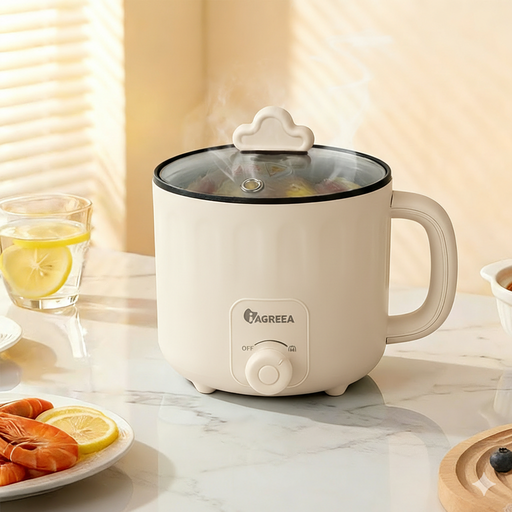
Why it suits this profile: With a capacity of 1.6 litres and dimensions of approximately 17 x 15 cm, this model is designed for one person, students and small kitchens. The single-button control keeps operation simple.
The clearly stated capacity helps prevent you from buying an appliance that is too large for one- or two-person portions. The description mentions automatic shut-off and boil-dry protection.
600 watts, non-stick interior, portable handle and suitable for ramen, soup, stews and shabu-shabu.

Why it suits this profile: The 6-litre capacity is designed for larger households and meals for several people. Fourteen cooking functions offer options including pressure cooking, steaming, stewing and slow cooking.
The generous capacity prevents undersized portions when cooking for the family. The product specifications mention a stainless-steel inner pot, keep-warm function and safety instructions for pressure and steam.
1000 watts, electronic controls, 6-litre capacity and several automatic programmes for a wide range of dishes.

Why it suits this profile: This model is designed for hotpot, simmering, stewing and larger shared meals. The continuously adjustable power setting gives you greater control across different cooking methods.
The 5-litre capacity is clearly specified, allowing you to match the size to family portions. Boil-dry protection and a glass lid with handle are included in the product information.
1500 watts, 5-litre capacity, slow cooker and hotpot functions, non-stick interior and detachable cord.
Energy consumption depends on the wattage and how long the appliance is used. A 600-watt appliance heating for half an hour theoretically uses around 0.3 kWh. In practice, a thermostat may switch off temporarily. So do not compare wattages alone; consider portion size and cooking time as well.
Place every electric cooking pot on a flat, dry and heat-resistant surface. Keep ventilation openings clear and do not use the appliance next to a sink. Allow a non-stick cooking pot to cool before cleaning it. Before buying, also check the plug, warranty terms, included accessories and whether a replacement inner pot is available.
We have put together a complete, up-to-date list of products that fully meet these strict selection criteria and the applicable European safety regulations.
Yes, provided that using one is permitted at the location in question and that a stable, dry surface is available. A compact 1.6-litre electric pan takes up very little space and is suitable for ramen, soup, pasta and simple stews. Do not leave the appliance unattended and pay attention to the maximum fill level.
Its lifespan depends on how it is used, cleaned and maintained. Do not use metal utensils with a non-stick coating, prevent the pot from boiling dry and never immerse the electric base in water. Always follow the manufacturer’s instructions and replace a damaged cord immediately.
That depends on the wattage, cooking time, portion size and your electricity tariff. A smaller pot heats only the amount you need, while a larger multifunctional cooking pot may use more energy but can prepare several portions at once. Compare total usage rather than looking at wattage alone.
