
Vandaag of morgen in huis

Kwaliteit gegarandeerd

Welkomstaanbiedingen ontgrendelen: GRATIS bezorging | Tot 80% korting | Gratis 30 dagen JoyPlus-proefperiode
Download de app
An electric cooking pot can be useful for noodles, soup, rice, stews and hotpot. However, the difference between a suitable pan and a disappointing purchase is often greater than the product photo suggests. A small pan may be practical for one person but fall short when preparing a family meal. A model with lots of programmes may look appealing, even though all you really need is simple temperature control.
Joybuy Product Recommendation Officer filters the most important product specifications and highlights the most common pitfalls.
An electric pan with a capacity of 5 or 6 litres may seem spacious, but you cannot always fill it to the brim. Pressure cooking also comes with additional filling limits. Ingredients such as rice, pulses and pasta can expand and foam.
So check:
For one or two people, a 1 to 1.6-litre mini electric cooking pot may be sufficient. For a family electric cooking pot, 5 to 7.6 litres is more practical, depending on the number of portions.
A multifunctional electric pan may offer functions for cooking, stewing, steaming, rice or slow cooking. That does not mean every function provides the same temperature control or capacity. An electric sauté pan, for example, is mainly designed for frying and simmering, while an electric hotpot is generally suitable for boiling and sharing food at the table.
Pay attention to the difference between:
According to a brand’s own research, certain programmes may cook faster or save energy. Treat claims such as “up to 70% faster” or “up to 80% energy savings” as information provided by the brand; actual results depend on the recipe, quantity, starting temperature and selected function.
A removable inner pot, detachable power cord or dishwasher-safe parts can make everyday use easier. However, check exactly which parts are dishwasher-safe. The heating base, plug and cable must not be submerged in water.
With an electric pressure cooker, pay particular attention to:
When using non-stick coatings, use wooden or silicone utensils rather than metal spatulas or scouring pads.
Choose the capacity based on the number of people you are cooking for:
Also check the external dimensions. A 6-litre pan may be spacious inside but still take up a lot of cupboard space. Measure the available worktop area in advance and check that the lid can open without obstructions.
Power is measured in watts. A higher wattage may speed up heating, but it can also increase electricity consumption during prolonged use. More important than wattage alone is how you control the heat.
A simple pan with two settings is suitable for cooking, noodles and hotpot. A dial with several settings gives you more control when simmering, stewing and frying. Automatic programmes are useful if you often prepare the same dishes, but check that the instructions clearly explain how much liquid is needed and how long each programme takes.
A stainless-steel inner pot is generally designed for durability and may be suitable for intensive everyday use. A non-stick coating helps food come away easily and makes cleaning simpler, but it requires careful maintenance. According to the product description, a ceramic coating may be PFOA-free; always check the exact product specifications and care instructions.
Also look out for:
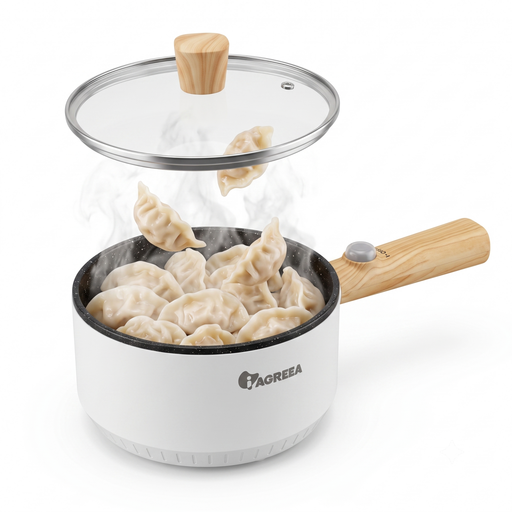
Why it suits this profile: Its compact capacity and two power settings make it suitable for students, single people and small kitchens. You can use it to prepare noodles, soup, porridge and an individual hotpot, among other dishes.
The capacity makes it clear that this is a personal pan rather than a family-sized model. The product description also mentions overheating and boil-dry protection.
1.2-litre capacity, 1000 watts, two settings, glass lid and detachable EU plug.

Why it suits this profile: This model is designed for larger households that want to combine several cooking methods in one appliance, including pressure cooking, sautéing, steaming and slow cooking.
The product information states a capacity of 7.1 litres and a stainless-steel inner pot. This makes the capacity verifiable rather than something suggested by the appearance alone.
7-in-1 functions, a wide cooking base, automatic keep-warm function and at least two years’ statutory warranty according to the product information.

Why it suits this profile: The combination of 6 litres, 1000 watts and 14 cooking functions is ideal for families that regularly prepare large portions of soup, rice or stews.
The product description gives specific filling warnings, including the MAX line and a lower limit for ingredients that expand. The inner pot is removable.
6-litre capacity, 14 programmes, automatic keep-warm function and stainless-steel inner pot according to the product details.
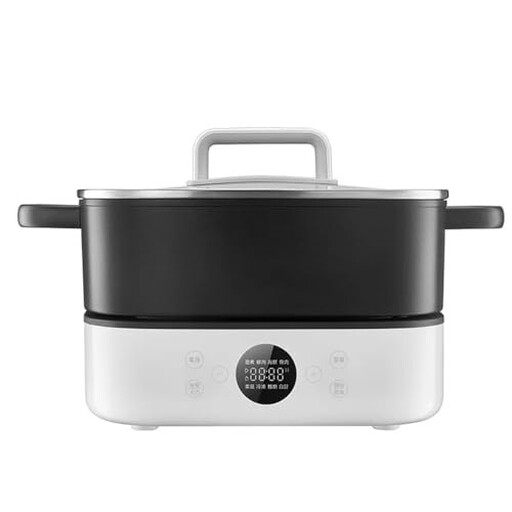
Why it suits this profile: This electric hotpot is designed for cooking together at the table and, according to the product information, offers hotpot, steaming and cooking functions.
The product category and functions are clearly described. This makes the model a more logical choice for cooking and hotpot than for pressure cooking or advanced slow-cooker programmes.
6-litre capacity, 1500 watts and several cooking modes for shared meals.
We have put together a complete, up-to-date list of products that fully meet these strict selection criteria and the applicable European safety regulations.
Yes, as long as the model is suitable for the available space and electrical connection. A 1 to 1.6-litre mini electric cooking pot is practical for noodles, soup, rice and simple single-serving meals. Use the appliance on a flat, dry and heat-resistant surface, and check that there is sufficient ventilation space.
Energy consumption depends on the power rating and how long you use the appliance. A 1000-watt model theoretically uses 1 kilowatt-hour when it operates continuously at full power for one hour. In practice, a pan will often reduce its power or will not heat continuously. So compare more than just wattage: also consider cooking time, portion size and programme.
Its lifespan depends on how it is used, how well it is maintained and the quality of components such as the non-stick coating, seal and power cable. Clean the pan according to the instructions, prevent scratches and regularly check the seal and steam outlet on a pressure cooker. Allow the appliance to cool completely before cleaning it, and never submerge the heating base in water.
