
Vandaag of morgen in huis

Kwaliteit gegarandeerd

Welkomstaanbiedingen ontgrendelen: GRATIS bezorging | Tot 80% korting | Gratis 30 dagen JoyPlus-proefperiode
Download de app
An electric cooking pot can be useful in a studio flat, student room, office space or kitchen with limited worktop space. You can use one appliance for noodles, soup, hotpot, slow cooking or a simple meal. However, many models look similar, while the differences in capacity, controls and cleaning can be significant.
Pay particular attention to these three common pitfalls:
High wattage without a suitable capacity
More power may sound appealing, but a small 1-litre pot does not need 2,000 watts for everyday use. Conversely, a large pot with low power may take a long time to reach temperature.
“Multifunctional” without clear temperature control
An electric pot for noodles and soup is of limited use if it only has an on/off switch. Simmering, frying and fondue require more control than boiling water.
A non-stick coating that is not maintained correctly
According to product information from various brands, a non-stick coating can make cleaning easier. That does not mean every coating can withstand metal cutlery, abrasive sponges or high dry-boiling temperatures. Always check the instructions and use wooden or silicone utensils if recommended.
Choose the capacity based on the number of people and the type of dishes you prepare:
A larger pot not only takes up more space on the worktop, but often also requires a sturdier storage area. Measure the available space in advance, including the height of the lid.
Power is measured in watts. A higher wattage can speed up heating, but the result also depends on the pot’s capacity, the heating element and the temperature control.
Also consider the controls. A model with two settings is straightforward, while a dial or continuously variable control gives you more control when simmering and frying. An electric sauté pan or multifunctional electric pot can be useful if you also want to stir-fry as well as cook.
Check the following before buying:
You will often use an electric hotpot or electric fondue pot at the table. Place the appliance on a flat, heat-resistant surface and never leave it unattended while in use.
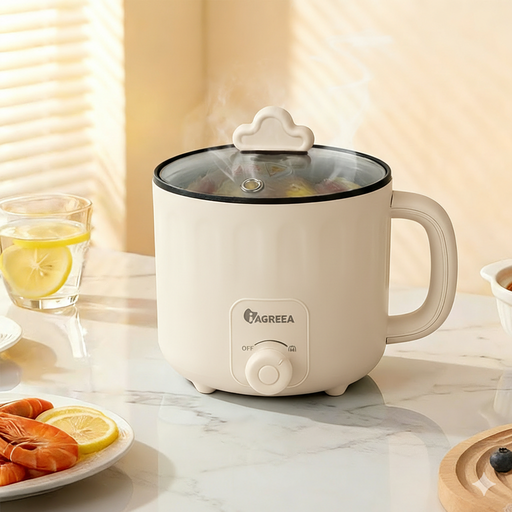
Why it suits this profile: The 1.6-litre capacity and one-button control are well suited to a student room, studio flat or small apartment. According to the product information, the pot is designed for noodles, soup, shabu-shabu and slow cooking.
The specifications list 600 watts and a compact capacity, so the appliance is not unnecessarily large for small portions.
1.6 litres, non-stick coating according to the product description, automatic shut-off and overheat protection.
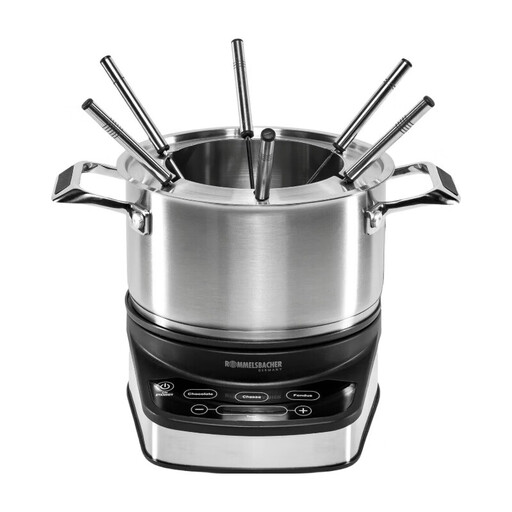
Why it suits this profile: This model is designed for fondue for several people, with a capacity of 1.2 litres, 1,200 watts and a temperature setting from 35 to 190 °C.
The product information lists temperature steps, a time limit, a residual-heat indicator and signals. This makes the controls more comprehensive than a simple on/off switch.
Stainless-steel pot, touch controls, six fondue forks and a stated temperature range of 35–190 °C.
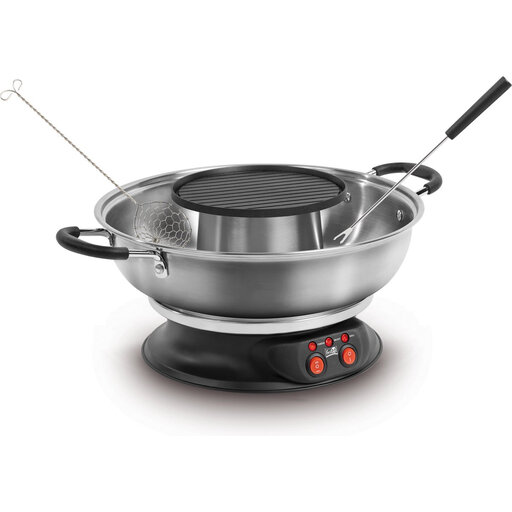
Why it suits this profile: The combination of a 2-litre fondue bowl and a separate grill plate is designed for shared meals for two to six people.
The product specifications clearly state which functions are available: fondue and grilling can be used separately or simultaneously. This avoids an unclear “everything-in-one” promise.
1,950 watts, 2-litre capacity, removable parts and dishwasher-safe pot and grill plate according to the product information.
We have put together a complete, up-to-date list of products that fully meet these strict selection criteria and the applicable European safety regulations.
An electric cooking pot uses electricity based on its power rating and how long it is used. A 1,000-watt appliance running at full power for half an hour theoretically uses around 0.5 kWh. In practice, a thermostat may switch off occasionally, resulting in lower consumption. Check the energy label or product instructions if energy use is important to you.
Never use the pot empty if the instructions prohibit this. Keep the fill level below the indicated maximum mark, particularly when preparing soup, oil and boiling water. After use, allow an electric hob, portable cooking pot or electric fondue pot to cool completely before moving or cleaning it.
Yes, many models are designed for this. However, check the capacity and power rating. A 1 to 1.6-litre pot is suitable for individual portions; for several people, 2.4 litres or more is more practical.
Its lifespan depends on usage, maintenance, the quality of its components and the non-stick coating. Use suitable utensils, avoid letting the pot boil dry and keep the electrical base dry. Store a model with a removable cord and lid according to the instructions to help prevent damage to the cable and valve.
A portable electric cooking pot can be suitable in places with a compatible socket and sufficient power supply. For camping or travelling, check in advance that the wattage is compatible with the connection. Always use the appliance on a stable, dry and heat-resistant surface.
