
Vandaag of morgen in huis

Kwaliteit gegarandeerd

Welkomstaanbiedingen ontgrendelen: GRATIS bezorging | Tot 80% korting | Gratis 30 dagen JoyPlus-proefperiode
Download de app
Fresh coffee starts with evenly ground beans. But an electric coffee grinder isn’t automatically right for every brewing method. A simple blade grinder can work well for a pot of coffee, while espresso calls for a precise coffee grinder with grind settings. Noise levels, capacity and ease of cleaning also determine whether an appliance is enjoyable to use every day.
Joybuy Product Recommendation Officer helps you separate the key specifications from the marketing talk. That way, you can choose a coffee bean grinder that suits your routine, budget and favourite coffee.
A 170 or 200-watt motor might sound powerful, but wattage doesn’t automatically determine how evenly the coffee is ground. A blade grinder chops beans rather than grinding them evenly. This can leave you with a mix of fine and coarse pieces.
That can be acceptable for filter coffee. For espresso, a grinding mechanism with adjustable grind settings is usually more practical, as small adjustments can affect your brew time and flavour balance.
A manufacturer might list a large number of grind settings, but check how the adjustment works too. Are there clear clicks, or is it a stepless dial? Is the product designed for both espresso and filter coffee? A big number without further technical details says little about how the grinder will work day to day.
Also check the finest and coarsest settings. An espresso grinder needs to grind finely, while a grinder for filter coffee and French press also needs a coarse setting.
A 250-gram bean hopper sounds handy, but if you usually make one or two cups, a smaller hopper might be easier to manage. For a portable coffee grinder, weight, battery life and charging time also matter.
Check the usage limits too. According to the product information for some models, you need to let the grinder rest after several grinding sessions to prevent overheating. This matters if you’re making coffee for several people.
An electric coffee grinder with a grinding mechanism usually uses burrs. These grind the beans between two surfaces. A conical grinder uses conical burrs, while a flat burr grinder uses flat burrs.
A blade grinder, like some compact entry-level models, uses a spinning blade. How fine the coffee is depends mainly on how long you grind it. This is simple, but less precise. For espresso, pour-over and other brewing methods where you want to make adjustments, burrs and clear grind settings are generally the more practical choice.
For home use, having several useful settings matters more than simply having the highest number. A model with 14 settings may be enough if you always use the same brewing method. If you switch between espresso, filter coffee and French press, 30 or 36 settings can give you more flexibility.
A timer, memory function or automatic stop can make the grinder easier to use. Check whether you can set the dose by time, number of cups or weight. Timing doesn’t give you an exact amount of coffee, as beans vary in size and density.
A quiet coffee grinder is especially useful in a flat, shared kitchen or office. Manufacturers use different ways to measure noise, so don’t just look for the term “low noise”. Consider the intended use and how the grinder is built too.
Measure the space available on your worktop. A compact coffee grinder is easier to fit under kitchen cupboards, while a larger model often offers more capacity or a more advanced grinding mechanism. Also look for:
The recommendations below are matched to different types of user. The features listed are based on the product information provided; brand claims about flavour or extraction are not presented as guaranteed results.
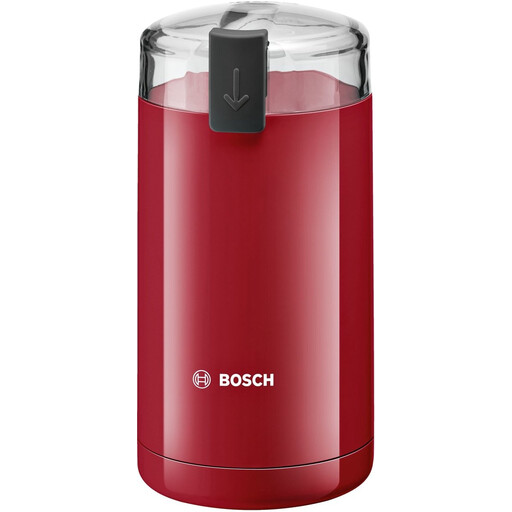
Why it suits this type of user: The controls are simple, and the 75-gram capacity is enough for a whole pot of coffee. It’s a practical choice if you want to try freshly ground beans without needing lots of settings.
The product information clearly states that this model uses a stainless steel blade. So you know you’re buying a simple blade grinder, not an adjustable grinder for espresso.
180 W power, 75-gram capacity and a lid safety lock that only lets the appliance operate when the lid is correctly in place.
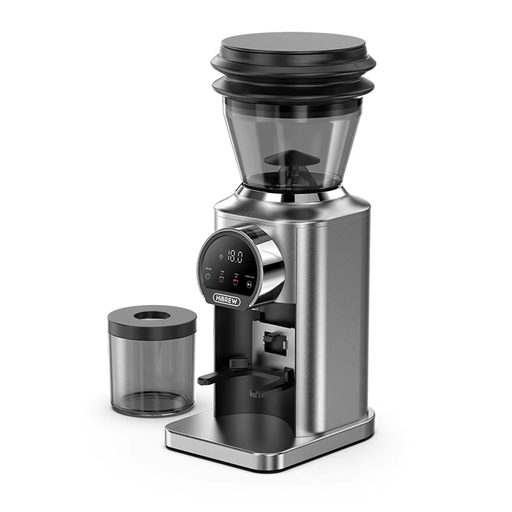
Why it suits this type of user: The touchscreen controls, 31 grind settings and portafilter holder make this a good fit for home baristas who switch between espresso and other brewing methods.
The grind settings aren’t just mentioned as a marketing term: the product information specifies 31 levels and a titanium-coated stainless steel grinding mechanism.
31 grind settings, adjustable grind time, touchscreen controls, anti-static plasma technology and a portafilter holder.
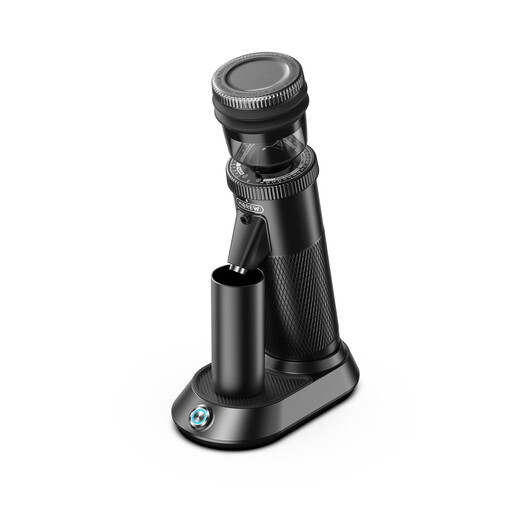
Why it suits this type of user: If you regularly make espresso, filter coffee or use different beans, 36 grind settings and a 48 mm conical grinding mechanism give you more options to fine-tune your grind.
The product name and specifications state both the type of grinding mechanism and the number of settings. Slow and fast grinding modes are also listed separately.
48 mm conical burrs, 36 grind settings, anti-static and anti-scattering features, and two speed modes.
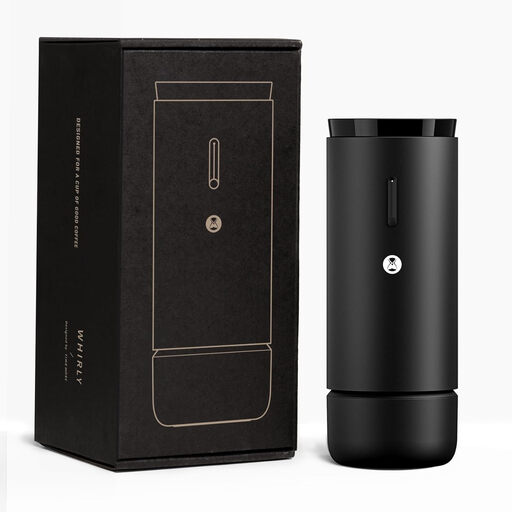
Why it suits this type of user: Its cordless design, weight of 940 grams and stated battery life of more than 20 espresso shots per charge make this model suitable for travel, camping or use at work.
The product information gives clear limits: a maximum of 50 grams of beans, 30 grams recommended for espresso, and rest periods between several consecutive grinding sessions.
30 grind settings, 50-gram maximum capacity, USB-C charging, automatic stop, protection against blockages and a low-noise design according to the product description.
We’ve put together a complete, up-to-date list of products that meet these strict selection criteria and the applicable European safety regulations.
An electric coffee grinder will generally keep working better if you use it according to the instructions. Don’t grind wet beans, or use the appliance for herbs, nuts or other ingredients unless it’s designed for them. Brush away loose coffee grounds regularly and keep water away from the motor housing.
For a blade grinder, pulsing is often recommended. With a burr grinder, adjust the grind setting in the order specified. Don’t force the dial if beans are caught between the burrs. Always unplug the appliance before cleaning or maintenance.
Choose a model with burrs and finely adjustable grind settings, ideally with a portafilter holder. Check whether the product information specifically mentions espresso too. A simple blade grinder usually gives you less control over the grind.
If you use it every day, a quick clean once a week is a practical starting point. Remove loose grounds more often if you use dark or oily beans. Always follow the instructions and don’t get the motor base wet.
Most models run for only a few seconds per coffee dose, so daily electricity use is limited. The stated motor power, for example 110, 150 or 180 watts, is the maximum electrical power while the grinder is running, not the amount of electricity used per cup of coffee.
