
Vandaag of morgen in huis

Kwaliteit gegarandeerd

Welkomstaanbiedingen ontgrendelen: GRATIS bezorging | Tot 80% korting | Gratis 30 dagen JoyPlus-proefperiode
Download de app
An electric coffee grinder quickly prepares fresh coffee beans for espresso, filter coffee or French press. However, the differences between models can be significant. A low price may seem appealing, but a grinder with blades only often gives you less control over the grind. A large number of grind settings sounds useful, but it does not automatically indicate how practical the grinder is for your brewing method.
Joybuy’s Product Recommendation Officer therefore focuses primarily on verifiable features: the type of grinding mechanism, adjustable grind size, capacity, operation, cleaning and safety information.
A basic electric blade grinder usually works with a push button. The longer you grind, the finer the result becomes. This is practical for occasional use, but gives you less precise control. The grind may also consist of a mixture of fine and coarse particles.
A coffee grinder with burrs works differently: the beans are ground between two grinding surfaces. Models with conical or flat burrs generally offer more adjustment options. However, always check the actual number of grind settings and the instructions for your brewing method.
Brands may claim that their grinder produces a consistent grind or delivers a particular yield. Treat this as a brand claim, not a guaranteed result. According to HiBREW’s own product description, for example, the G3 achieves a grinding yield of 99.5 per cent with the stated quantity of beans. This figure is linked to the manufacturer’s conditions and is not a general guarantee for every bean or setting.
You should therefore also consider practical details such as the type of grinding mechanism, the burr diameter and whether fine adjustments are possible.
A 220 or 250-gram hopper can be useful for making several cups, but coffee beans do not remain in peak condition indefinitely when stored in an open hopper for long periods. For one or two cups at a time, a smaller dosing container may sometimes make more sense. In a home office, family household or small café, a larger bean container and portion setting can save time.
For espresso, you need an espresso coffee grinder that can grind finely enough and allows small adjustments. A model with stepless adjustment is suitable if you regularly experiment with extraction time and dose. For filter coffee and pour-over, a consistent grind with several medium-fine settings is important. For a French press coffee grinder, you need a clearly defined coarse setting.
A conical coffee grinder is often compact and suitable for a range of brewing methods. You should also look at:
A capacity of 60 to 90 grams suits smaller households and occasional use. Models holding 200 grams or more are more practical when several people drink coffee. A dosing function, timer or automatic shut-off can help you work more consistently. Bear in mind that a coffee grinder with a timer does not automatically dose by weight: the time and actual quantity can vary from one bean to another.
A portable model with a maximum dose of 25 grams is primarily intended for one brew. This reduces waste, but makes it less suitable when you want to grind enough coffee for several cups quickly.
Check whether the parts need to be cleaned dry and whether the motor housing must not come into contact with water. With blade models, short pulses are often necessary to limit overheating. Burrs can work more consistently, but require regular maintenance with a brush or suitable cleaning product.
Also check the electrical specifications. For use in the Netherlands, a model rated for 220–240 volts and 50 Hz is suitable. A CE mark is a relevant indication of conformity, but it does not replace reading the manual and safety instructions.
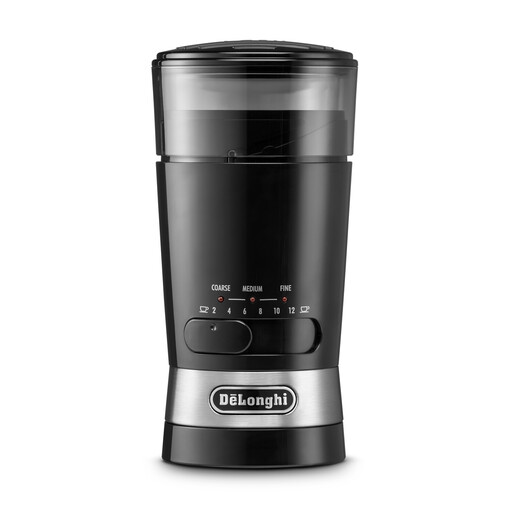
Why it suits this profile: This compact model is designed for everyday home use and has a 170-watt motor, a 90-gram hopper and three grind settings according to the product information.
The controls are simple, but the three settings make its limitation clear. This prevents you from paying for settings you do not need.
Compact size, 90-gram bean capacity and push-button operation. The grinding mechanism uses stainless-steel blades.
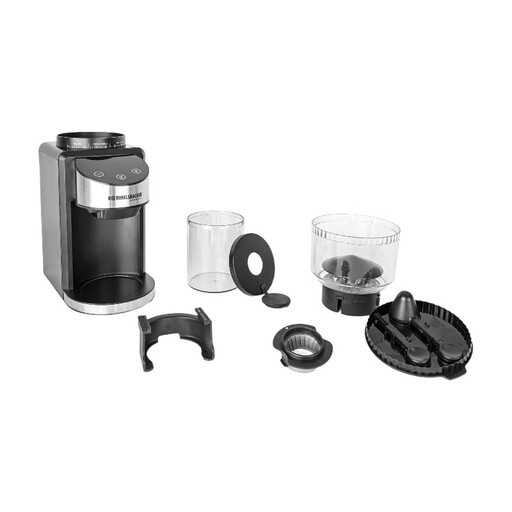
Why it suits this profile: The product information lists 35 grind settings, a 220-gram hopper, adjustable portions and a holder for grinding directly into a portafilter.
The grind settings are clearly specified. This means you can check in advance whether fine, medium-fine and coarse grinding suit your preparation method.
Stainless-steel conical burrs, 35 settings and portion selection in 10 steps. The housing and parts are not specified as dishwasher-safe.
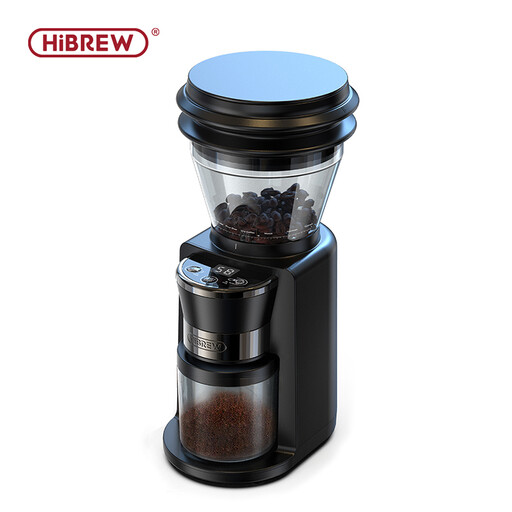
Why it suits this profile: This model has 34 settings, a 210-gram bean hopper, a 100-gram grounds container and a 220–240-volt power supply.
The specifications state both the number of settings and the container capacities. This allows you to match the capacity to several daily brewing sessions.
Conical grinding mechanism, digital dosing and an anti-static function according to the product description. The appliance weighs 1.6 kilograms.
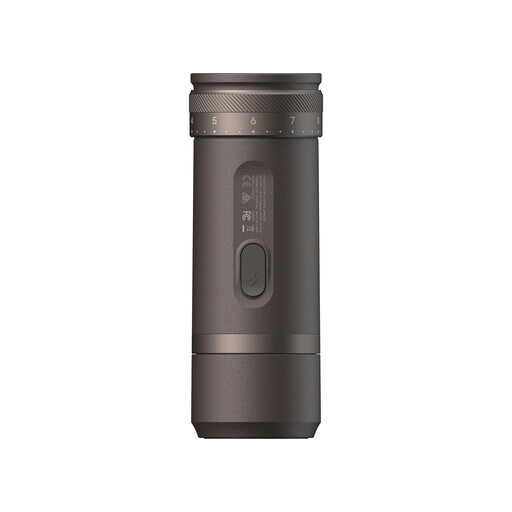
Why it suits this profile: This portable coffee grinder runs on a rechargeable battery, weighs 690 grams and has a maximum dose of 25 grams.
The stated maximum dose makes it clear that this model is primarily intended for a few cups at a time, rather than large groups.
38 mm conical burr, 28 settings with stepless fine adjustment and one-button operation. Charging takes approximately one hour according to the specification.
We have compiled a complete, up-to-date list of products that fully meet these strict selection criteria and the applicable European safety requirements.
Consumers’ statutory conformity rights in the European Union continue to apply. You should also check the product’s specific warranty and returns policy.
Choose a model with a fine setting and sufficient adjustment options. A coffee grinder with adjustable grind size and stepless fine adjustment gives you more scope to adapt the grind to your espresso machine. Also check whether the grinder can grind directly into a portafilter.
With daily use, a light clean with a dry brush is generally advisable. Regularly remove accumulated powder from the grinding chamber and follow the manual for disassembly. Do not use water on the motor housing, power cable or battery compartment.
Consumption depends on the motor power and how long the grinder is used. A 200-watt grinder uses those 200 watts only while grinding. As a grinding session usually lasts just a short time, total daily usage is limited. With a cordless model, you mainly need to consider charging and the stated battery capacity.
