
Vandaag of morgen in huis

Kwaliteit gegarandeerd
Download de app
Categorieën

Choosing an electric coffee grinder can be a daunting task. You want the rich aromas of freshly ground coffee, but the market is saturated with models featuring different burrs, blades, and settings. The right choice depends on your coffee preferences and how you plan to use the device. This guide provides a technical breakdown of the key specifications to help you find a model that meets your needs and ensures you make a worthwhile investment.
Before making a choice, it is helpful to understand the technical features that determine the quality of the grind and the functionality of the device.
Grinding Mechanism: Burrs vs. Blades
Grind Size Adjustability The ability to adjust the fineness of the grind is crucial. An espresso grinder requires a very fine, powder-like grind, whereas a French press needs a coarse grind. A stepless adjustment system offers the highest precision, which is especially important for the discerning home barista. Models with a limited number of steps are simpler to use and are sufficient for filter coffee or a Moka pot.
Material and Power Build quality determines durability. A housing made of stainless steel or aluminium is robust and easy to clean. The power, expressed in Watts, indicates the strength of the motor. A more powerful motor can grind harder beans and operate faster, which can reduce heat build-up and the associated loss of flavour.
Additional Features Some models offer extras like anti-static technology to prevent stray coffee grounds, or separate containers for those seeking a combined coffee and spice grinder. Also, pay attention to the capacity of the bean hopper and the grounds container.
Based on the specifications above, we have curated a selection of three electric coffee grinders, each with distinct features for different types of users.
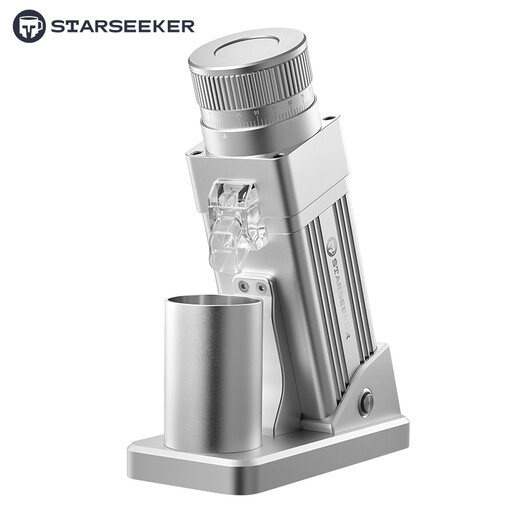
Why this product: This model is positioned as a professional-grade coffee grinder for home use. Its specifications are focused on precision and durability. At its core are 55mm conical burrs made of a titanium alloy, powered by a 72W AC motor. The housing is all-metal (aluminium alloy), ensuring structural integrity.
Advantages:
Who is this for: The serious home barista who wants complete control over the grinding process for brewing espresso and other speciality coffees, and who values a robust, all-metal construction.
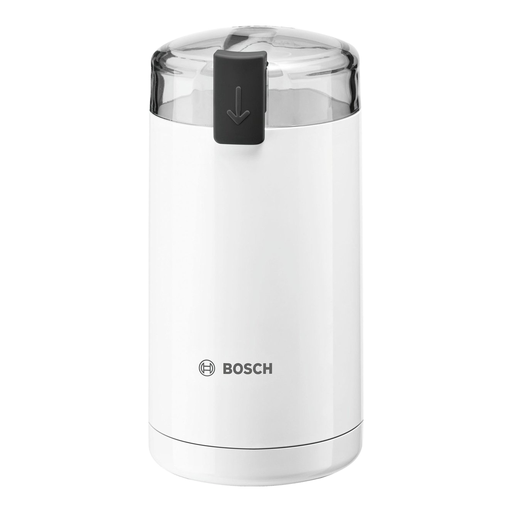
Why this product: This bean grinder from Bosch focuses on simplicity and ease of use. It is a blade model with stainless steel blades and a powerful 180W motor. Operation is straightforward with a single button; the grind time determines the fineness.
Advantages:
Who is this for: The novice user who wants to start grinding coffee beans without investing in a complex machine. It is also a practical choice for anyone needing a simple grinder for methods like filter coffee.
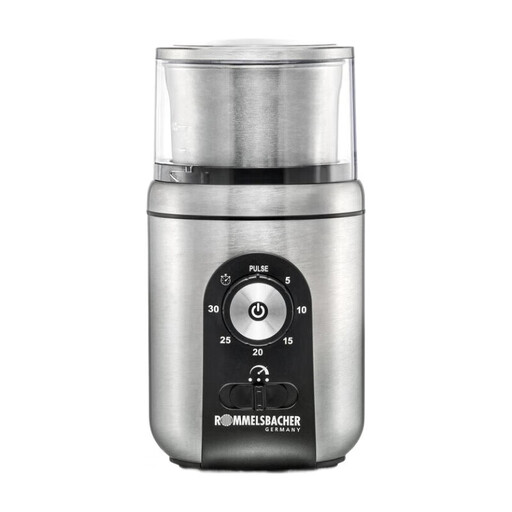
Why this product: The Rommelsbacher EGK 250 is designed as a versatile coffee and spice grinder. Its unique feature is that it comes with two separate stainless steel containers: one with a two-pronged blade for coffee and dry spices, and another with a four-pronged blade for herbs, nuts, and preparing pestos.
Advantages:
Who is this for: The home cook looking for an appliance that does more than just grind coffee beans. It is ideal for processing spices, nuts, and herbs in addition to coffee.
Do these specific models not quite meet your requirements? Every kitchen and coffee preference is unique. Sometimes, a different type of grinder or a complementary appliance is a better solution. For a broader overview of grinders and other useful tools, you can browse our kitchen appliances and gadgets category.
1. What is the difference between a burr grinder and a blade grinder? A burr grinder grinds beans to a consistent, uniform size, which is essential for a balanced coffee extraction. A blade grinder chops the beans into pieces, resulting in a less uniform grind. Burr grinders offer more control and are preferred for most brewing methods, while blade grinders are simpler and often more versatile.
2. Can I use an electric coffee grinder for spices? Yes, but it is generally not recommended to use the same device for both, as the oils and aromas from spices can transfer to your coffee. Models like the Rommelsbacher EGK 250 offer a solution with separate, interchangeable containers for coffee and spices.
3. How important is grind size for the taste of coffee? Grind size is one of the most critical factors. A grind that is too fine can lead to over-extraction (a bitter taste), while a grind that is too coarse can result in under-extraction (a sour, watery taste). Each brewing method (espresso, filter, French press) has its own optimal grind size. A grinder with precise adjustment capabilities gives you the control to perfect the flavour of your coffee.