
For cleaning an entire tiled floor
If you want to clean the floor in sections as part of your weekly routine, compare a mop for freshening up with a roller floor cleaner that also picks up dirt.


For a whole tiled floor, an electric mop is a good choice if you mainly want to freshen it up. A roller floor cleaner makes more sense if you also want to pick up crumbs and wet dirt regularly. If the main task is cleaning grout and localised marks, consider a targeted scrub brush. Whichever type you choose, check that it’s suitable for your tile finish and find out how much maintenance it needs after use.
If you want to clean the floor in sections as part of your weekly routine, compare a mop for freshening up with a roller floor cleaner that also picks up dirt.
If you’re dealing with dirt in the grout, along skirting boards or in a few stubborn spots, a suitable targeted brush may be a better fit than a wide mop head.
If you want to pick up both loose and wet dirt in the same weekly clean, look for a floor cleaner designed for both and bear in mind that it’ll need cleaning afterwards.
Best for: a larger, fairly flat tiled floor that you want to freshen up each week.
Bear in mind: Philips recommends vacuuming thoroughly before using the OneUp. In an initial review, the Consumentenbond found the OneUp handy for freshening up, but less convincing on certain stubborn stains.
Best for: cleaning a floor when you also want to pick up loose or wet everyday dirt. Rowenta describes the X-Clean 4 this way; Kärcher says the same of the FC 2-4 Battery Set.
Bear in mind: the tank, roller and filters need maintenance. Also check whether a special tile or grout roller is compatible with the exact model.
Best for: grout, edges and individual spots that need more focused brushing. Bosch says the UniversalBrush is suitable for tiles and grout.
Bear in mind: a small brush head is less practical for cleaning a large floor in sections. According to Kärcher, its stone roller is suitable only for the FC 2-4 and non-delicate ceramic surfaces.
When cleaning ceramic tiles each week, your choice mainly depends on which part of the job needs the most attention: the whole floor, grout and specific spots, or a combination of loose and wet dirt.
| What to consider | What to look for | Who should pay particular attention? |
|---|---|---|
| The whole tiled floor | Check the cleaning width, how easy it is to manoeuvre around furniture and whether you need to vacuum first. | If I mainly want to clean the whole floor in sections, I look for a wide cleaning head that can get around my furniture. Around 33% of consumers prioritise the entire tiled floor. |
| Grout and localised marks | Look at the shape of the brush head and check whether a special roller is compatible with the exact appliance. | If grout, edges or a few stubborn spots need the most work, I want to be able to target them. Around 27% of consumers prioritise grout and localised marks. |
| Loose and wet dirt | Check that the exact model is suitable for both dry and wet everyday dirt, and find out how to clean the tank and roller. | If I want to pick up crumbs and spills in the same clean, I check whether the appliance is designed for that. Around 20% of consumers prioritise this combination. |
| Handling and maintenance | Check the reach and read the instructions for cleaning and drying pads, rollers and filters. | For a weekly task that I want to keep simple, ease of use and maintenance afterwards are important to me. Around 20% of consumers prioritise the effort involved each time. |
A wide mop head and a compact scrub brush are designed for different parts of the job. A wide head isn’t necessarily suited to targeted grout cleaning.
First decide whether the tiled surface or the grout needs the most work. Then check the brush head, your floor finish and whether any special rollers are compatible.
For grout, you may need a suitable detail brush or a roller made for your specific model.
Even with a self-cleaning function, components such as the dirty water tank, roller and filters may still need attention. The Consumentenbond points out that these parts require regular maintenance.
Before buying, check which parts you’ll need to clean after a weekly session and how long the manufacturer says they need to dry.
Allow time to empty, wash and dry the components.
Ryobi states that the R18TPS-0 is sold without a battery, so it’s important to check what’s included when comparing versions.
Check the full contents of the pack you’re choosing and make sure you already have the required battery and charger.
If you don’t have the required battery or charger, you’ll need to buy or source them separately.
The X-Clean 4 GZ5035WO is a roller floor cleaner for dry and wet everyday dirt on hard floors, including tiles.
The FC 2-4 Battery Set is a floor cleaner. Kärcher also offers a separate stone roller for non-delicate ceramic surfaces and dirty grout.
The compact, cordless UniversalBrush is designed for targeted scrubbing, including on tiles and grout.
The R18TPS-0 has a telescopic handle and tilting head for scrubbing jobs where extra reach is useful.
The OneUp 5000 XV5113/01 is an electric mop for freshening up tiled floors, not a rotating grout brush.
This selection includes a targeted scrub brush for tiles and grout, as well as electric floor cleaners for your weekly mopping routine.
 No image available
Suitable for targeted scrubbing of tiles and grout.
Rechargeable; the product name mentions seven interchangeable brush heads and an LED charging indicator.
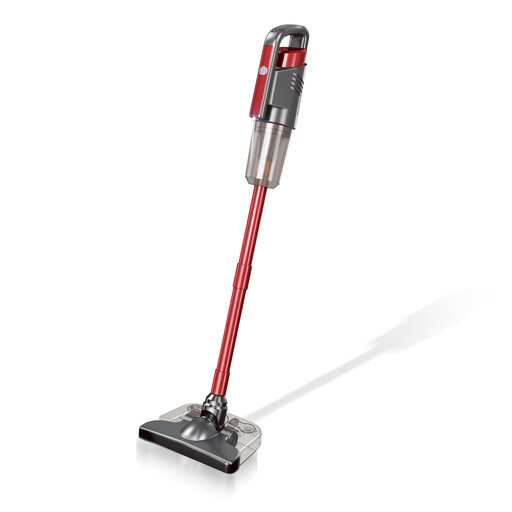 No image available
An option for mopping tiled floors when you also want to pick up dust and crumbs.
The product name mentions a cordless spray mop and a handheld vacuum cleaner.
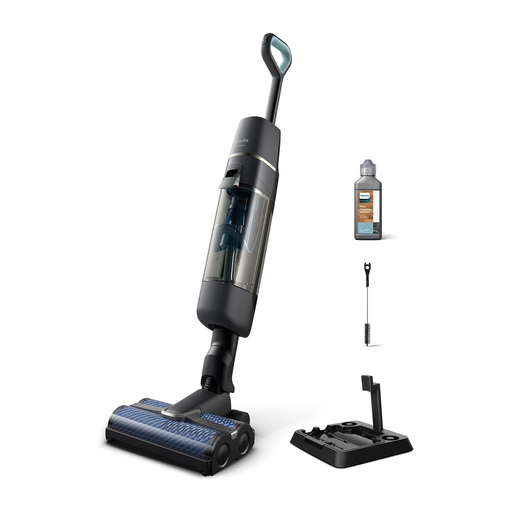 No image available
An option for wet cleaning hard floors with an appliance that combines vacuuming and mopping.
After use, both water tanks need to be emptied and rinsed. The brushes and filters also need regular maintenance.
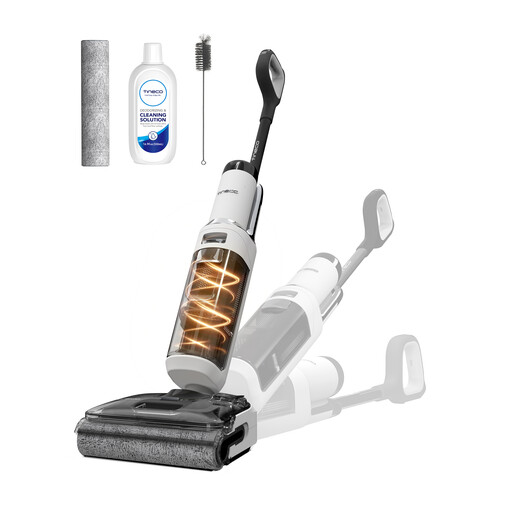 No image available
Worth considering for wet and dry cleaning ceramic tiles.
The product name mentions a reclined height of 13 cm, 5 min FlashDry, 70°C and a run time of 40 min. The product information notes that it may perform less well on rough surfaces.
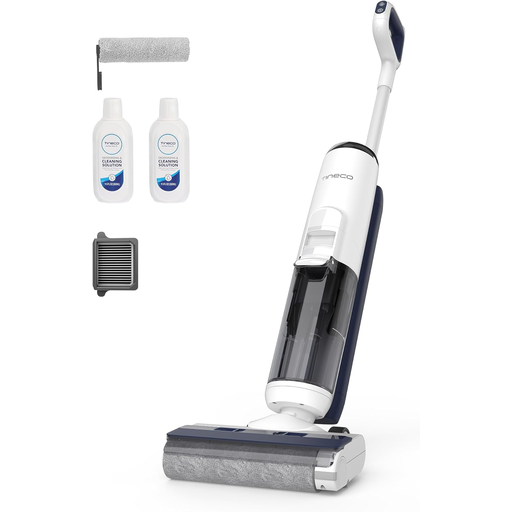 No image available
An option to consider for wet and dry cleaning ceramic tiles.
The product name mentions edge cleaning <0.5 cm and a self-cleaning function. The product information notes that it may perform less well on rough surfaces.
It depends on the appliance. Philips recommends vacuuming thoroughly before using the OneUp, while Kärcher describes the FC 2-4 as suitable for picking up dry and wet everyday dirt. Follow the instructions for the exact model.
No. Kärcher says the FC 2-4 stone roller is suitable only for the FC 2-4, not for other Floor Cleaner models. Kärcher lists non-delicate ceramic surfaces as suitable, so check both the model and your floor finish.
A floor cleaner’s dirty water tank, roller and filters may need maintenance. The Consumentenbond points out that a self-cleaning function doesn’t remove the need for all maintenance. Also follow the washing and drying instructions for pads or rollers specific to your model.
When you buy from a business at a distance, you’ll often have a 14-day cancellation period, according to the Dutch government. You’re also entitled to a product that meets legal requirements; there’s no fixed statutory two-year warranty period in the Netherlands. If a product is faulty, contact the seller. A manufacturer’s warranty doesn’t replace your statutory rights.
Electrical equipment must comply with the applicable European product safety rules. CE marking is required only where the relevant rules specify it. Follow the instructions, use the original charger and don’t use damaged cables, as advised by Brandweer Nederland.