
Vandaag of morgen in huis

Kwaliteit gegarandeerd

Welkomstaanbiedingen ontgrendelen: GRATIS bezorging | Tot 80% korting | Gratis 30 dagen JoyPlus-proefperiode
Download de app
At first glance, choosing an electric city bike seems straightforward. But marketing claims about range, motor power and comfort can lead to an unsuitable purchase. For commuting, shopping and leisure rides on paved roads, the most important factors are fit, battery, brakes and maintenance requirements.
Manufacturers sometimes state a maximum distance, for example, an e-bike with a range of up to 100 km. This figure is not guaranteed for every ride. Rider weight, tyre pressure, wind, temperature, hills, assist level and frequent acceleration all affect energy consumption.
Use the stated range as a point of comparison instead. If you cycle 25 kilometres each way every day, you’ll need more battery reserve than someone who mainly makes short shopping trips.
An electric bike for public roads in the Netherlands typically provides pedal assistance up to 25 km/u. A motor’s 250 watts doesn’t tell you everything about how it feels to ride. Torque, motor position and controls also play a part.
An electric bike with a front hub motor can be practical for leisurely city riding. However, its power delivery feels different from that of a mid-drive motor. On wet or loose surfaces, it’s best to accelerate gently and keep an eye on tyre grip.
An electric bike with a low step-through frame is handy if you need to get on and off frequently, for example in busy city traffic. But a low wave frame doesn’t automatically make a bike suitable for every height. Check the frame size, saddle adjustment and handlebar position.
An electric bike with a step-through frame isn’t just for women, either. The term usually refers to the frame shape. So check the geometry and recommended rider height rather than relying on the product name alone.
Capacity is usually stated in watt-hours, or Wh. On paper, an e-bike with a 400Wh battery stores more energy than a comparable model with 360 Wh. The actual distance you can travel still depends on the conditions.
Also check:
According to the product description, the Prophete Geniesser 2.4 has an integrated, removable lithium-ion battery with a capacity of 399,9 Wh. The stated charging time is 3.5 hours. The manufacturer gives a maximum range of 100 km; treat this as a guide, not a guaranteed distance.
For a city bike, easy-to-modulate brakes and visibility matter more than a sporty appearance. Check whether the bike has front and rear lights, whether they’re powered by the battery and whether the rear light stays on when you stop.
An electric bike with hydraulic disc brakes generally needs different adjustments from a bike with rim brakes. The Prophete Geniesser 2.4 uses Shimano MT200 hydraulic disc brakes. The Geniesser 2.0 is described as having hydraulic brake callipers. Always check the latest product specifications and included documentation before buying.
A hub gear can be practical for flat city routes. An electric bike with 7-speed Shimano Nexus gears offers a choice of ratios and is suitable for changing conditions, such as headwinds or bridges.
Also look for:
Weight matters, too. A bike weighing 26 kg or more can be difficult to carry up stairs, store in a bike shed or load onto a bike rack.
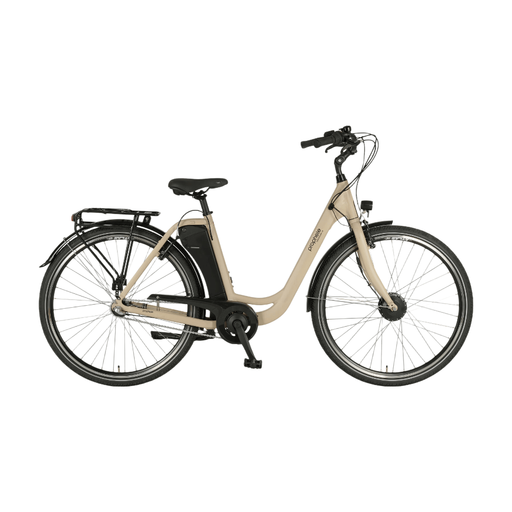
Why it suits this type of rider: This Prophete electric bike is designed for everyday city riding, with a 49 cm wave frame, three hub gears and a 374 Wh battery.
The specifications state the battery capacity, motor and gears. The range of up to 100 km is noted as depending on riding style.
28-inch reflective tyres with puncture protection, a pannier rack, 40-lux lighting and a Shimano Nexus 3-speed hub gear.
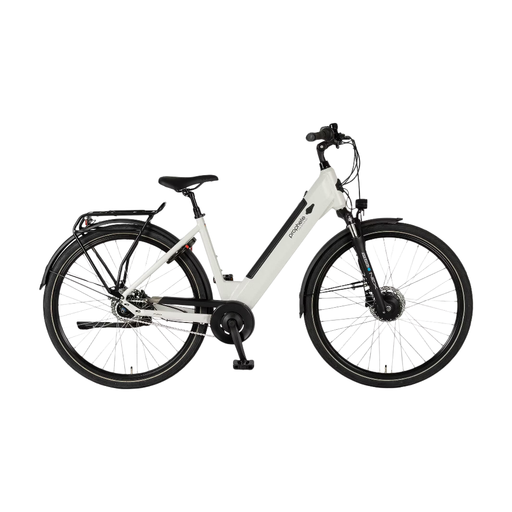
Why it suits this type of rider: The 46 cm wave frame, integrated 400 Wh battery and Shimano MT200 hydraulic disc brakes make it a good fit for regular commuting and longer rides on paved roads.
The bike combines clear battery specifications with five assist levels and an LCD display. The stated range of 100 km still depends on how the bike is used.
Shimano Nexus 7-speed hub gear, Suntour suspension fork, suspension seatpost and removable 399,9 Wh battery.
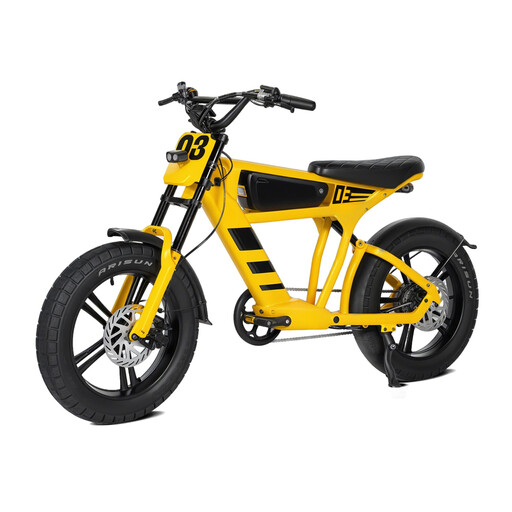
Why it suits this type of rider: This model is designed for riders who value wide tyres, full suspension and a large removable battery for a variety of surfaces.
The product information lists the tyre size, battery capacity, charging time and maximum load separately. At 42 kg, the bike will need suitable storage.
48 V 18,2 Ah battery, 20 x 4,5 inch tyres, hydraulic disc brakes and full suspension. Check in advance that using it is permitted and suitable for your planned routes.
We’ve put together a complete, up-to-date list of products that meet these strict selection criteria and current European safety regulations.
Before every ride, check the brakes, tyre pressure, lights and any visible cables. Charge the battery in a dry, well-ventilated space using the supplied charger. If you won’t be using a removable battery for a while, don’t store it completely flat, and avoid exposing it to extreme temperatures.
An e-bike used for commuting benefits from regular cleaning, especially after riding in rain or mud. Don’t use a pressure washer on the motor, display, battery or bearing points. Have the brake pads, chain or hub gear checked if the bike doesn’t brake or change gear as smoothly as it should.
That depends on battery capacity, assist level, tyre pressure, rider weight, wind and temperature. A stated range of 100 km is usually a maximum guide. Plan your commute with plenty of reserve and recharge the battery in good time.
Battery life depends on charging cycles, storage temperature, use and maintenance. Follow the manufacturer’s instructions, use the original charger and don’t continue charging a damaged or deformed battery. Check the warranty terms, too, as these can vary by product.
The cost depends on battery capacity and your electricity tariff. A battery of around 400 Wh theoretically uses 0,4 kWh per full charge, excluding charging losses. Multiply this by your current electricity price for a practical estimate.
