
Vandaag of morgen in huis

Kwaliteit gegarandeerd

Welkomstaanbiedingen ontgrendelen: GRATIS bezorging | Tot 80% korting | Gratis 30 dagen JoyPlus-proefperiode
Download de app
An electric citrus press can make juicing oranges, lemons, limes and grapefruits much easier. Yet many people buy an appliance that barely gets used after a few weeks. The reason is often not the power, but small design choices: a filter that’s difficult to clean, an awkward spout, or a capacity that doesn’t match the number of glasses you make each day.
This buying guide helps you compare models based on verifiable specifications. That way, you can make a more informed choice between a citrus press, electric orange juicer or citrus juicer.
A higher wattage doesn’t automatically mean you’ll get more juice. A citrus press with 30 or 40 watts can be perfectly adequate for daily use, while a 100-watt model is mainly worth considering if you’re juicing several fruits in a row or using a lever mechanism. The shape of the juicing cone, the pressure distribution and the filter also affect performance.
So pay attention to the combination of power, operation and juicing cone. An electric lemon press with automatic start can be more practical than a more powerful appliance with fiddly controls.
Juice residue and pulp dry out quickly. An appliance with hard-to-reach nooks and crannies can therefore require more maintenance than you might expect. Check whether the removable parts can be taken off and whether they are dishwasher-safe according to the product information.
The motor base must not be submerged in water. Clean it with a slightly damp cloth. This applies to virtually every citrus juicer.
A spout without an anti-drip system can keep dripping after you’ve poured. That quickly leads to a sticky worktop. Also, not every model has an adjustable pulp filter. Some presses separate out most of the pulp, while others let more fruit flesh through.
Think in advance whether you want smooth juice or juice with some texture. A citrus press with a pulp filter or adjustable pulp setting can make a practical difference.
For occasional use, 20 to 40 watts is often suitable. The Braun MPZ9, for example, has a power rating of 20 watts and starts when you press the fruit onto the cone. The MELISSA Citrus Press works with 40 watts and also has an automatic start when pressure is applied.
If you’re making several glasses in a row, you could look at a model with 60 to 100 watts. The FRITEL Citrus Press CP 4177 has 100 watts and a lever operation. By pressing the fruit onto the cone with the lever, you need to use less force with your hand.
A small reservoir is fine for one or two glasses and takes up less space. For a family, a larger capacity is more convenient. Do note the difference between a collection reservoir and a direct pouring spout.
Some examples:
A large capacity means you don’t have to empty it in between, but it often makes the appliance a bit bigger to store.
A citrus press with two juicing cones is practical if you want to juice both small limes and lemons as well as oranges and grapefruits. The small cone fits smaller fruits; the larger cone is intended for larger citrus fruits.
Also check:
An easy-to-clean citrus press saves you time, especially with daily use. Don’t just look at the “easy clean” claim, but at the actual parts and cleaning instructions.
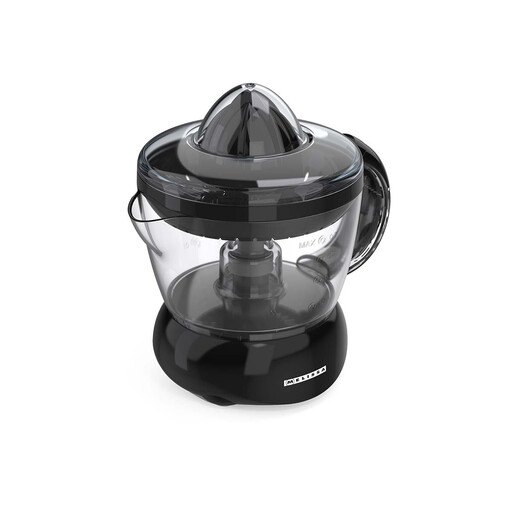
Why this fits the profile: This compact model is ideal for anyone who occasionally juices oranges or lemons and has limited worktop space. The 0.7-litre capacity is suitable for a few glasses at a time.
The parts are dishwasher-safe according to the product information. The automatic start and non-slip base reduce unnecessary steps during juicing.
40 watts, two interchangeable cones, a juicing cone that rotates left and right, and removable dishwasher-safe parts.
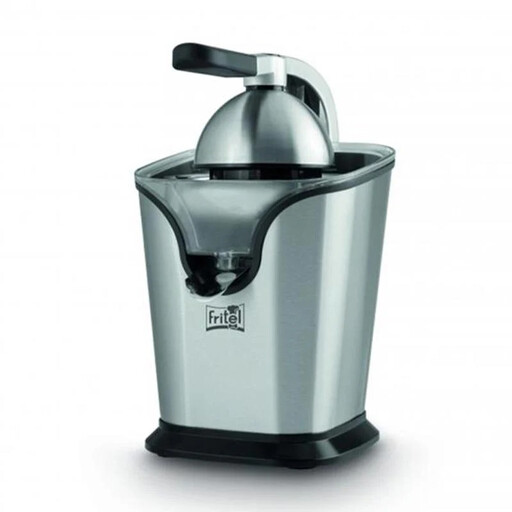
Why this fits the profile: The combination of 100 watts, a lever mechanism and a stainless steel housing suits users who make juice regularly and value sturdy operation.
The built-in pulp filter and drip stop tackle two common issues: pulp in your glass and dripping on your worktop.
100 watts, two cone sizes, anti-drip spout, non-slip feet and removable parts that are dishwasher-safe according to the product information.
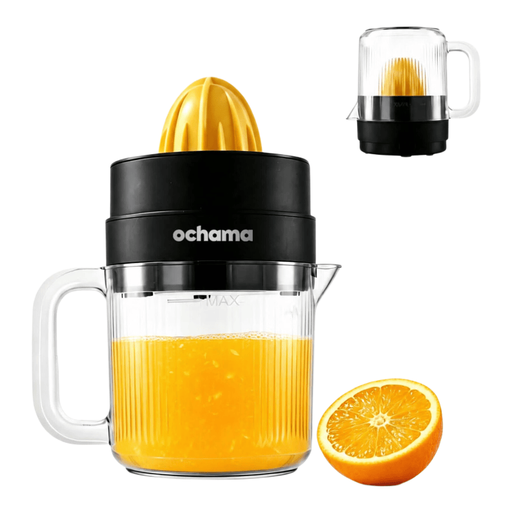
Why this fits the profile: The 1.4-litre collection capacity suits families who want to make several glasses at once without having to empty the reservoir in between.
The design has no blades, a pulp separator and removable parts. That makes it suitable for citrus fruits without the extra components of a centrifugal juicer.
30 watts, 1.4-litre capacity, electric press operation and removable parts for cleaning.
An electric citrus press is designed for halved citrus fruits. You cut the fruit in half and press it onto a juicing cone. A centrifugal juicer works differently: it often processes apples, carrots and other hard ingredients using a sieve or cutting system.
For oranges, lemons, limes and grapefruits only, a citrus press is usually simpler in construction. If you also want to process vegetables and other fruit, compare the permitted ingredients, the feed chute and the cleaning effort. Do not use a citrus press for ingredients that the manufacturer states the appliance is not suitable for.
We’ve put together a full, up-to-date list of products that fully meet these strict selection criteria and comply with current European safety regulations.
For normal home use, 20 to 40 watts is often sufficient. If you’re juicing several fruits in a row or want to use a lever press, you could look at models around 60 to 100 watts. The wattage doesn’t just indicate speed; the construction of the juicing cone and the controls are also relevant.
The lifespan depends on use, cleaning and storage. Do not run the motor for longer than stated in the manual, and give the appliance time to cool down. Clean the removable parts after use and keep the motor base dry. Also check the cord, plug and juicing cone regularly for damage.
The electricity consumption per juicing session is generally low because the appliance only runs for a short time. A 40-watt model used for a few minutes consumes less energy than the same machine running for a prolonged period. The main cost differences are usually between the purchase price, maintenance and any replacement parts.
