If you only squeeze a lemon now and then, look for a simple juicer with a suitable cone and easy-to-clean parts. Measure the space where you’ll use it and where you’ll store it, too. If you’d like to pour straight into a glass or avoid pressing down on the fruit by hand, compare models with a spout or lever, and check how much room they need, along with the cord length and exact model specification.
Who is an electric citrus juicer suitable for?
For occasional juicing in a small kitchen
You usually squeeze one or a few lemons and want a juicer that’s easy to set out and put away. Compare its footprint and height, the cone size and cord storage. Philips lists cord storage for the HR2738/00; Princess gives the dimensions of the 201848 as 15 × 15 × 23 cm.
For cooks who want to tidy up quickly
You use lemon juice while cooking and want fewer loose parts, or would prefer to pour straight into a glass. Check which parts are removable and dishwasher-safe for the specific model. Princess lists removable, dishwasher-safe parts for the 201848; Braun describes direct pouring for the CJ3050WH.
For anyone who wants to press down less by hand
You’d rather use a lever than press the fruit directly onto the cone. Also check that the lever has room to move where you plan to use the juicer. Princess lists a lever for the 201848.
What should you look for when choosing one?
Juicer with a collection jug
A good fit if: you juice small amounts and collect the juice in a jug first.
Bear in mind: you’ll need to empty and clean the jug. Philips lists a 0.5-litre jug for the HR2738/00; Rommelsbacher lists a 1-litre jug and dimensions of 23 × 16 × 22 cm for the ZP 40.
Pour straight into a glass
A good fit if: you want to avoid using a collection jug and can fit a glass under the spout. Braun lists direct pouring for the CJ3050WH.
Bear in mind: check the height of your glass and the space around the spout. The cone and filter will still need cleaning.
Lever juicer
A good fit if: reducing the amount of direct hand pressure matters more to you than having the simplest possible operation. Princess lists a lever and a 15 × 15 cm footprint for the 201848.
Bear in mind: the lever needs room to move. Princess gives a height of 23 cm and a cord length of 0.75 m. These specifications don’t tell you how its juice yield compares with other models.
| What to consider |
What to look for |
Who is this important for? |
| Space for use and storage |
Compare the stated width, depth and height. Allow extra room for a lever to move, and check cord storage for the exact model. |
If you’re short on worktop and cupboard space, you’ll want to know whether the juicer fits in both places. Space is the main reason for buying for around 33% of consumers. |
| Cleaning after use |
Count the parts that collect juice or pulp, and check which ones the manual says are dishwasher-safe. |
If you use the juicer while cooking, you won’t want to wash more parts than necessary afterwards. Cleaning is the main reason for buying for around 25% of consumers. |
| How much hand pressure is needed |
Check whether the exact model has a lever or a press-to-start function. If it has a lever, measure the space above it. |
If you’d rather not press directly down on the fruit, check how the juicer is operated. Reducing hand pressure is the main reason for buying for around 25% of consumers. |
| Cone, pulp and juice capacity |
Check which cone comes with the juicer, whether the specific model has pulp control and whether the jug capacity suits your needs. Don’t judge juice yield by wattage alone. |
If you juice different types of citrus fruit or want to control the amount of pulp, you’ll want to know which settings and cones actually come with the model. Controlling the amount of juice is the main reason for buying for around 17% of consumers. |
What to watch out for when buying
-
Comparing the footprint alone
A lever juicer also needs space above it, and a short cord can limit where you can put it. Princess gives a height of 23 cm and a cord length of 0.75 m for the 201848.
Measure the space where you’ll use and store the juicer, and check the location of the socket before choosing a model.
-
Treating an entire brand range as one model
Features vary by model: Braun lists pulp control for the CJ3000WH, while direct pouring and an anti-drip system are features of the separate CJ3050WH.
Check the full model number and the parts listed for the specific version.
-
Mistaking a manufacturer’s warranty period for your full legal guarantee
ACM ConsuWijzer explains that your statutory guarantee is separate from any warranty period set by the seller or manufacturer.
Keep your proof of purchase and contact the seller if the product is faulty.
Brands to compare
Philips
The Daily collection HR2738/00 is worth considering if a simple juicer with a collection jug and cord storage suits the way you’ll use it.
- Philips lists a 0.5-litre jug, 25 W, reverse rotation and cord storage for the HR2738/00.
- These product specifications don’t compare juice yield or the space required.
Princess
The 201848 is a lever model to consider if you want a small footprint and have room above the appliance.
- Princess lists two cones, removable dishwasher-safe parts and dimensions of 15 × 15 × 23 cm.
- Bear in mind the 0.75 m cord length and the space needed for the lever.
Braun
The CJ3000WH and CJ3050WH are separate models with different features, so compare the specific version you’re considering.
- Braun lists five pulp settings and cord storage for the CJ3000WH; the CJ3050WH has a direct-pour spout and an anti-drip system.
- Don’t assume that a feature on one model is also available on the other.
Rommelsbacher
The ZP 40 is worth comparing if you juice larger citrus fruit as well as lemons and would like a larger collection jug.
- Rommelsbacher lists a 1-litre jug, two cones, pulp control and dimensions of 23 × 16 × 22 cm.
- Check that these dimensions will fit; the stated features aren’t the result of a comparative hands-on test.
Citrus juicers at Joybuy
These product options are designed for juicing lemons in a small kitchen, with different features to consider, such as cleaning, cone choice, pulp settings and how the juicer works. Check that the exact appliance has the relevant CE marking and product information. The Netherlands Food and Consumer Product Safety Authority says that CE marking is required for electrical appliances covered by the applicable rules.
 No image available
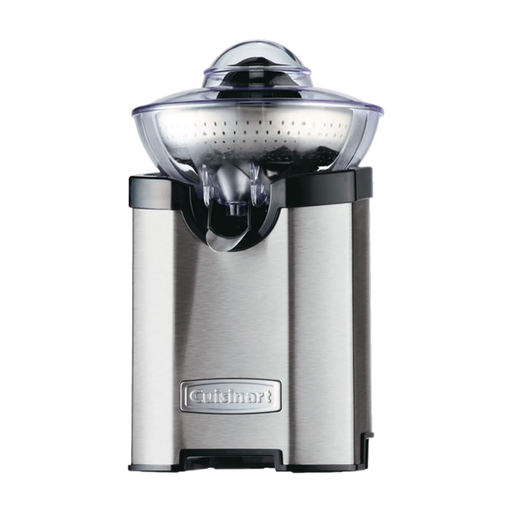
Cuisinart CCJ210E
An option if you want to juice lemons and clean the parts in line with this model’s dishwasher-safe specification.
100 W, wide spout, anti-drip system and dishwasher-safe parts.
View at Joybuy
 No image available
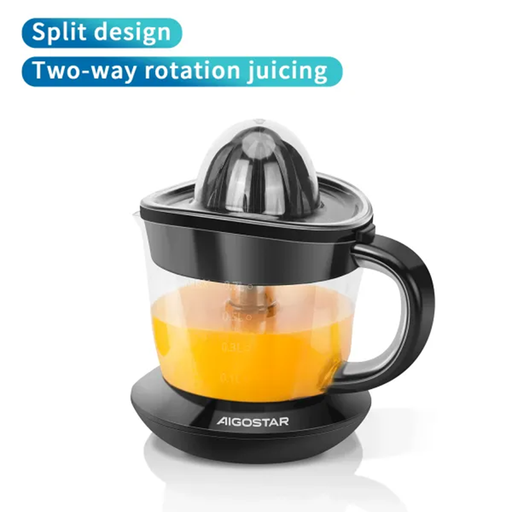
Aigostar Juicer, 40 W, 0.7 l
An option if you juice lemons and want two cones for different sizes of citrus fruit.
40 W, 0.7 l collection capacity and two juicing cones. The cord is listed as 0.22 m, so bear this in mind when choosing where to place it.
View at Joybuy
 No image available
Bear CZJ-A04B1
An option if you want to adjust the amount of pulp when juicing lemons.
Five pulp settings and a 110 mm feed opening.
View at Joybuy
 No image available
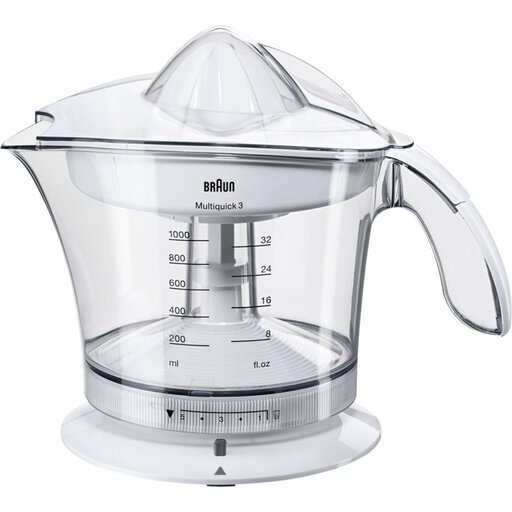
Braun MPZ9 Citrusquick 1
An option if you want to collect and measure lemon juice in a jug.
The product information lists a 1-litre jug with measurement markings and two-way rotation.
View at Joybuy
 No image available
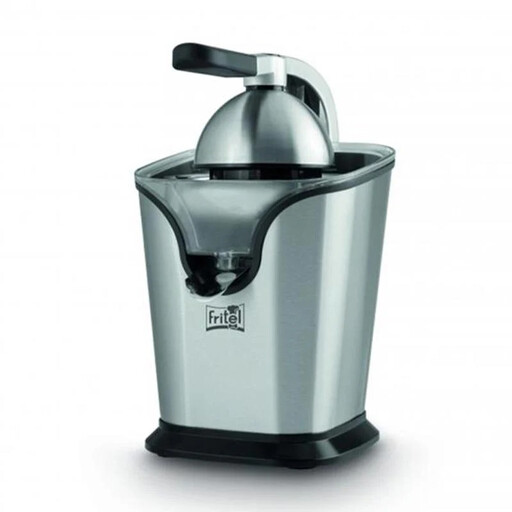
FRITEL Citrus Press CP 4177
An option if you juice lemons and would rather use a lever than press directly down on the fruit.
100 W, two cone sizes and an anti-drip system. Allow space for the lever to move.
View at Joybuy
Frequently asked questions
How do I choose a juicer for lemons and larger citrus fruit?
Check whether the exact model comes with two cone sizes. Princess lists two cones for the 201848; Rommelsbacher lists separate cones for large and small fruit with the ZP 40.
What should I check before using it for the first time and when cleaning it?
Follow the manual for your chosen model, especially for assembly and which parts can go in the dishwasher. Rommelsbacher advises reading the manual before first use and lists removable, dishwasher-safe parts for the ZP 40.
What are my rights when buying online or if a product is faulty?
For a standard online purchase in the Netherlands, you generally have 14 days after delivery to change your mind, subject to legal exceptions. You’re also covered by statutory guarantee: if a product doesn’t perform as you could reasonably expect under normal use, the seller is responsible for providing an appropriate remedy free of charge. ACM ConsuWijzer explains these rights.
Is CE marking required for an electric citrus juicer?
CE marking is required for electrical appliances covered by the applicable rules. For low-voltage regulations, the Netherlands Food and Consumer Product Safety Authority states a range of 50 V to 1000 V AC. Check whether those rules apply to the specific appliance and whether the required marking is present.


