
Making dressing for one lunch
If you usually need a small amount of lemon or lime juice, look for a suitably sized juicing cone and an easy way to collect or measure the juice.


For a small amount of juice, a compact juicer with a collecting jug is handy if you want to catch or measure it. A direct spout is better if you want to squeeze straight into a cup or measuring jug. If the juicer will be shared, also check the size of the cone and which parts can be cleaned after use. A lever can be useful if you often need to squeeze several fruits in a row.
If you usually need a small amount of lemon or lime juice, look for a suitably sized juicing cone and an easy way to collect or measure the juice.
If several colleagues use the juicer, it’s worth checking which parts can be removed and how to clean them. Philips and Tristar list dishwasher-safe parts for specific models.
If you often squeeze several fruits in a row, compare a direct spout or lever with a compact model that has a collecting jug. Princess describes the 201853 as having a lever and direct spout.
For a shared office kitchen, the key things to consider are whether the cone is suitable, how easy the juicer is to clean and how well it collects small amounts of juice.
| What to consider | What to check when buying | Who this matters to |
|---|---|---|
| Squeezing lemons and limes | Check which juicing cone is included and which fruit sizes the manufacturer recommends for the exact model. | If I mainly squeeze lemons or limes, I want to know whether the cone is suitable. Around 36% of consumers prioritise this. |
| Cleaning between users | Check which parts can be removed and are listed as dishwasher-safe in the manual; agree who will clean them after use. | If colleagues take turns using the juicer, I want to be able to clean the parts that come into contact with food thoroughly afterwards. Easy cleaning is a priority for around 29% of consumers. |
| Collecting the juice | Check whether a collecting jug suits the way you work, or measure the space beneath the spout to see if your own cup or measuring jug will fit. | If I want to add a small amount of juice to a dressing, I want to collect it with control. Around 21% of consumers prioritise collecting and pouring. |
| Squeezing several fruits | Compare how a lever juicer is operated and cleaned with the amount of fruit you actually squeeze at a time. | If I’m squeezing for several colleagues in a row, I consider how it works and how much pressure is needed. This is the main consideration for around 14% of consumers. |
Whether the juicing cone is suitable for lemons and limes is a separate consideration, especially if you’re making small amounts for dressings.
Check which fruits and juicing cones the manufacturer specifies for the exact model.
Philips and Tristar’s product information refers to loose or removable parts. It doesn’t mean the motor base can go in the dishwasher.
Check the cleaning instructions for each part in the manual.
With a direct spout, you need to place a cup or measuring jug beneath it to collect the juice.
Before buying, check that the container you use for dressings will fit beneath the spout.
An order placed in a company’s name isn’t automatically covered by the same consumer protections as a personal purchase.
KVK explains that businesses may have different protections and that consumer protection can sometimes apply by analogy. Check who the buyer is and read the terms that apply to the purchase.
Philips offers several models, including the compact HR2738/00 with a collecting jug and the HR2744/40 with a pulp selector.
The CP-3007 is a citrus juicer with a direct spout and two cones for different sizes of citrus fruit.
The CitrusQuick 3 CJ3050WH is designed for easy juicing and pouring straight into a container.
The 201853 has a lever and a direct spout, features that may be useful if you’ll be juicing repeatedly.
These electric citrus juicers are suited to making juice for dressings, with a focus on lemons and limes, cleaning and collecting the juice.
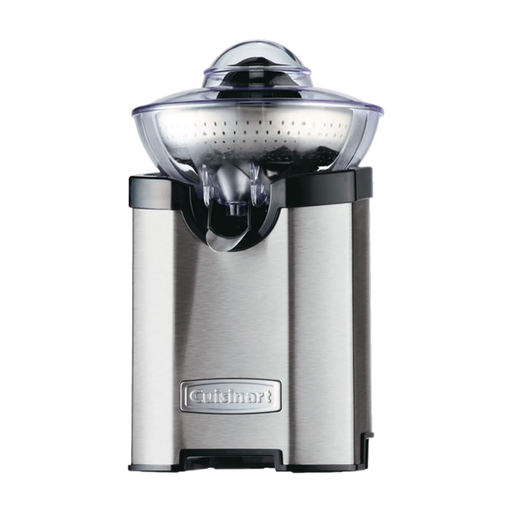 No image available
An option to consider if an anti-drip spout and dishwasher-safe parts are important when sharing the juicer.
100 W; extra-wide spout; anti-drip system; dishwasher-safe parts.
 No image available
An option if you want to adjust the amount of pulp in your juice.
Five adjustable pulp settings; 110 mm filling opening.
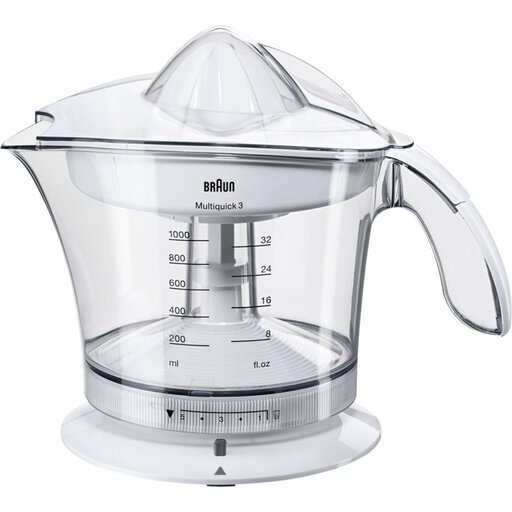 No image available
A suitable option if you want to collect and measure the juice before adding it to a dressing.
1-litre collecting jug with measurements; operated by pressing down on and lifting the fruit; dishwasher-safe parts.
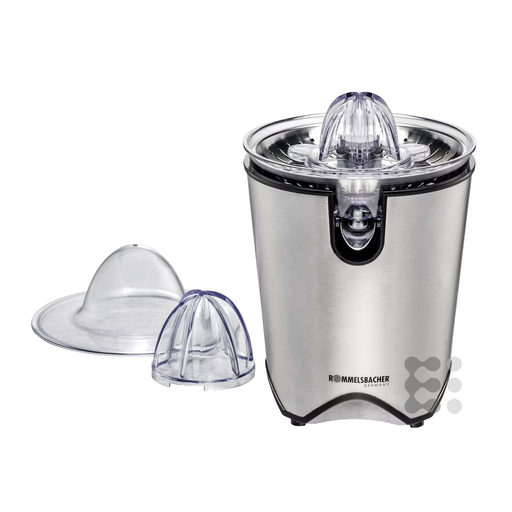 No image available
An option for lemon or lime juice if you want to be able to clean the removable parts in the dishwasher after use.
Spout with anti-drip system; dishwasher-safe removable parts; stainless steel finish.
First, choose a cone that suits the lemons or limes you use. A collecting jug is handy if you want to collect or measure the juice first; with a direct spout, use a suitable container of your own.
Check the manual to see which parts are removable and dishwasher-safe, and clean any parts that come into contact with juice and pulp after use. Philips lists dishwasher-safe removable parts for the HR2738/00, and Tristar does the same for the CP-3007. This doesn’t mean the motor base can go in water or the dishwasher.
The Netherlands Nutrition Centre recommends keeping freshly squeezed lemon juice in the fridge for 3–7 days. This advice applies to the juice, not necessarily to a prepared dressing containing other ingredients; assess that separately.
Not simply because colleagues make dressing for themselves in a shared kitchen. The NVWA guidance on food safety plans or hygiene codes applies to businesses that prepare, process or sell food, such as hospitality and food businesses. Check which requirements apply if the office prepares or sells food to others as a food business.
Distinguish between a personal and a business purchase. European guidance on the minimum two-year legal guarantee concerns consumer rights; KVK explains that businesses generally have different protections and that consumer protection can sometimes apply by analogy. For a business order, check the terms that apply to the purchase.