
Anyone who wants to juice a lime quickly
You squeeze a few limes during a short break and want a cone that fits small fruit, with parts that are quick to clean. Tristar lists a small cone for limes for the CP-3007.


If you’re squeezing one or a few limes during your lunch break, look for a cone designed for small citrus fruits and parts that are easy to clean. A pulp setting is useful if you want to control how much pulp you get, while a lever suits anyone who prefers to press the fruit down that way. Manufacturer information describes these features, but doesn’t prove that one model extracts more juice than another.
You squeeze a few limes during a short break and want a cone that fits small fruit, with parts that are quick to clean. Tristar lists a small cone for limes for the CP-3007.
You want to choose how much pulp ends up in your lime juice, so you’re comparing an adjustable pulp setting with a simple strainer. Braun lists five pulp settings for the CJ3000WH.
You want to press the citrus half down onto the cone with a lever, and you’re also looking for a good fit for limes and a handy spout. Tristar and Princess describe models with a lever; check which cone comes with each version.
Start by checking that the cone fits and that the juicer is easy to clean. Then decide how you want to collect the juice, and whether you want to adjust the amount of pulp or the way you operate it.
| What to consider | What should you look for? | Who will find this most important? |
|---|---|---|
| Juicing cone for small limes | Check whether the manufacturer specifically says the cone is for limes and whether it comes with the version you’ve chosen. | If I’m juicing a few small limes during my break, I want a cone that suits them. Around 29% of consumers prioritise this fit. |
| Cleaning after use | Check which parts can be removed, which are dishwasher-safe and how to clean the motor base. | If I want to get back to what I was doing quickly after a short break, I want to know how many parts I’ll need to clean. Around 29% of consumers put cleaning first. |
| Collecting and pouring the juice | Choose between juicing straight into a glass and collecting the juice in a jug first. If there’s a spout, check that your glass will fit underneath it. | If I want to pour my lime juice straight away, I look at the spout and how the juice is collected. Around 18% of consumers start with how they plan to serve it. |
| Amount of pulp | Check whether the exact model has an adjustable pulp selector and how to clean it. | If I prefer my juice with less or more pulp, I want to be able to choose the texture. Around 12% of consumers put this preference first. |
| Lever | Check how it works, which cone is included and which parts can be removed. Don’t treat claims about the force required as test results. | If I find a lever easier than pressing directly on the fruit, I look at how it works and how much space the appliance takes up. Around 12% of consumers say lever operation is their top priority. |
A general description such as ‘citrus juicer’ doesn’t tell you which cone fits small limes. Tristar specifically lists a small cone for limes for the CP-3007; for other models, check the specifications for the exact version.
Check which cone is included and whether the manufacturer says it’s designed for limes.
For the Philips HR2738/00, the dishwasher information applies to the removable parts, not the motor unit.
Follow the cleaning instructions for each part and keep the motor base out of the dishwasher.
A power rating or a claim about juicing doesn’t, on its own, show how much juice a model extracts from limes.
Choose based on cone fit, operation and cleaning. Don’t use wattage as the only guide to expected yield.
The models reviewed differ in their cones and how they operate. Tristar lists a small cone for limes for the CP-3007 and describes the CP-3002 as having a lever.
Philips lists a 0.5-litre jug for the HR2738/00 and describes how to clean its parts.
The Braun CitrusQuick 1 CJ3000WH is an electric juicer with an adjustable pulp setting.
For the 201851 Master Citrus Juicer, Princess describes a pressing arm and a cone that the manufacturer says is also designed for limes.
These product picks are for anyone looking for an electric citrus juicer for limes, with cleaning, collecting juice and different operating preferences in mind.
 No image available
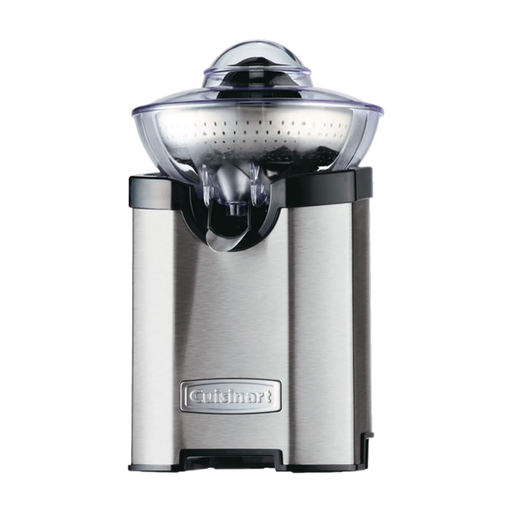
An option if you want to juice limes and clean the removable parts in the dishwasher afterwards.
The product information mentions an extra-wide spout, a 1-litre juice container and an anti-drip system.
The stated power is 100 W. The product information says the removable parts are dishwasher-safe.
 No image available
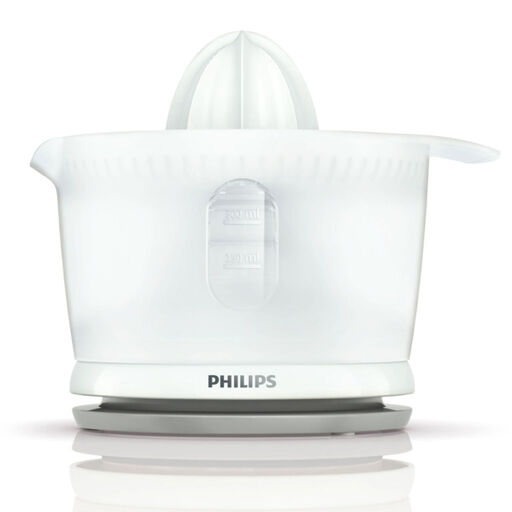
Suited to anyone who prefers to collect the juice in a jug and pour it afterwards. Check whether the cone on this version is suitable for small limes.
The jug holds 500 ml and the stated power is 25 W.
Philips says the removable parts are dishwasher-safe, but the motor unit isn’t. The product information states that it can be used continuously for up to 10 minutes, after which it needs to cool down.
 No image available
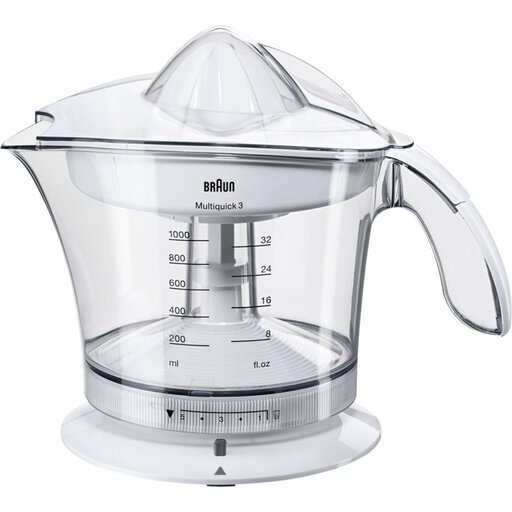
An option if you want to juice limes with operation that starts when you press the fruit down and stops when you lift it.
The product information mentions two-way rotation and dishwasher-safe parts.
 No image available
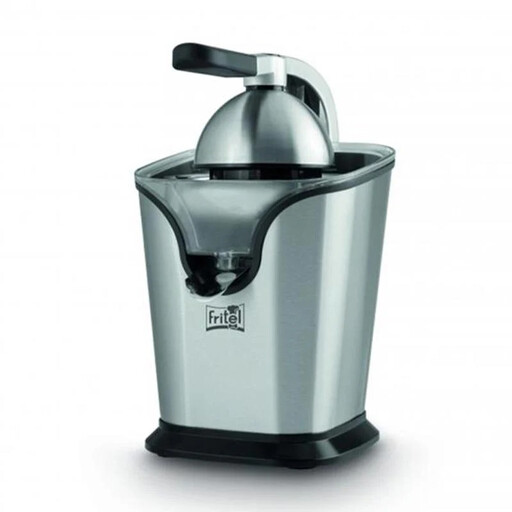
An option if you want to juice limes using a lever and clean the removable parts.
The product information mentions a small cone for limes, two interchangeable cones and a drip-stop feature. The stated power is 100 W.
According to the product information, the removable parts are dishwasher-safe; don’t immerse the motor base in water.
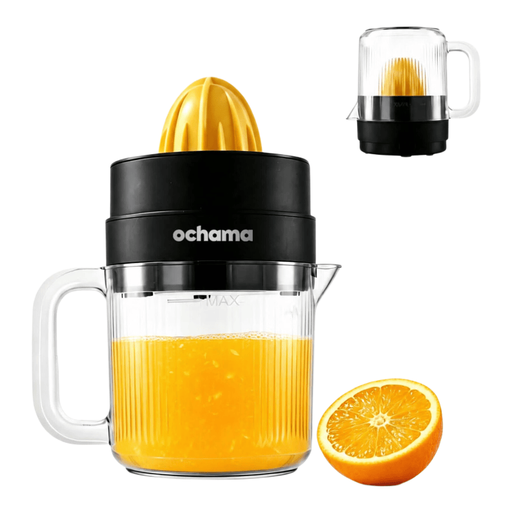 No image available
An option if you want to keep juice and pulp separate and remove the parts for cleaning after use.
The product title lists a 1.4-litre capacity and 30 W power. The product information mentions pulp separation and removable parts.
Follow the instructions for your exact model and, ideally, clean the removable parts straight after use. Philips says that the parts of the HR2738/00, apart from the motor unit, can go in the dishwasher; clean the motor unit with a damp cloth.
Before buying, check the electrical specifications and usage restrictions for your chosen version, and make sure you have a suitable power connection and a stable place to use it. The product category alone doesn’t confirm that a particular plug or voltage is suitable.
Contact the seller about your statutory rights. According to the Dutch government, the Netherlands has no fixed statutory guarantee period; what you can reasonably expect from a product depends, among other things, on the product and the information provided with it. A manufacturer’s guarantee is separate from this.
Parts that come into contact with juice must comply with the applicable rules for materials that come into contact with food. Electrical equipment within the scope of the Low Voltage Directive must meet electrical safety requirements; the NVWA states that CE marking is mandatory for products covered by the Dutch Commodities Act Decree on Electrical Equipment. A CE mark doesn’t mean that the NVWA has approved an individual appliance in advance.
According to Milieu Centraal, you can hand in an old appliance free of charge when you buy a similar new one. There are also collection points for small appliances; check which option suits the size of your citrus juicer.