
If you mainly juice limes
You’ll want to check first whether the juicing cone supplied is actually suitable for small limes. Tristar and Cloer explicitly mention small limes as suitable for one of their cones.


Start by checking that the juicing cone is explicitly suitable for small limes. Then consider the space needed for the appliance, a glass or collection jug, and any loose parts. A collection jug is handy if you want to save the juice, while a direct spout needs room for a glass. A lever changes how you operate the juicer, but doesn’t in itself tell you how much worktop space you’ll need.
You’ll want to check first whether the juicing cone supplied is actually suitable for small limes. Tristar and Cloer explicitly mention small limes as suitable for one of their cones.
You’ll want to work out in advance how much space the appliance needs, as well as room for a glass or moving lever. Princess lists the dimensions of the 201858; Philips describes the cord storage on the HR2738/00.
You’ll want to know which parts come apart and how to clean them. Princess says its removable parts are dishwasher-safe; Philips says the motor unit of the HR2738/00 should not be cleaned in the dishwasher.
First, check that the cone fits small limes. Then consider the space needed and how the juice is collected, followed by cleaning and operation.
| What to consider | What should you check? | Who is this most important for? |
|---|---|---|
| Juicing cone for small limes | Look for an explicit mention of limes or check the size of the cone supplied. Tristar says its small cone is for limes; Cloer describes two cone sizes, including one for small limes. | If I mainly juice small limes, I don’t want to find out afterwards that the cone doesn’t fit properly. Around 36% of consumers prioritise fit above all else. |
| Worktop and storage space | Measure the available width, depth and height, and allow room for a glass or lever. Princess lists dimensions of 15 × 15 × 23 cm for the 201858. | With limited worktop space, I want to know how much room the juicer takes up when in use, not just its size when it’s standing still. Around 29% of consumers prioritise space. |
| Cleaning | Check which parts come apart and are dishwasher-safe for each model. Philips says the motor unit of the HR2738/00 should not be cleaned in the dishwasher. | If I use the juicer often, I want to know which parts I’ll need to clean separately after juicing. Around 21% of consumers prioritise ease of cleaning. |
| Operation and pulp | Check whether press-to-start operation, a lever or adjustable pulp settings suit your preferences. Braun lists five pulp settings for the CJ3000WH, but this doesn’t confirm that the cone is suitable for small limes. | If I mainly want to choose how the juicer works or how much pulp is in my juice, I want to weigh up those features without losing sight of how well the cone fits. Around 14% of consumers prioritise operation or pulp control. |
A general description such as ‘citrus juicer’ doesn’t automatically mean the cone will fit small limes properly. For example, Braun lists five pulp settings for the CJ3000WH, but this doesn’t confirm that it fits limes.
Look for an explicit mention of small limes, or ask for confirmation of the size and suitability of the cone supplied.
A direct spout also needs room for a glass, while a lever needs space to operate the juicer.
Measure the setup as you’ll use it while juicing, including the glass and room for movement.
For the Philips HR2738/00, Philips says the motor unit should not be cleaned in the dishwasher.
Follow the cleaning instructions for the exact model and check them for each individual part.
The CP-3004PR could be a good fit if you want a small cone explicitly described as suitable for limes and a collection jug.
The 201858 is worth considering if you’re looking at a juicing lever and direct spout.
The CJ3000WH could be a good option if you want to adjust the amount of pulp.
The Daily Collection HR2738/00 has a collection jug and cord storage.
The Cloer 6815 could be a good fit if you juice both small limes and larger citrus fruit and want to pour directly into a glass.
This selection includes electric citrus juicers for juicing citrus fruit, with different ways to collect the juice and operate the appliance. For your chosen model, check the product information on CE marking and materials that come into contact with food.
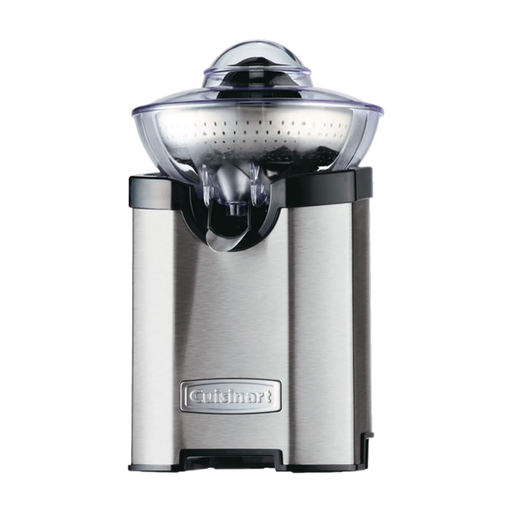 No image available
The product description mentions small limes, making this model worth considering if you want to juice them.
Dimensions: 17 × 17 × 29 cm. The product information lists removable dishwasher-safe parts, an anti-drip system and an extra-wide spout.
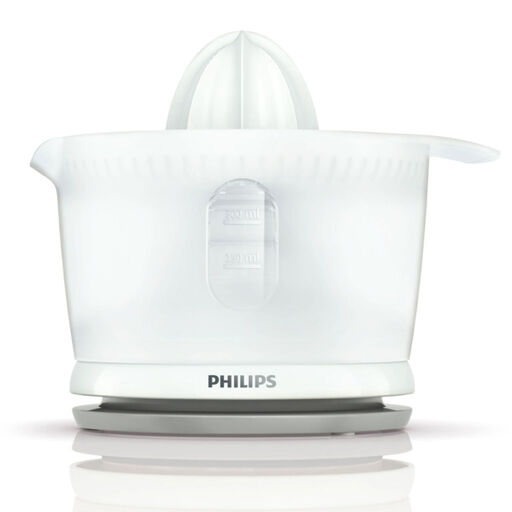 No image available
The collection jug and cord storage can come in handy if you want to collect the juice and put the juicer away after use.
Jug capacity: 500 ml. Power: 25 W. Dimensions: 14,5 × 19,7 × 16,4 cm. Philips says the motor unit should not be cleaned in the dishwasher; check that the cone fits the limes you use.
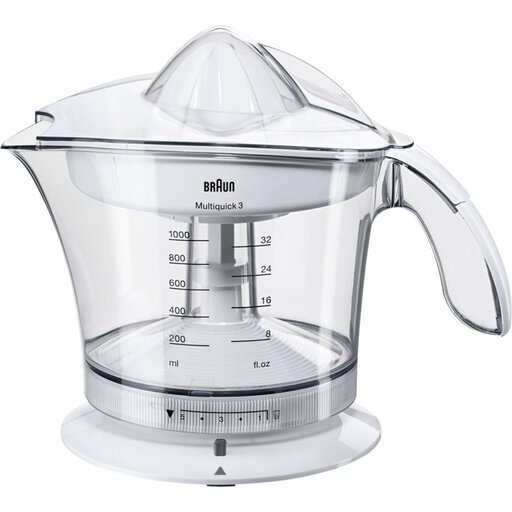 No image available
The product description mentions limes; check that the cone fits the limes you use.
The product information lists a 1-litre collection jug, cord storage and dishwasher-safe parts. Check the manual to see which parts are suitable for the dishwasher.
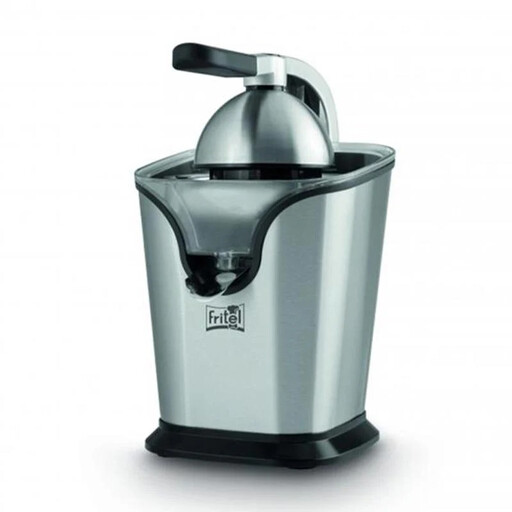 No image available
The product information says the smaller juicing cone is suitable for limes, making this model worth considering if you juice small citrus fruit.
Dimensions: 270 × 185 × 165 mm. The product information lists two cones, a drip-stop and removable dishwasher-safe parts.
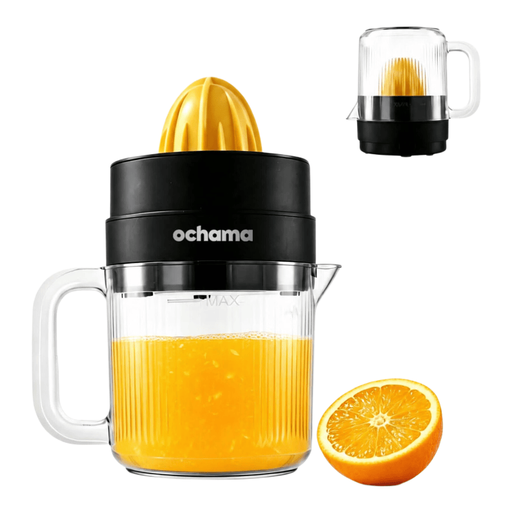 No image available
This electric citrus juicer could be a good fit if you want to juice citrus fruit and need a collection capacity of 1,4 litres.
The product information lists a capacity of 1,4 litres, a power rating of 30 W and removable parts. Check whether the juicing cone is suitable for small limes.
No. Philips says the motor unit should not be cleaned in the dishwasher. Clean the other parts according to the instructions for this model; for other juicers, check the relevant manual.
Check the information on electrical safety and materials that come into contact with food. Under European rules, electrical equipment designed for 50–1.000 V AC falls within the scope of the Low Voltage Directive and is subject to applicable safety requirements and CE marking. The Netherlands Food and Consumer Product Safety Authority also sets out requirements for products that come into contact with food. A product listing alone doesn’t confirm that an individual item meets all applicable requirements.
For a standard online purchase from a business, you generally have a statutory cooling-off period of up to 14 days after delivery, subject to applicable exceptions. The seller must also resolve issues with a product that, under normal use, doesn’t meet what you were entitled to expect under the legal guarantee. In the Netherlands, there is no single fixed statutory guarantee period.