
Host making a jug of lemonade
Wants to collect enough juice for several glasses, so compares the jug’s capacity with the amount needed for their recipe. Philips lists a 0.5-litre jug for the HR2738/00.


If you’re making juice for several guests, a collection jug is handy when its capacity suits your recipe. A direct spout lets you pour juice straight into glasses or your own jug. Also choose a cone that suits your citrus fruit, and consider how easy the juicer is to use, clean and store.
Wants to collect enough juice for several glasses, so compares the jug’s capacity with the amount needed for their recipe. Philips lists a 0.5-litre jug for the HR2738/00.
Wants to juice lemons and other citrus fruit, and pays attention to the size of the cone and how the juice and pulp are collected. Tristar lists two cones for the CP-3002.
Wants to keep cleaning to a minimum after guests have left, and checks which detachable parts can be cleaned without getting the motor unit wet. Philips recommends wiping the motor unit clean with a damp cloth.
Best for: collecting juice first to serve several glasses.
Keep in mind: you’ll pour from the jug and need to clean it after use. Philips lists a capacity of 0.5 litres for the HR2738/00; compare this with the amount needed for your recipe.
Best for: pouring juice straight into a glass or your own jug.
Keep in mind: if you’re serving several guests, you’ll need a separate jug or have to change glasses. Braun lists a direct spout for the CJ3050WH.
Best for: juicing with a lever rather than pressing directly down on the fruit.
Keep in mind: the lever and detachable parts take up space and need cleaning. Tristar lists a lever, two cones and a spout for the CP-3002.
| What to consider | What to look for | Who is this most important for? |
|---|---|---|
| Collecting enough juice | Compare the stated jug capacity with your recipe, or choose a direct spout and use your own jug. | I want to collect enough juice in one go for my guests’ glasses. Around 36% of consumers prioritise the amount of juice collected. |
| Juicing different types of citrus fruit | Check how many cones are included and which fruits the model can handle, according to the product information. | I want to juice other citrus fruit as well as lemons, so I look at the cones and strainer. Around 29% of consumers prioritise this versatility. |
| Cleaning after use | Check which parts can be detached and are dishwasher-safe; follow the instructions for the motor unit. | I want to tidy up quickly after guests have left and know which parts need cleaning separately. Around 21% of consumers make ease of cleaning their top priority. |
| Space and use | Check the dimensions and cord storage, and whether the controls suit the way you want to use the juicer. | I want a model that fits in my kitchen and suits the way I’ll use it. Around 14% of consumers give the most weight to space and their choice of purchase. |
Philips lists 25 W for the HR2738/00, while Braun lists 60 W for the CJ3050WH. These are stated power ratings, not measurements of juice yield under comparable conditions.
Choose based on the amount you need, ease of use and the right cone. Treat wattage only as the stated electrical power.
Tristar lists plug type G – BS 1363 for the CP-3006KW. Don’t assume the version you’re buying will suit the socket you plan to use it with without checking first.
Check the plug, voltage and version for the exact item before ordering.
An unsuitable plug may prevent you from using the appliance or mean you need a suitable solution.
The HR2738/00 is designed to collect juice in a jug; Philips lists a capacity of 0.5 litres.
According to Tristar, the CP-3002 combines two cones with a lever and direct spout.
The CitrusQuick 3 CJ3050WH is designed to pour juice straight into a glass.
The 201853 is a citrus juicer with an aluminium press arm.
The CJF11WHEU offers a different style and choice of materials among electric citrus juicers.
These electric citrus juicers are worth comparing if you’re making juice for guests. Look at the listed jug capacity, cones and cleaning information to find the right option for your needs. For the specific product on offer, check that the version intended for the Netherlands meets the applicable electrical safety requirements and carries the required CE marking.
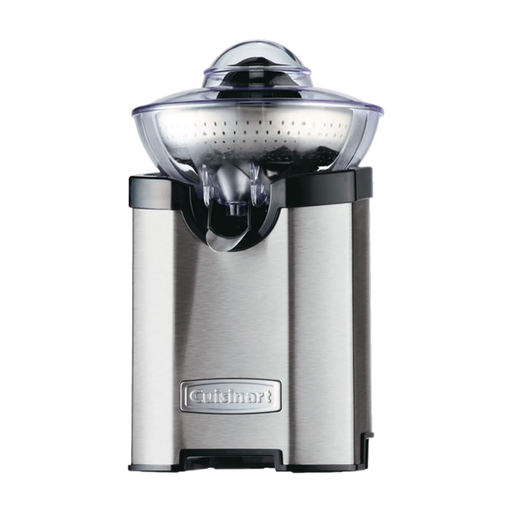 No image available
An option to compare if you want to collect juice and clean the parts after use.
100 W; stainless steel design; extra-wide spout; anti-drip system; dishwasher-safe parts.
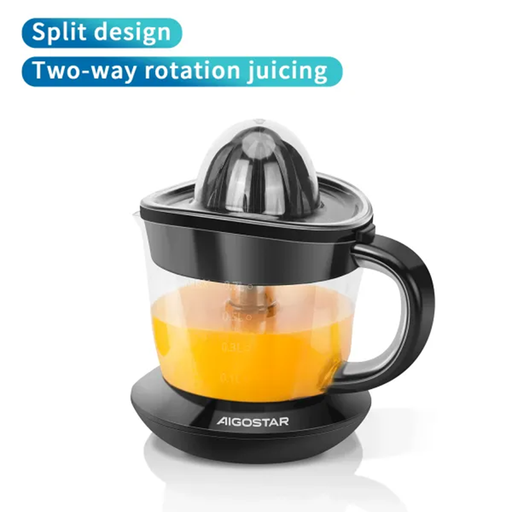 No image available
An option to compare if you want to collect juice and are looking for multiple cones.
40 W; 0.7L capacity; two cones; two directions of rotation.
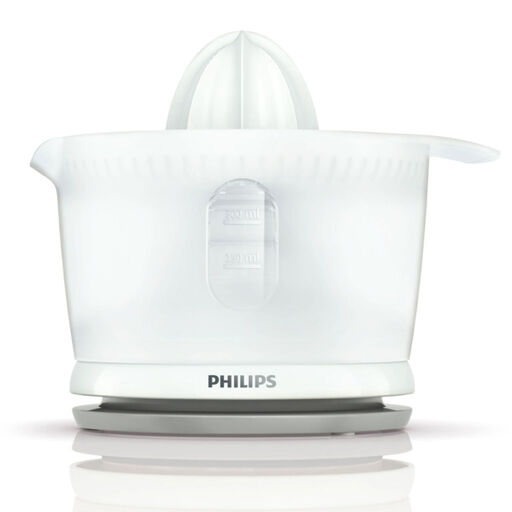 No image available
An option for collecting juice before serving; compare the stated capacity with the amount needed for your recipe.
500 ml; 25 W; compact design.
 No image available
An option to compare if you want to consider the pulp setting and opening when choosing.
Five pulp settings; 110 mm feed opening.
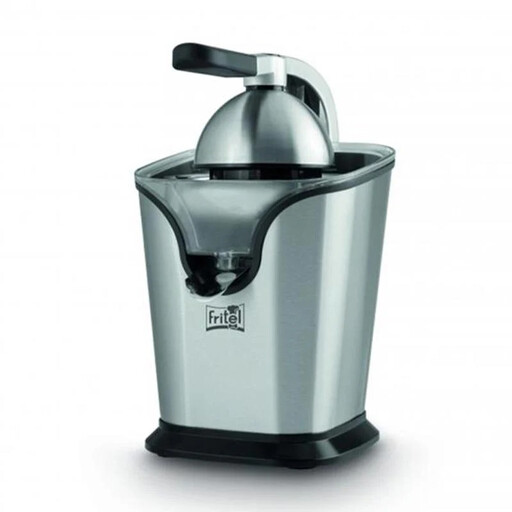 No image available
An option to compare if you’re looking for a press arm and different cone sizes.
Electric; two cone sizes; anti-drip system; 100 W.
No. Philips recommends wiping the motor unit of the HR2738/00 clean with a damp cloth. Philips says the other parts can be washed in the dishwasher; for other models, follow the instructions for that model.
Voedingscentrum recommends keeping freshly squeezed lemon juice in the fridge for 3–7 days and says it can also be frozen. This isn’t a guarantee of how long lemonade made using a different recipe will keep.
For online purchases from a business, the Dutch government says you generally have 14 days to change your mind, although exceptions may apply. If a product is faulty, contact the seller; the Dutch government states that the Netherlands has no fixed statutory warranty period.
The NVWA says CE marking is mandatory for electrical products covered by the applicable rules. A logo or product listing alone doesn’t prove that an individual item meets all the requirements.