
Holidaymaker with limited kitchen space
Wants to put the juicer away easily after breakfast, so looks at its size and cord storage. Philips lists cord storage for the HR2738/00, while Princess gives the dimensions of the 201004.


If you have limited worktop space and only need small quantities, a compact juicer with a collection jug is a sensible choice. For making several glasses in a row, a larger removable jug is more practical. If you want to juice straight into a glass, a direct spout can be useful. Just check how the removable parts need to be cleaned and which features come with the exact model.
Wants to put the juicer away easily after breakfast, so looks at its size and cord storage. Philips lists cord storage for the HR2738/00, while Princess gives the dimensions of the 201004.
Juices several oranges in a row, so compares the capacity and ease of handling of removable jugs. Princess and Tristar list 1-litre and 1.2-litre jugs respectively for specific models.
Wants to minimise hand-washing after juicing, so checks which removable parts of the chosen model are dishwasher-safe. Princess and Tristar list this feature for parts of specific models.
Best for: limited storage space and small quantities; Philips lists a 0.5-litre jug and cord storage for the HR2738/00.
Trade-off: when serving a larger group, you may need to pour out the smaller jug part-way through.
Best for: making several glasses in a row; Princess lists a 1-litre jug for the 201004, while Tristar lists a 1.2-litre jug for the CP-3006.
Trade-off: allow for the space the jug takes up and check which parts you can clean after use.
Best for: juicing straight into a glass; Princess lists a lever and direct spout for the 201858.
Trade-off: you’ll need a suitably sized glass under the spout; according to the manufacturer, the Princess 201858 does not have a collection jug.
| What to consider | What to look for | Who is it most relevant for? |
|---|---|---|
| Storage in a small kitchen | Compare the stated dimensions and cord storage with the cupboard and worktop space available. | If I need to put the juicer in a small cupboard after breakfast, its size and cord storage matter. Around 31% of consumers say storage is their main buying concern. |
| Making several glasses | Compare the jug’s capacity and whether it is removable; the stated capacity does not measure how much juice it produces. | For a shared breakfast, I want to collect enough juice for several glasses without having to pour it out repeatedly. Around 23% of consumers prioritise this need. |
| Cleaning after juicing | Check which parts of the exact model are removable and dishwasher-safe; don’t assume the motor base is included. | If I want to tidy up quickly after breakfast, I want to know which removable parts can go in the dishwasher. Around 31% of consumers prioritise easy cleaning. |
| Pulp and pouring | Check whether the exact model has an adjustable pulp filter, a direct spout or both. | I want to choose how much pulp I have or pour straight into a glass, depending on my preference. Around 15% of consumers particularly value pulp control or serving directly. |
The stated capacity tells you how much juice the jug can hold, not how much juice the juicer has been measured to produce in a comparison.
Choose the jug capacity based on how much juice you want to collect at a time. Don’t treat claims about juice yield as an independent user test.
Braun lists five pulp settings for the CJ3000WH, while a direct spout is listed for the separate CJ3050WH model.
Check the full model number and the features of the exact version you want to buy.
A lid on the jug is no substitute for refrigeration.
Refrigerate any leftover fresh juice and follow the Voedingscentrum’s storage advice.
For the Daily Collection HR2738/00, Philips lists a 0.5-litre jug and cord storage.
According to Princess, the 201004 has a removable 1-litre jug and an adjustable pulp filter. The manufacturer lists a lever and direct spout for the 201858.
Tristar lists a removable 1.2-litre jug for the CP-3006; the CP-3002 is a separate model with a lever and spout.
Braun lists five pulp settings for the CJ3000WH and a direct spout for the separate CJ3050WH.
These Joybuy products are suited to juicing oranges in a holiday cottage, with options for storage, collecting juice and adjusting the pulp.
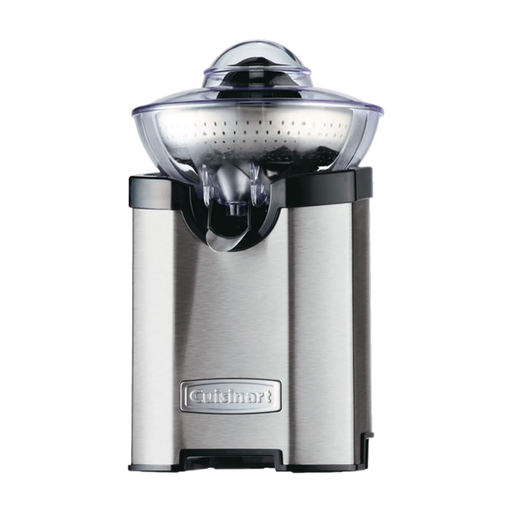 Image unavailable
A 1-litre collection jug could suit anyone who wants to collect enough juice for several glasses.
The product information lists 100 W, a 1-litre reservoir, a drip-stop system and dishwasher-safe parts. Check exactly which parts are dishwasher-safe.
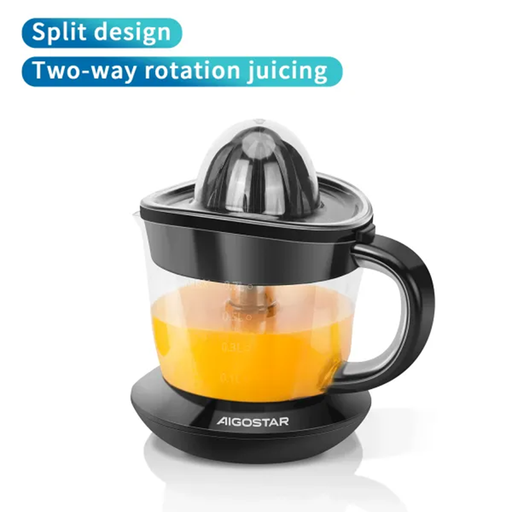 Image unavailable
The 0.7-litre capacity may be useful if you want to collect juice for more than one glass.
The product information lists two juicing cones, two-way rotation and an adjustable filter. It is designed for citrus fruit and household use.
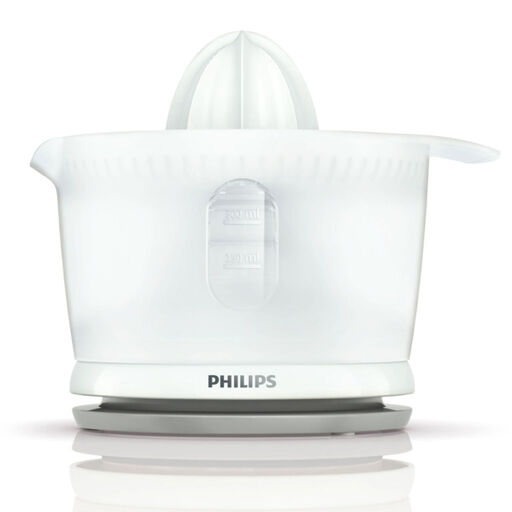 Image unavailable
The compact design, with a collection jug and cord storage, suits anyone who wants to put the juicer away after use.
The jug has a 500 ml capacity and the juicer has a power rating of 25 W. The product information lists dishwasher-safe removable parts. Do not use the juicer continuously for more than 10 minutes.
 Image unavailable
The pulp settings may be useful if you want to adjust the texture of your juice.
The product information lists five pulp settings and a 110 mm feed chute. Do not put your fingers, utensils or other objects into the chute while the juicer is in use.
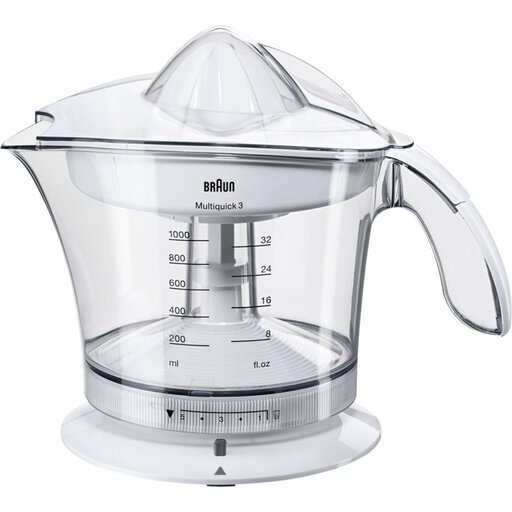 Image unavailable
An option for anyone who wants to juice oranges and other citrus fruit and clean removable parts in the dishwasher.
The product information lists Start & Stop operation and dishwasher-safe parts. Check the manual to see which parts are suitable.
Don’t assume you can. Princess specifically lists removable parts as dishwasher-safe for the 201004 and 201858, and Tristar does the same for the CP-3006. Check the manual for your exact model to find out about the other parts.
The Voedingscentrum advises keeping fresh orange juice in the fridge for 1–2 days. Ideally, set your fridge to 4 °C; a lid on the jug is no substitute for refrigeration.
Electrical equipment covered by the European Low Voltage Directive, including equipment designed for 230 V AC, must meet the applicable conformity requirements and carry the CE marking. Check the product details and conformity information for your chosen model; the general requirement alone does not confirm that a specific model complies.
If you buy a faulty product as a private consumer in an EU country, you have statutory rights to a repair or replacement. Any manufacturer’s guarantee offered is in addition to this statutory protection; also check which seller you are buying from.